

The 2022 literary landscape was characterized by a profound shift toward introspective narratives, the exploration of "invisible" conditions, and a rigorous examination of historical legacies. As the global community navigated the complexities of a post-pandemic reality, authors across genres focused on the intersection of trauma, cultural identity, and the scientific underpinnings of the human experience. This year’s most significant contributions to the literary canon provided not only a means of escapism but also a framework for understanding a world increasingly defined by rapid social and environmental change.
The Evolution of Culinary Literature: Preservation and Regional Identity
In 2022, culinary writing moved beyond simple instruction, embracing a more academic and anthropological approach to food. This shift was exemplified by Naomi Duguid’s The Miracle of Salt: Recipes and Techniques to Preserve, Ferment, and Transform Your Food. Duguid’s work explores the foundational role of salinity in global food security and tradition, detailing the chemical and cultural significance of fermentation processes such as miso and sauerkraut.
The year also saw a rise in "culinary recovery," where authors sought to bring marginalized cuisines into the mainstream. Cynthia Shanmugalingam’s Rambutan: Recipes from Sri Lanka and Romy Gill’s On the Himalayan Trail: Recipes and Stories from Kashmir to Ladakh served as critical entries in this category. These publications did more than provide recipes; they offered historical context for regions often overlooked by Western gastronomic centers. Gill’s work, in particular, highlights the urgency of documenting recipes in conflict-prone areas, where political instability threatens the continuity of oral and domestic traditions.

Industry data from 2022 indicates that while overall print book sales saw a slight decline of approximately 6.5% compared to the record-breaking heights of 2021, the "Specialty Cookbook" and "Regional Cuisine" categories remained resilient. Readers increasingly sought books that combined high-quality photography with narrative-driven storytelling, a trend further validated by the release of The Explorer’s Library by the Atlas Obscura and Gastro Obscura teams, which integrated travel and food into a singular anthropological study.
Historical Fiction and the Reclamation of Narrative
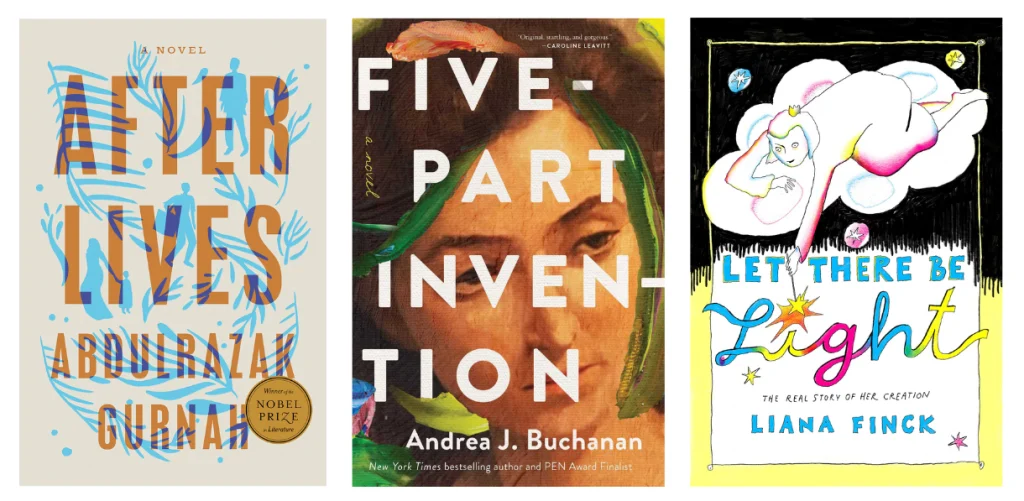
The fiction sector in 2022 was dominated by themes of intergenerational trauma and the subversion of traditional myths. Andrea J. Buchanan’s Five-Part Invention explored the psychological weight of inherited trauma through the lens of five generations of women, reflecting a broader societal interest in epigenetics and family constellations.
Parallel to this, the literary world saw a significant interest in the retelling of foundational myths. Liana Finck’s Let There Be Light: The Real Story of Her Creation provided a satirical yet profound reimagining of the Book of Genesis, positioning the divine as a female figure. This work aligned with a 2022 trend of feminist re-evaluations of religious and classical texts.
On the international stage, the North American paperback release of Abdulrazak Gurnah’s Afterlives brought renewed attention to the long-term effects of German colonial rule in East Africa. Following Gurnah’s 2021 Nobel Prize in Literature, Afterlives became a central text for understanding the displacement and psychological scarring inherent in the colonial project. The novel’s focus on the transition from colonial occupation to independence mirrors the ongoing global discourse on decolonization and historical accountability.

Narrative Nonfiction and the Science of Perception
The most successful nonfiction titles of 2022 focused on bridging the gap between complex scientific data and accessible storytelling. Ed Yong, a Pulitzer Prize-winning journalist, released An Immense World: How Animal Senses Reveal the Hidden Realms Around Us, which challenged human-centric views of reality. Yong’s exploration of "Umwelt"—the unique sensory world of different species—was hailed by critics as a landmark in nature writing, encouraging a more empathetic engagement with the environment.
The year also featured a rigorous investigation into the mechanics of belief and persuasion. David McRaney’s How Minds Change: The Surprising Science of Belief, Opinion, and Persuasion addressed the growing polarization of the digital age. By synthesizing neuroscience and psychology, McRaney provided a framework for understanding how individuals can be led toward self-persuasion through empathy and rapport, rather than confrontation.
Historical nonfiction also saw a significant contribution with Candice Millard’s River of the Gods: Genius, Courage, and Betrayal in the Search for the Source of the Nile. Millard’s research brought to light the often-erased contributions of Sidi Mubarak Bombay, an enslaved East African man whose logistical expertise was essential to the expeditions of Richard Burton and John Hanning Speke. This publication reflects a broader movement in 2022 historiography to identify and credit the "invisible" figures who made major geographical and scientific discoveries possible.
The Chronic Illness Movement and the "Invisible Kingdom"
A pivotal theme in 2022 literature was the documentation of chronic illness and the failures of modern medical systems to address "invisible" disabilities. This was spearheaded by Meghan O’Rourke’s The Invisible Kingdom: Reimagining Chronic Illness. O’Rourke’s investigation into autoimmune diseases and post-viral states arrived at a critical juncture, as millions of individuals globally began grappling with the long-term effects of COVID-19.

O’Rourke’s work, alongside Alice Wong’s Year of the Tiger: An Activist’s Life, signaled a shift in how disability is portrayed in media. Wong’s collection of creative ephemera rejected the "tragedy" or "inspiration" tropes often associated with disability memoirs. Instead, it offered a searing critique of ableism and the institutional barriers to healthcare. These books have been cited by medical professionals and patient advocates as essential reading for improving the "clinical gaze" and fostering a more patient-centered approach to chronic care.
Mental Health and the Epigenetics of Trauma
The intersection of psychological health and social structures was further explored in Gabor Maté’s The Myth of Normal: Trauma, Illness, and Healing in a Toxic Culture. Maté, writing with his son Daniel, argued that the modern Western lifestyle is inherently "toxic" to human biology, contributing to a rise in autoimmune disorders and mental health crises. The book’s emphasis on "small t" trauma—the daily stressors and attachment disruptions of modern life—resonated deeply with a public still recovering from the collective trauma of the early 2020s.
This focus on internal healing was complemented by Susan Cain’s Bittersweet: How Sorrow and Longing Make Us Whole. Following the success of her previous work on introversion, Cain’s 2022 release explored the value of "melancholic" emotions in a society that often demands relentless positivity. Cain argued that acknowledging grief and longing is a prerequisite for genuine creativity and connection.
2022 Literary Chronology and Market Impact
The trajectory of the 2022 book market was influenced by several key events and cultural shifts:

- January–March: The emergence of "Long COVID" literature began to gain traction, with O’Rourke’s The Invisible Kingdom setting the tone for the year’s medical discourse.
- April–June: Narrative nonfiction titles like Millard’s River of the Gods and Yong’s An Immense World dominated the bestseller lists, indicating a strong public appetite for science and history.
- July–September: The rise of "BookTok" (a sub-community on the social media platform TikTok) began to significantly influence sales, particularly for titles focused on emotional maturity and personal evolution, such as Yung Pueblo’s Lighter.
- October–December: The holiday season saw a surge in high-concept gift books and comprehensive memoirs, including Maud Newton’s Ancestor Trouble, which tapped into the growing popular interest in genealogical DNA testing and ancestral trauma.
Analysis of Broader Implications
The literature of 2022 suggests a global audience that is increasingly literate in the nuances of psychology, sociology, and environmental science. The popularity of books like How Minds Change and The Myth of Normal indicates that readers are seeking tools to navigate a world where traditional institutions—whether medical, political, or social—are perceived as failing to provide adequate support.
Furthermore, the success of authors like Alice Wong and Cynthia Shanmugalingam points to a permanent shift in the publishing industry toward inclusivity. No longer relegated to niche categories, stories of marginalized experiences and regional histories are now central to the mainstream literary conversation. This diversification of voices is not merely a trend but a fundamental restructuring of whose stories are deemed worthy of record.
As the industry moves forward, the "2022 model" of publishing—blending rigorous research with deeply personal narrative—is expected to remain the standard for high-impact literature. The books of this year did not just reflect the state of the world; they provided the intellectual and emotional vocabulary necessary for the public to begin the long process of reconstruction and reconciliation in a post-crisis era.
