

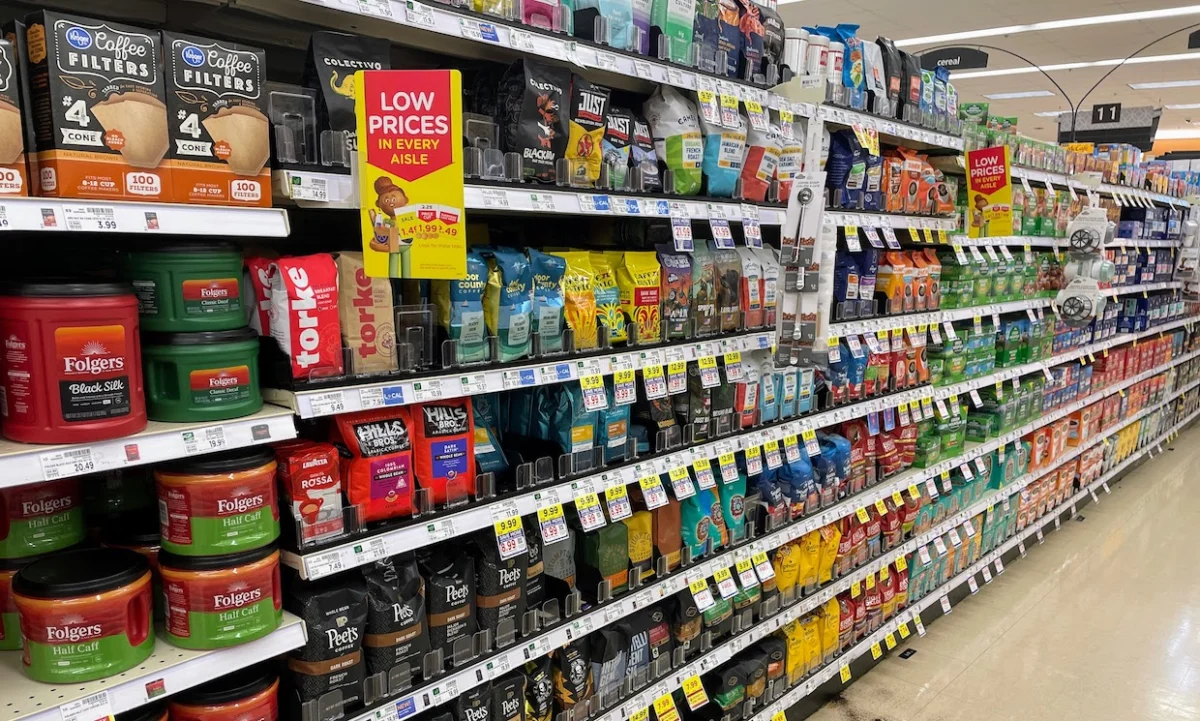
A significant chasm exists between consumers’ stated intentions to purchase ethically produced goods and their actual buying habits, a phenomenon that researchers suggest can be overcome by shifting the perception of cost from a price increase to a reduction in quantity. This groundbreaking study, published in the prestigious Journal of Business Ethics, offers a compelling new strategy for brands seeking to align their products with the growing consumer demand for sustainability and ethical sourcing, particularly within the competitive coffee market.
The widely cited United Nations estimate that 40% of consumers are willing to buy ethically produced goods, yet only 4% actually do, has remained remarkably consistent for nearly two decades. This stark disparity, often referred to as the "intention-behavior gap," has long puzzled marketers and sustainability advocates. While the desire to support ethical practices is prevalent, the practical realities of the marketplace, primarily driven by price, often act as a formidable barrier. The research from Canadian business scholars Mehak Bharti, an assistant professor of marketing at Toronto Metropolitan University’s Ted Rogers School of Management, and Jing Wan, from the University of Guelph, delves into the psychological underpinnings of this gap, specifically examining the concept of "ethical premiums" and proposing an innovative solution.
The "Pain of Payment" and the Ethical Premium
The core of the problem, as identified by the researchers, lies in what they term the "pain of payment." When consumers encounter ethically sourced products, such as Fairtrade-certified coffee, they are frequently met with a higher price tag. Studies indicate that "ethical" products can cost anywhere from 20% to a staggering 220% more than their conventional counterparts. This price difference triggers an immediate, visceral discomfort – the feeling of spending more money for a benefit that accrues to someone else, rather than directly to the consumer.
"Price is immediate and hard to ignore," explained Professor Bharti in a university press release. "Even people with strong values struggle, because the cost feels immediate. The immediate financial outlay often outweighs the long-term ethical satisfaction." This psychological friction makes it difficult for even the most well-intentioned consumers to consistently choose ethical options when faced with a direct price increase at the point of purchase.
Innovative Research Design and Findings
To investigate this phenomenon further and test potential solutions, Bharti and Wan conducted six rigorous experiments involving 2,332 participants across the Netherlands, the United States, and Canada. The studies focused on products commonly associated with ethical consumption, with a particular emphasis on Fairtrade-certified coffee, a staple in many households and a sector where ethical sourcing is a significant talking point.
The experiments consistently demonstrated a powerful consumer preference when the "ethical premium" was framed differently. Instead of presenting an ethically sourced product at a higher price for the same quantity, the researchers found that consumers were significantly more inclined to purchase the ethical option if it offered a reduced quantity at the same shelf price as its conventional counterpart.
One pivotal experiment involved 587 U.S. participants. They were presented with a choice between a conventional coffee and a Fairtrade version. In the first scenario, the Fairtrade coffee was priced 25% higher per ounce. When the Fairtrade coffee was simply marked up – costing $6.05 compared to $4.95 for the same 12.2-ounce bag – 49.2% of participants opted for the ethical choice. However, when the Fairtrade coffee was reduced in size to 10 ounces but priced identically at $4.95, a much more substantial 60.7% of participants chose the ethical option. A similar uplift was observed when the conventional product was offered in a larger size at the higher, shared price point, further solidifying the strategy’s effectiveness.
"Paying a higher cost hurts more than getting a little less," Professor Bharti elaborated on the study’s core finding. "When the shelf price is the same, shoppers don’t feel penalized for doing the right thing. They can still feel good about their purchase without the immediate sting of overspending." This suggests that the perceived financial sacrifice associated with ethical purchasing is a far greater deterrent than a slight reduction in product volume.
Distinguishing from "Shrinkflation"
The researchers were keen to differentiate their proposed strategy from the often-criticized practice of "shrinkflation." Shrinkflation involves companies subtly reducing product sizes while maintaining prices and packaging, effectively masking cost increases and passing them onto consumers without clear disclosure.
In contrast, the study’s approach emphasizes transparency. The quantity and price of both conventional and ethical products are clearly displayed, with unit prices readily available for comparison. "In our research, rather than obscure quantity differences, we present ethical options in visibly smaller quantities," the study states. "Consumers are able to directly compare the (lower) quantity and (same) retail price of ethical products with their conventional counterparts. Framing the ethical premium as a quantity difference rather than a price difference allows consumers to prioritize their ethical intentions over price considerations, potentially narrowing the gap between ethical attitudes and behaviors."
This transparency is crucial. It allows consumers to make an informed trade-off, understanding that they are receiving slightly less product in exchange for supporting ethical practices, rather than feeling deceived by a hidden price increase. This mindful exchange can foster a greater sense of agency and satisfaction with the purchase.
Implications for the Coffee Industry and Beyond
The findings of this research hold significant implications for the global coffee industry, a sector increasingly scrutinized for its ethical and environmental impact. Coffee production involves complex supply chains, often impacting smallholder farmers in developing nations. Fairtrade certification, for instance, aims to ensure fair wages, safe working conditions, and sustainable farming practices. However, the higher costs associated with these certifications have historically limited the widespread adoption of ethically sourced coffee.
By adopting the "less product, same shelf price" strategy, coffee brands can potentially:
- Increase Market Share for Ethical Coffee: Companies that embrace this model could see a substantial rise in the sales of their Fairtrade or sustainably certified coffee lines, directly contributing to better livelihoods for coffee farmers and more responsible environmental stewardship.
- Strengthen Brand Reputation: Consumers are increasingly aligning their purchasing decisions with their values. Brands that proactively implement strategies to make ethical choices more accessible are likely to garner greater customer loyalty and positive brand perception.
- Influence Competitors: If successful, this strategy could encourage other players in the coffee market, and indeed in other consumer goods sectors, to re-evaluate their pricing and packaging strategies for ethical products, leading to a broader shift towards more responsible business practices.
- Educate Consumers: The transparent display of quantity differences can serve as an ongoing educational tool, subtly reinforcing the value proposition of ethical sourcing and encouraging consumers to think critically about the true cost of their purchases.
Beyond coffee, the research’s applicability extends to a wide array of consumer goods, including apparel, food items, and personal care products, where ethical sourcing, environmental sustainability, and fair labor practices are increasingly important considerations for consumers. The principle of reframing the ethical premium as a quantity adjustment, rather than a direct price hike, offers a universally applicable strategy for bridging the intention-behavior gap across diverse markets.
Future Directions and Broader Context
The study, published late last year, builds upon a growing body of research in behavioral economics and marketing that seeks to understand and influence consumer decision-making in the context of sustainability. The researchers’ focus on the "pain of payment" aligns with established psychological principles that highlight the immediate impact of financial loss aversion.
While this research offers a promising avenue, further exploration could delve into the long-term impact of such strategies on consumer perceptions of value and brand trust. It would also be beneficial to examine how different demographic groups respond to this framing and whether cultural nuances play a significant role. Additionally, understanding the operational challenges and potential for misunderstanding if not implemented with utmost clarity would be valuable for widespread adoption.
The broader context for this research is the urgent global need for more sustainable consumption patterns. As climate change accelerates and social inequalities persist, the role of businesses in facilitating ethical choices becomes increasingly critical. This study provides a tangible, research-backed mechanism for businesses to not only contribute to a more sustainable future but also to thrive commercially by meeting the evolving demands of conscious consumers. By understanding and strategically addressing the psychological barriers to ethical purchasing, companies can move beyond simply stating their commitment to sustainability and actively empower consumers to turn their good intentions into impactful actions. The future of ethical consumption, it seems, may hinge not on higher prices, but on a more nuanced understanding of how we perceive value and make our everyday choices.
