

The culinary landscape of America continues to be a vibrant and often contentious arena, with recent developments ranging from political figures leveraging fast food for policy promotion to the economic pressures reshaping beloved staples. This week saw a convergence of high-brow gastronomic investigations, corporate social responsibility dilemmas, the fluctuating fortunes of emerging food trends, and intense debates over the price of everyday comforts, all set against a backdrop of evolving consumer expectations and an inflationary economy.
The Enduring Allure of Free Bread and the Quest for America’s Best
Food culture aficionados were recently captivated by Caity Weaver’s extensive journalistic endeavor to uncover the best free bread offerings across America. Weaver, known for her meticulous and often whimsical deep dives into consumer culture, embarked on a quest that resonated deeply with diners who appreciate this foundational, often overlooked, element of the restaurant experience. Her investigation highlighted how a simple basket of complimentary bread can set the tone for a meal, evoke powerful nostalgia, and even serve as a quiet indicator of a restaurant’s hospitality and attention to detail.
For many, the appeal of free bread transcends mere sustenance; it is a ritual, a comfort, and a benchmark. Restaurants have historically offered bread as a welcoming gesture, a means to temper hunger while guests await their main courses, and a cost-effective way to enhance perceived value. Weaver’s exploration meticulously cataloged contenders from various establishments, scrutinizing factors such as warmth, texture, accompanying spreads, and overall presentation. Her findings sparked a nationwide discussion, as readers eagerly compared her selections to their own cherished memories of restaurant bread. The article’s journey through diverse bread experiences underscored a fundamental truth: our culinary preferences, particularly for comfort foods like bread, are often deeply intertwined with personal history and formative experiences. The dismissal of Bertucci’s warm, yeasty rolls in Weaver’s analysis, for instance, struck a chord with many who hold that particular chain’s offering in high esteem, suggesting that, much like one’s preferred "Saturday Night Live" cast, the "best" free bread is often the one encountered and loved during impressionable years. This phenomenon speaks to the powerful role of nostalgia in shaping consumer loyalty and perception within the food industry.
Erewhon’s LACMA Debut and Philz Coffee’s Principled Stance
Los Angeles’s cultural and commercial spheres witnessed a notable convergence with the announcement of Erewhon’s impending opening inside the Los Angeles County Museum of Art (LACMA) on April 19. This collaboration, while celebrated by some as a fusion of two prominent L.A. institutions, was met with a discernible undercurrent of grumbling among others. Erewhon, a high-end organic grocery chain renowned for its curated, health-conscious, and often celebrity-patronized offerings, embodies a particular brand of luxury and exclusivity. Its integration into LACMA, a public cultural landmark dedicated to broad accessibility and artistic enrichment, raised questions about the commercialization of public spaces and the potential clash of brand identities. Critics expressed concern that the presence of a luxury brand with notoriously high price points might alienate segments of LACMA’s diverse visitor base, potentially altering the museum’s inclusive ethos. Proponents, however, might argue that the partnership represents a strategic move for LACMA to diversify its revenue streams, modernize its visitor experience, and appeal to a contemporary Los Angeles demographic that values both art and wellness-oriented lifestyles.
Concurrently, the debate surrounding corporate social responsibility continued to simmer with Philz Coffee reaffirming its stance against displaying Pride flags. Following an internal memo, as reported by the San Francisco Chronicle, the coffee chain is reportedly opting for a "new ‘unifying’ piece of artwork" to be displayed in every store instead of the rainbow flag. This decision follows previous discussions regarding the company’s policy on political and social displays within its establishments. The move positions Philz Coffee distinctly in the ongoing discourse about how corporations navigate politically charged social issues. While some businesses actively embrace and display symbols of inclusivity during Pride Month, Philz’s approach signals a preference for perceived neutrality. This strategy, however, often elicits strong reactions from both sides: those who support a neutral corporate environment and those who view the absence of explicit support as a tacit endorsement of exclusion. The proposed "unifying artwork" represents an attempt to bridge this divide, though its reception and effectiveness in fostering a truly inclusive atmosphere without explicitly acknowledging specific communities remain to be seen. The ongoing dialogue underscores the complexities businesses face in aligning their brand identity with social values in an increasingly polarized cultural landscape.
Presidential Palates and the Politics of Fast Food
The intersection of politics and food took center stage once more as former President Donald Trump continued his long-standing, well-documented relationship with McDonald’s, utilizing the fast-food giant as a prop for political messaging. His affinity for McDonald’s has been a consistent feature of his public persona, dating back years. During his election campaigns, he notably served McDonald’s fries at rallies in battleground states, a calculated move to project an image of relatability and connect with working-class voters. His presidency also saw instances of fast-food buffets, predominantly featuring McDonald’s and other chain offerings, laid out for visiting athletic teams at the White House. Reports even suggested that cheeseburgers were a regular part of his nightly wind-down routine, further cementing his public association with the brand.
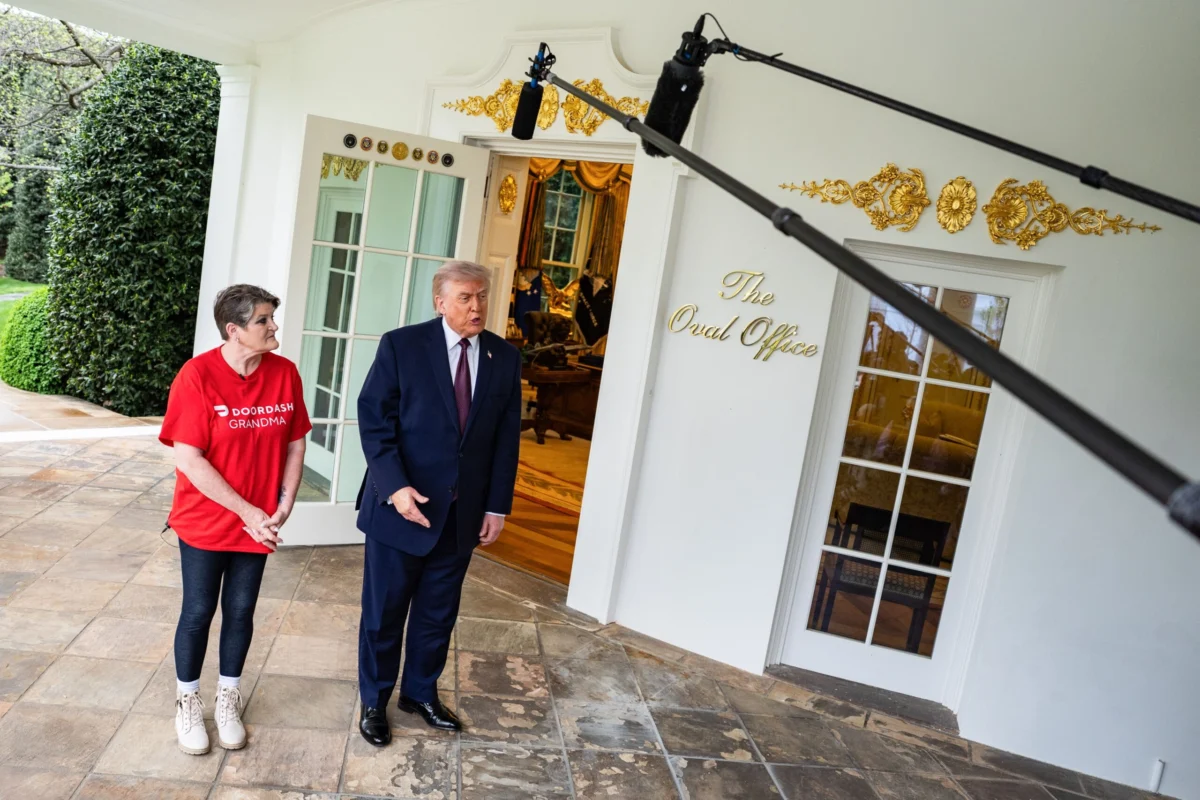
This consistent preference for ubiquitous American fast food stands in stark contrast to broader dietary trends and health initiatives, including the hypothetical "MAHA" (Make America Healthy Again) movement, highlighting a stark divergence between political messaging and public health discourse. The recent incident involved Trump reportedly DoorDashing McDonald’s to the Oval Office, a stunt explicitly designed to promote his "no tax on tips" policy. This proposed policy, aimed at alleviating the tax burden on service workers, has, however, not garnered universal acclaim among its intended beneficiaries. Many servers express skepticism or outright opposition, concerned about potential long-term impacts on wages, benefits, and the overall stability of their income, particularly if employers adjust base pay or other compensation structures in response.
The encounter during the DoorDash delivery itself provided a "trenchant vignette" of the current culture war. When Trump reportedly posed a politically loaded question about gender in sports to the delivery driver, Sharon Simmons, her response—"I really don’t have an opinion on that"—served as a powerful, understated commentary on the average citizen’s desire to navigate daily life without being drawn into divisive political rhetoric. This incident perfectly encapsulated the strategic use of commonplace interactions for political theater, while also inadvertently highlighting the public’s potential weariness with such tactics.
The Rise and Recent Retreat of Utah-Inspired Food Trends
The influence of Utah’s distinctive food culture has quietly but steadily permeated the national culinary scene, giving rise to what some have termed the "Utah-ification" of American food. This trend, deeply rooted in the state’s cultural landscape, particularly its strong Mormon population and associated dietary preferences (e.g., abstinence from alcohol, coffee, and tea, leading to a vibrant soda culture), has produced several notable exports. In 2023, Crumbl Cookies, founded in Utah, rapidly ascended to become the country’s fastest-growing dessert shop, capitalizing on its unique weekly rotating menu of oversized, often brightly colored, cookies designed for social media sharing. Another Utah-born phenomenon, Swig, a drive-thru soda shop concept, played a pivotal role in popularizing "Dirty Soda"—customized soda concoctions mixed with cream, fruit purees, and flavorings. This trend gained further national traction through its appearances on popular culture platforms, including Hulu’s "The Secret Lives of Mormon Wives," showcasing the lifestyle and consumer habits associated with the region.
However, the past week presented a mixed bag for the seemingly unstoppable ascent of Utah’s food trends, hinting at a potential deceleration for some of its pioneers. While McDonald’s, a global fast-food behemoth, officially embraced the Dirty Soda trend by introducing its own versions, such as a "Dirty Dr. Pepper" (Dr. Pepper infused with coconut cream and lime), signaling the mainstreaming of this regional innovation, Crumbl Cookies appears to be facing headwinds. After experiencing a significant slowdown in its rapid expansion throughout 2024, the company reportedly saw a decline in unit volumes—the average revenue generated per franchise—in 2025, according to internal franchise documents. This shift suggests potential market saturation, increased competition, or a cooling of consumer enthusiasm for its once-novel concept. The challenges faced by Crumbl illustrate the inherent difficulties of sustaining hyper-growth in the competitive fast-casual dessert market. The question now looms whether Crumbl can innovate, adapt its business model, or find new avenues for growth to counter this deceleration, perhaps even, as playfully suggested, by pivoting to AI-driven personalization or operational efficiencies, to prevent a more significant "crumble" of its market position.
The Great Rotisserie Chicken Debate: How Much is Too Much?
A culinary controversy erupted this week, uniting food writers and editors across the media spectrum in a collective gasp over the price of a single rotisserie chicken. The focal point of this widespread debate was a rotisserie chicken served at Gigi’s, a restaurant in Greenpoint, Brooklyn, priced at an astonishing $77. While the offering did include roasted potatoes and a trio of sauces, the price tag for what is traditionally considered an affordable, comforting, and readily available meal sparked immediate and intense outrage. The rotisserie chicken has long been a supermarket staple, symbolizing convenience and value, often retailing for under $10 at grocery chains like Costco. Its transformation into a luxury item at Gigi’s immediately ignited discussions about food inflation, economic accessibility, and the evolving definition of "value" in contemporary dining.
The spark that set the discourse ablaze was an Instagram post by New York City Councilman Chi Ossé, who questioned the price of a half chicken at the same establishment: "$40 half chicken at a wine bar? Really?" His post quickly went viral, drawing thousands of comments and shares, amplifying the public’s shock and frustration. In response to the burgeoning controversy, Gigi’s owner, Hugo Hivernat, offered a candid explanation to Bon Appétit. He attributed the elevated pricing to broader economic pressures, stating, "Is it bad that we ended up having a half chicken at $40? Probably, yes, but this is how the inflation and the affordability crisis is coming through. It’s not our fault we have to do these prices." Hivernat’s defense underscores the severe challenges faced by restaurateurs in high-cost urban environments, where rising rents, labor costs, and ingredient prices compel them to adjust menu prices significantly to maintain viability. The debate around Gigi’s chicken became a microcosm of the larger affordability crisis impacting consumers and businesses alike, forcing a critical examination of how luxury dining intersects with everyday staples and the economic realities of a post-pandemic world.
The Corporate Takeover of Bagels: Private Equity’s New Frontier
The humble bagel, a beloved culinary icon, particularly in the Northeast, is undergoing a significant transformation, moving from its traditionally "lo-fi" and unpretentious origins into the realm of high-end artisanal craft—and now, corporate investment. For decades, the charm of a bagel shop lay in its simplicity: a no-frills counter, the aroma of freshly baked dough, and a focus purely on the product. However, a new wave of bagel establishments, such as Courage Bagels in Los Angeles and Boichik Bagels in the Bay Area, has emerged, emphasizing premium ingredients, distinctive aesthetics, and elevated prices, successfully challenging the long-held belief that the best bagels could only be found in New York. Indeed, in 2023, Bon Appétit notably declared that the finest bagels were now being crafted outside the Empire State, signaling a significant shift in the gastronomic landscape.
This evolving perception of the bagel, from a working-class staple to a gourmet item, has attracted serious attention from investment funds. Bagel shops across the country are now receiving substantial capital injections from private equity firms, viewing them as ripe opportunities for expansion and market consolidation. This trend is part of a broader movement where private equity increasingly targets niche food ventures with scalable models. While proponents argue that this influx of funding could usher in a "new golden age of bagel-dom," enabling these businesses to expand, standardize operations, and reach new customer bases, concerns persist. The involvement of private equity often brings a heightened focus on profit margins, efficiency, and rapid growth, which can, in some cases, compromise the artisanal quality, unique character, and community-centric ethos that made these establishments special in the first place. The risk of homogenization, reduced ingredient quality, or a loss of authentic local flavor is a common apprehension when financial investors take the reins. The future trajectory of the American bagel—whether it will successfully blend corporate expansion with artisanal integrity or succumb to the pressures of mass market production—remains a critical point of observation for food enthusiasts and industry analysts alike.
