

The classification of London Dry Gin remains one of the most misunderstood technical designations in the global spirits industry, serving as a rigorous process-driven standard rather than a marker of geographic origin or a specific flavor profile. While many consumers associate the term with the city of London or a specific "piney" taste, the legal framework governing its production—primarily codified in European Union Regulation 2019/787 and subsequently retained in United Kingdom law following its departure from the bloc—strictly defines the spirit through its method of manufacture. As the distilling industry continues to evolve with the rise of contemporary and "New Western" styles, the persistence of the London Dry designation represents a commitment to a purity-first approach that traces its origins back to the technological revolutions of the 19th century.
The Legal Framework: Understanding Regulation 2019/787
The modern era of gin regulation was significantly updated in 2019 when the European Union sought to clarify the definitions of spirit drinks. Regulation 2019/787, which replaced the older 2008 guidelines, was designed to provide greater transparency for consumers and a level playing field for distillers. Although the United Kingdom left the EU, it adopted the 2019 legislation into its own domestic law, ensuring that the standards for London Dry Gin remain largely harmonized across the English Channel.
Under this legislation, gin is categorized into three distinct tiers: Gin, Distilled Gin, and London Gin. To carry the "London Dry" label, a spirit must meet the requirements of all three tiers while adhering to additional, more stringent constraints. The core of the regulation dictates that the base spirit must be of agricultural origin, such as grain, sugar beet, or grapes, and must be distilled to an initial alcoholic strength of at least 96% alcohol by volume (ABV). This high threshold ensures that the base spirit is "neutral," meaning it is stripped of any residual flavors or impurities from its source material before the gin-making process begins.
The Technical Evolution of Purity: From the Gin Craze to the Column Still
To understand why the 96% ABV requirement exists, one must look at the historical chronology of spirit production. In the 18th and 19th centuries, gin production was often a crude endeavor. Distillers frequently used low-quality grains or fermented waste, resulting in "rough" spirits contaminated with high levels of methanol and fusel oils. To mask these unpleasant and often toxic flavors, producers would heavily sweeten the gin with sugar or add adulterants like turpentine or sulphuric acid.
The turning point occurred in the 1830s with the invention of the continuous column still, perfected by Aeneas Coffey. Unlike the traditional pot still, which could only reach an alcohol purity of roughly 70-80% in a single run, the column still allowed for the production of nearly pure ethanol. This technological leap enabled distillers to create a "clean" spirit that did not require masking agents. This style of unsweetened, high-purity gin became known as "Dry Gin," and because much of this high-quality production was centered in the British capital, the term "London Dry" was born.
The Process Designation: Distillation and Post-Distillation Constraints
The defining characteristic of London Dry Gin is that all flavors must be imparted exclusively through the redistillation of the neutral spirit in the presence of natural botanicals. According to Section 21.a of Regulation 2019/787, the resulting distillate must come off the still at no less than 70% ABV.
The most critical restriction for the London Dry designation is what happens after distillation. Unlike "Distilled Gin," which allows for the addition of flavorings, essences, or colorings after the spirit has left the still, London Dry Gin prohibits any such additions. The only substances that may be added to the final distillate are water (to bring the spirit down to bottling strength) and a minute amount of sweetening.
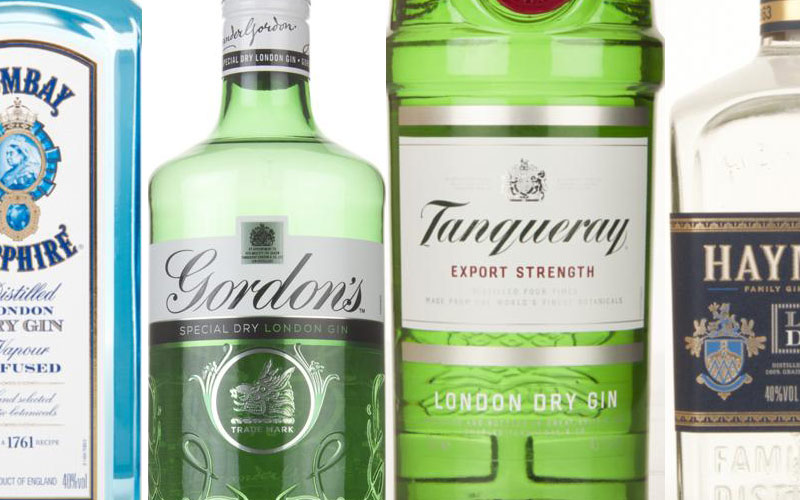
Specifically, the "Dry" part of the designation is legally defined: the final product may contain no more than 0.1 grams of sweetening per liter, expressed as invert sugar. In the industry, this tiny allowance is rarely used for flavor; rather, it is often utilized for "tracing." Large-scale producers like Gordon’s Gin use microscopic amounts of sugar-based dyes as a security measure to deter counterfeiters, allowing them to verify the authenticity of a bottle in the global market.
The Botanical Boundary: Plants, Fungi, and Animal Products
The legislation requires that the flavor of London Dry Gin be "imparted exclusively through the distillation… in the presence of all the natural plant materials used." This phrasing has created a unique set of challenges for modern craft distillers who experiment with non-traditional ingredients.
Because the law specifies "plant materials," there is a technical argument that gins using mushrooms (fungi) or honey (an animal byproduct) may not strictly qualify for the London Gin designation. A notable example is the "Pechuga" style gin, such as Portobello Road’s Director’s Cut, which involves suspending raw meat (typically poultry or ham) in the still during distillation. While this process uses vapor infusion—a standard distillation technique—the use of animal protein technically places it outside the "plant material" requirement of the London Dry category.
Furthermore, the "exclusively through distillation" rule is the reason why world-famous brands like Hendrick’s and Martin Miller’s cannot be labeled as London Dry. Hendrick’s adds essences of cucumber and Bulgarian rose after the distillation process is complete. Martin Miller’s distills its botanicals in England but ships the high-proof spirit to Iceland to be blended with glacial water, a process that involves a secondary addition of cucumber distillate. While both are high-quality "Distilled Gins," their post-still modifications disqualify them from the London Dry title.
Subjectivity in Flavor: The Predominant Juniper Problem
Despite the rigid technical requirements regarding ABV and additives, the regulation remains surprisingly vague regarding the actual flavor of the gin. The law states that the "taste must be predominantly that of juniper" (Juniperus communis L.). However, the term "predominant" is not numerically defined.
There are currently no legal requirements for a specific milligram-per-liter concentration of alpha-pinene (the primary aroma compound in juniper). This lack of a measurable standard has led to the rise of "Contemporary" or "New Western" gins, which use the London Dry process but emphasize citrus, floral, or spicy notes to the point where the juniper is barely detectable to the average palate.
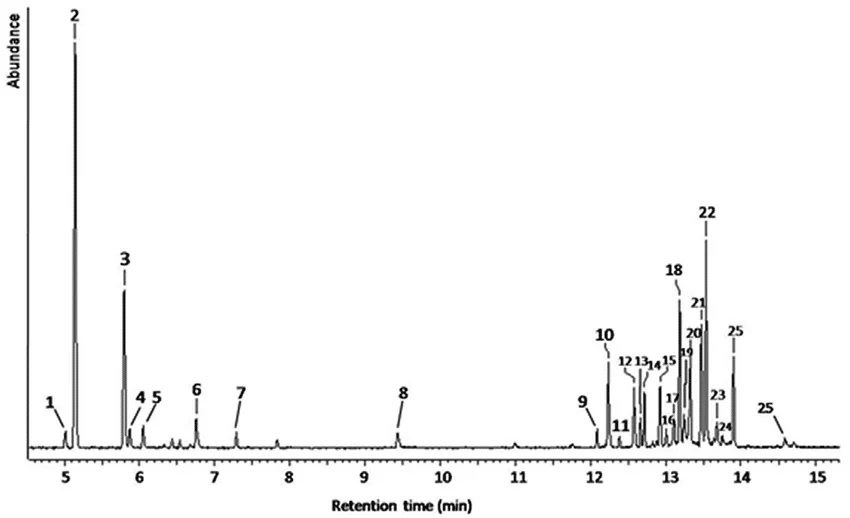
Some larger distilleries, such as Bombay Sapphire’s home at Laverstoke Mill, utilize Gas Chromatography-Mass Spectrometry (GC-MS) to ensure consistency. By analyzing the volatile organic compounds in each batch, they can create a chemical "fingerprint" that ensures the juniper profile remains consistent. However, for regulatory agencies, enforcing the "predominant juniper" clause remains a subjective exercise, often relying on sensory panels rather than laboratory data.
The Geography Myth and the Lack of GI Status
One of the most persistent misconceptions is that London Dry Gin must be made in London. In reality, it can be produced anywhere in the world, from Japan to the United States, provided the process requirements are met. This distinguishes it from spirits with a Geographical Indication (GI) status, such as Plymouth Gin (which held GI status until 2014), Gin de Mahón, or Vilnius Gin.
The industry has historically resisted seeking GI status for London Dry Gin. Obtaining a GI requires a "technical file" that outlines a specific geographic area and a highly standardized production method. Because the "London Dry" style is produced by thousands of distillers globally with vastly different recipes, reaching a consensus on a single technical file would be nearly impossible. Furthermore, many distillers are reluctant to disclose the exact proportions of their botanicals or the specifics of their maceration times, which would be required for GI protection. In effect, the current EU and UK regulations provide a "de facto" protection of the term as a quality standard without the restrictive geographic ties of a GI.
International Divergence: The United States Perspective
While the EU and UK maintain a strict hierarchy of Gin, Distilled Gin, and London Gin, the United States takes a more inclusive approach. The Alcohol and Tobacco Tax and Trade Bureau (TTB) defines gin more broadly as a spirit with a "main characteristic flavor derived from juniper berries."
The TTB does not formally recognize "London Dry" as a distinct regulatory category in the same way the EU does. In the U.S., the term is often treated as a "trade name" or a style descriptor rather than a legally enforced process designation. This discrepancy can lead to confusion in international trade, as a gin labeled "London Dry" in the U.S. might not meet the 0.1g/L sugar limit or the "no-additives" rule required for sale under that same name in Europe.
Broader Impact and Industry Implications
The rigor of the London Dry designation serves as a hallmark of quality in an increasingly crowded spirits market. By forbidding post-distillation additives, the category forces distillers to perfect their craft at the still. There is no "fixing" a bad batch of London Dry with sugar or extra flavorings; the balance must be achieved entirely through the interaction of heat, alcohol, and botanicals.
As the "gin-naissance" continues, the London Dry label remains a vital tool for consumer protection. It guarantees a spirit of high purity, free from artificial colorings and excessive sweeteners, with a methanol content of less than 5 grams per hectoliter—a safety standard that ensures the "wood alcohol" blindness of the 18th century remains a relic of the past. While the flavor profile of the category continues to expand, the process-based definition of London Dry Gin remains the gold standard for transparency and technical excellence in the world of botanical spirits.
