

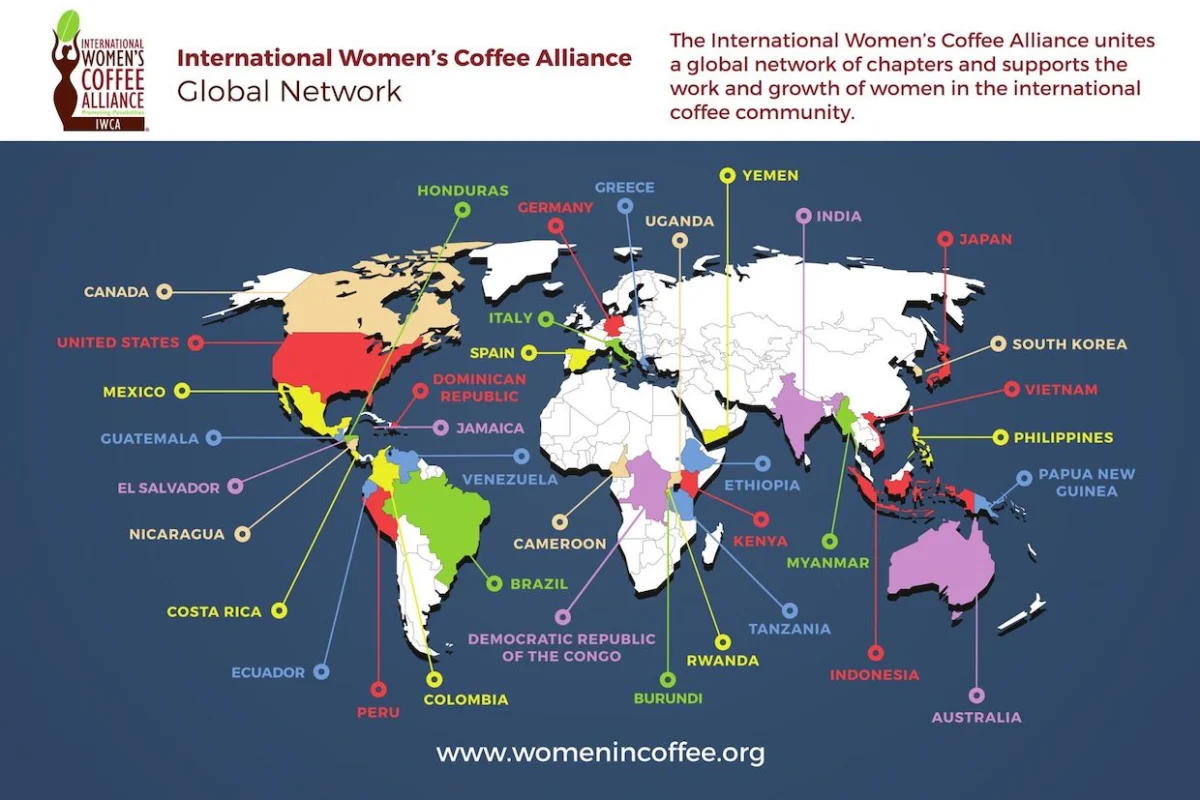
The International Women’s Coffee Alliance (IWCA) has officially expanded its global network with the establishment of its 37th chapter, IWCA Canada. This significant milestone, founded by Isabelle Huard, Elsa Ouagmi, and Muna Mohammed, with crucial support from Cheryl Hung and Cynthia Elie, marks a pivotal moment for women in the Canadian coffee industry. IWCA Global highlighted the new chapter’s core mission: "to connect the national coffee community and support women at every stage of the value chain, while building sustainable bridges to the global IWCA network," underscoring a commitment to social justice and women’s empowerment that resonates deeply within the sector.
IWCA Canada: A New Frontier for Women in Coffee
The formation of IWCA Canada arrives at a time when the global coffee industry is increasingly recognizing the indispensable role of women, not only as consumers and baristas but also as farmers, processors, exporters, and entrepreneurs. Historically, women have faced significant barriers within the coffee value chain, including limited access to land, credit, education, and market opportunities. The IWCA, with its overarching goal of empowering women in the coffee sector and advancing their economic, social, and professional development, provides a vital platform to address these disparities.
Canada, with its burgeoning specialty coffee scene and a strong emphasis on ethical sourcing and sustainability, presents a fertile ground for IWCA’s expansion. The founding members of IWCA Canada have identified a clear need to foster a more inclusive and equitable environment for women within the nation’s coffee ecosystem. Their mission extends beyond mere representation; it aims to create tangible support systems, mentorship programs, and collaborative opportunities that will empower Canadian women in coffee to thrive and lead.
The establishment of this chapter is particularly timely as global coffee production faces increasing challenges, from climate change impacts to market volatility. Empowering women, who often bear the brunt of these challenges in coffee-producing regions and within the supply chain, is not just a matter of equity but also a strategic imperative for the resilience and sustainability of the industry. IWCA Canada’s vision to build "sustainable bridges" suggests a forward-looking approach that will likely involve forging stronger connections between Canadian businesses and women-led initiatives in coffee-producing countries, thereby fostering mutual growth and understanding.
The Coffee Coalition for Racial Equity Launches "Grounds for Change" Fundraiser
In parallel, the U.S.-based Coffee Coalition for Racial Equity (CCRE) has initiated a crucial fundraising campaign named "Grounds for Change." This initiative aims to secure the financial resources necessary to sustain and expand CCRE’s vital work in addressing racial inequity within the coffee industry. The campaign has received a significant boost from an anonymous donor who has pledged to match all donations made in April, up to $10,000. This matching gift offers a compelling incentive for individuals and organizations to contribute, effectively doubling the impact of every dollar donated during this period.
The CCRE was established with the explicit purpose of dismantling systemic racism and promoting racial justice throughout the coffee sector. Their work encompasses a range of activities, including advocacy, education, research, and direct support for Black, Indigenous, and People of Color (BIPOC) individuals and communities within the coffee industry. The "Grounds for Change" campaign is designed to fuel these efforts, enabling CCRE to continue its multifaceted approach to creating a more equitable and inclusive coffee landscape.
The urgency of CCRE’s mission cannot be overstated. Data consistently shows disparities in representation, ownership, and economic opportunities for BIPOC individuals at various levels of the coffee supply chain. By launching "Grounds for Change," CCRE is actively engaging the broader coffee community in a collective effort to rectify these historical injustices. The success of this campaign will be instrumental in allowing CCRE to develop and implement programs that foster leadership, support entrepreneurship, and promote equitable practices, thereby creating a more just and sustainable future for all within the coffee world. The matching gift program, a common and effective fundraising strategy, underscores the organization’s commitment to maximizing donor contributions and demonstrates a strong belief in the widespread support for their cause.
UNDP and Bank of Agriculture Forge Partnership to Transform Nigeria’s Agricultural Sector
In a move with far-reaching implications for food security and rural development, the United Nations Development Programme (UNDP) and Nigeria’s Bank of Agriculture (BOA) have formalized a memorandum of understanding (MoU). This landmark agreement is set to accelerate the transformation of Nigeria’s vast agricultural sector, a cornerstone of the nation’s economy and a critical source of livelihood for millions. The UNDP emphasized that the partnership is strategically designed to shift agricultural support towards more integrated, investment-ready systems. This approach aims to bolster food security, enhance rural livelihoods, stimulate export growth, and build greater resilience against the impacts of climate change.
Nigeria, as Africa’s most populous nation, faces significant challenges in ensuring adequate food supply for its growing population. Agriculture remains the largest employer, yet productivity and efficiency often fall short of potential. This collaboration between the UNDP, a global leader in development, and the BOA, a key financial institution dedicated to agricultural development, signals a concerted effort to inject new dynamism into the sector. The focus on "investment-ready systems" suggests a move away from fragmented aid towards more structured, sustainable, and scalable agricultural financing and support mechanisms.
The implications of this MoU are substantial. By strengthening food security, Nigeria can reduce its reliance on imports and improve the nutritional well-being of its citizens. Enhanced rural livelihoods will contribute to poverty reduction and economic stability, potentially curbing rural-to-urban migration. Increased agricultural exports will bolster foreign exchange earnings, contributing to national economic growth. Crucially, the emphasis on climate resilience is paramount, given the increasing frequency and intensity of climate-related shocks, such as droughts and floods, that disproportionately affect agricultural communities. This partnership represents a significant step towards modernizing Nigeria’s agricultural landscape and positioning it for sustainable growth in the face of global challenges.
Nespresso Taps Pop Sensation Dua Lipa as Global Brand Ambassador
The global coffee giant Nespresso has announced a high-profile collaboration, naming international pop superstar Dua Lipa as its newest global brand ambassador. Lipa is set to be the face of a forthcoming campaign titled "Vertuo World," scheduled to launch on April 14th. This strategic partnership signifies Nespresso’s intent to leverage Lipa’s immense global appeal and cultural influence to connect with a younger, more diverse consumer base and to further amplify its brand messaging.
Dua Lipa, known for her chart-topping hits and dynamic stage presence, represents a significant cultural force. Her appointment as a Nespresso ambassador is a clear indication of the brand’s marketing strategy, which seeks to associate its premium coffee experience with contemporary lifestyle and aspirational values. The "Vertuo World" campaign is expected to showcase the Nespresso Vertuo system, a line of coffee machines known for their innovative brewing technology and a wide range of coffee capsules.
The choice of a globally recognized music artist like Lipa underscores the evolving landscape of brand ambassadorships in the consumer goods sector. Companies are increasingly turning to cultural influencers to build emotional connections with consumers and to translate product benefits into relatable lifestyle narratives. For Nespresso, this partnership is likely aimed at reinforcing its brand image as a sophisticated yet accessible choice for coffee lovers worldwide, while also driving sales and market penetration for its Vertuo offerings. The campaign’s launch date suggests a carefully timed rollout designed to capture consumer attention during a period of increased engagement.
Kicking Horse Coffee Appoints Andrea Chiaramello as President and CEO
Kicking Horse Coffee, a well-regarded Canadian roaster based in British Columbia, has appointed Andrea Chiaramello to the key leadership positions of President and Chief Executive Officer. Chiaramello brings a wealth of experience from the international coffee and beverage industry, most recently serving as Senior Vice President of North America Retail Sales for Lavazza. This appointment follows Lavazza’s acquisition of a majority stake in Kicking Horse Coffee in 2017, indicating a strategic move to integrate and further develop the brand under experienced leadership.
Chiaramello’s tenure at Lavazza, a global leader in the coffee sector, provided him with extensive insights into market dynamics, retail strategies, and brand management. His previous role involved overseeing significant sales operations across North America, a crucial market for both Lavazza and Kicking Horse Coffee. This background is expected to be invaluable as Kicking Horse Coffee navigates its next phase of growth, potentially focusing on expanding its market reach, enhancing its product offerings, and strengthening its brand presence.
The transition to new leadership at Kicking Horse Coffee, a company known for its commitment to organic, fair-trade, and specialty coffee, signals an ongoing evolution within the Lavazza portfolio. The investment in experienced leadership like Chiaramello underscores Lavazza’s long-term vision for Kicking Horse Coffee, aiming to capitalize on its established reputation for quality and ethical sourcing while leveraging Lavazza’s global infrastructure and expertise. This leadership change is likely to influence strategic decisions regarding product development, market expansion, and operational efficiency, all with the aim of solidifying Kicking Horse Coffee’s position in the competitive specialty coffee market.
BooKoo Unveils Themis Ultra Coffee Scale, Following Successful Kickstarter
BooKoo, a startup specializing in innovative coffee tools, has officially launched its Themis Ultra coffee scale, a product that garnered significant attention and funding through a successful Kickstarter campaign exceeding $470,000. The launch of the Themis Ultra signifies the company’s commitment to bringing advanced, user-friendly technology to the home brewing community. The scale is engineered with precision and durability in mind, featuring Bluetooth connectivity for seamless integration with brewing apps and an IP67-rated waterproof design, ensuring resilience against spills and splashes common in a busy kitchen environment.
The Themis Ultra is specified with a readability of 0.1 grams, a critical feature for baristas and home brewers who strive for meticulous accuracy in their measurements, essential for achieving optimal extraction and flavor profiles. Its capacity of 2,000 grams (approximately 70 ounces) makes it suitable for a wide range of brewing methods, from pour-overs to espresso preparation. The Bluetooth functionality allows for real-time data tracking and analysis, potentially enabling users to refine their techniques and achieve more consistent results.
The success of the Kickstarter campaign is a testament to the demand for high-quality, technologically advanced coffee brewing equipment. It also validates BooKoo’s product development strategy, which appears to be driven by direct consumer feedback and market needs. The launch of the Themis Ultra positions BooKoo as a notable player in the coffee accessories market, poised to offer tools that enhance the precision and enjoyment of home coffee brewing. This product launch is indicative of a broader trend in the coffee industry, where technology is increasingly being integrated to elevate the home brewing experience and cater to the growing segment of discerning coffee enthusiasts.
Brazil’s Robusta Cultivation: A Resilient Future Amidst Climate Change
A compelling report from The Guardian sheds light on the evolving landscape of coffee cultivation in Brazil, highlighting the efforts of small growers to elevate the reputation of Robusta coffee in the face of escalating climate pressures. As global coffee production grapples with the unpredictable impacts of climate change, particularly on the more delicate Arabica varieties, the heat-tolerant Robusta species is emerging as a potentially crucial component in meeting future demand. Brazilian growers are actively working to improve the quality and perception of Robusta, challenging its traditional association with lower-grade coffee.
Brazil is the world’s largest coffee producer, and historically, its production has been dominated by Arabica. However, changing weather patterns, including increased temperatures and unpredictable rainfall, are posing significant challenges to Arabica cultivation in many regions. Robusta, on the other hand, is known for its hardiness and ability to thrive in warmer climates, making it a more resilient option in a warming world. This inherent adaptability positions Robusta to play an increasingly important role in ensuring a stable global coffee supply.
The efforts to improve Robusta’s reputation are multifaceted. Growers are investing in better agricultural practices, improved processing techniques, and more rigorous quality control measures. This focus on quality aims to bridge the gap between Robusta and Arabica, demonstrating that high-quality, flavorful Robusta coffee can be produced. The Guardian’s report suggests that as climate change continues to impact coffee-growing regions worldwide, the investment in and appreciation for high-quality Robusta will likely grow. This shift could have significant economic implications for farmers, opening up new markets and opportunities for those who successfully adapt their cultivation and processing methods. The long-term implication is a potential recalibration of the global coffee market, with Robusta gaining a more prominent and respected position in the specialty coffee conversation.
Allpress Espresso Accelerates Global Expansion with New Roasteries
Allpress Espresso, a New Zealand-based specialty coffee roaster with a strong international presence, is undertaking a significant expansion of its global footprint. The company is investing in the establishment of new roasteries in London and Melbourne. This strategic move, spearheaded by its parent company Asahi Beverages, signals a commitment to deepening its market penetration and enhancing its operational capabilities in key international hubs. The London roastery, specifically, is slated to commence operations in Tottenham by mid-2026, marking a substantial physical presence in one of the world’s most dynamic urban markets.
Allpress Espresso has built its reputation on a foundation of high-quality, freshly roasted specialty coffee, distributed through its own cafes and supplied to wholesale partners. The establishment of new roasteries in major cities like London and Melbourne is a logical progression for a company focused on delivering fresh coffee. Proximity to markets allows for reduced transit times, ensuring that consumers and wholesale clients receive coffee at its peak freshness, a critical factor in the specialty coffee sector.
The investment in these new facilities reflects a robust growth trajectory for Allpress Espresso and underscores the increasing global demand for high-quality, ethically sourced coffee. Asahi Beverages’ backing provides the financial strength and strategic support necessary for such ambitious expansions. The opening of the Tottenham roastery in London, in particular, is expected to significantly bolster Allpress Espresso’s presence in the United Kingdom and Europe, potentially serving as a central hub for distribution and brand development in the region. This expansion is indicative of a broader trend among specialty coffee roasters to scale their operations strategically to meet growing international demand, while maintaining a commitment to the quality and freshness that defines their brands.
Community Coffee Appoints Kristi Crump to Key Commercial Leadership Role
Community Coffee, a prominent family-owned coffee company, has announced a significant leadership enhancement with the appointment of Kristi Crump to a dual role: Senior Vice President of Brand, Retail, and E-commerce, and Chief Commercial Officer. This expanded mandate signifies a strategic alignment of key commercial functions under Crump’s leadership, positioning her to drive the company’s overall commercial strategy with a focus on brand development, retail presence, and online sales.
Crump’s previous contributions to Community Coffee have been instrumental in shaping its brand identity and expanding its market reach. Her new role integrates oversight of the brand’s narrative, the strategic development of its retail footprint, and the optimization of its e-commerce operations. As Chief Commercial Officer, she will be responsible for a comprehensive commercial vision, ensuring that all aspects of the business work in synergy to achieve growth objectives and enhance customer engagement.
The consolidation of these responsibilities under a single executive highlights Community Coffee’s commitment to a cohesive and integrated commercial approach. In an increasingly competitive market, where brand perception, retail experience, and online presence are paramount, this strategic leadership structure is designed to foster agility and drive innovation. Crump’s expanded role is expected to lead to more streamlined decision-making and a more unified execution of the company’s commercial initiatives, ultimately aiming to strengthen Community Coffee’s position in the market and deepen its connection with consumers across all channels.
Sol-ti Strengthens Leadership Team with Five New Appointments
Sol-ti, a San Diego-based beverage supplement manufacturer, has announced a significant expansion of its leadership team, welcoming five new members. This strategic infusion of talent is designed to bolster the company’s operational capabilities, drive innovation, and expand its market reach, particularly within the coffee and cafe channel. The new appointments include Julia Cain as Vice President of Operations, Steven Cosgrove as Vice President of Innovation and Marketing, Clay Lichterman as Vice President of Business Development, Mark Putnam as Vice President of Coffee and Cafe Channel Development, and John Rossi as Senior Director of Supply Chain.
The addition of these experienced professionals signals Sol-ti’s ambition for growth and its commitment to enhancing its product development and market penetration strategies. The appointment of Julia Cain as VP of Operations and John Rossi as Senior Director of Supply Chain indicates a focus on optimizing production processes and ensuring a robust and efficient supply chain, crucial for a beverage manufacturer. Steven Cosgrove’s role in Innovation and Marketing will be vital in developing new product lines and communicating their value to consumers.
Of particular note is the appointment of Mark Putnam as Vice President of Coffee and Cafe Channel Development. This suggests a strategic emphasis on expanding Sol-ti’s presence within the coffee industry, likely through partnerships with cafes, roasters, and other coffee-related businesses. This move could involve the development of specialized beverage supplements tailored for the coffee market or integration of Sol-ti’s products into existing coffee offerings. The collective expertise of the new leadership team is poised to drive Sol-ti’s strategic objectives forward, contributing to its growth and market positioning in the competitive beverage sector.
Recent Developments and Industry Trends Highlighted
The coffee industry continues to be a dynamic landscape, marked by significant corporate developments, technological advancements, and evolving consumer preferences. In a major industry shift, coffee equipment giant Bunn, formerly Bunn-O-Matic, has been acquired by Ali Group. This acquisition brings together two established players in the beverage equipment sector, potentially leading to consolidated product lines and expanded service offerings. Ali Group’s acquisition of Bunn signifies a strategic consolidation within the equipment manufacturing segment, aiming to leverage combined strengths and market reach.
Further illustrating shifts in corporate leadership, Massimo Zanetti Beverage USA (MZB-USA) has appointed Matthew Smith as its new President. Smith, who previously held significant sales and marketing roles within the company, is expected to bring his expertise to a broader leadership capacity, overseeing U.S. operations. This promotion reflects an internal talent development strategy and a focus on experienced leadership to guide the company’s strategic direction.
Innovation in sustainability and product development is also a prominent theme. Recent research suggests that coffee byproducts, such as pulp, husk, silverskin, and spent grounds, hold potential for reducing plastic waste, particularly in applications like "plastic wrap." This exploration of waste valorization aligns with growing consumer and industry demand for sustainable solutions. Furthermore, advancements in processing techniques, such as CO2 fermentation, are showing promise in enhancing the quality scores of natural-process coffees, as demonstrated in a Colombian trial. This indicates a growing interest in scientific approaches to optimizing coffee flavor and quality.
In the realm of branding and design, Cravens Coffee in Spokane, Washington, has unveiled new package designs that emphasize authenticity and a connection to its roots, showcasing how brands are leveraging storytelling to resonate with consumers. The global nature of the coffee industry is also evident in the detailed guides emerging on specific regional coffee cultivars and varieties, such as a recent guide to Indonesian coffee, highlighting the diversity and complexity of coffee origins.
Finally, the practical applications of coffee waste are being explored in novel ways. Beyond its potential for reducing plastic, spent coffee grounds are being investigated for their efficacy in cleaning contaminated water, demonstrating a growing awareness of coffee grounds as a valuable resource with multiple applications. These diverse developments underscore the multifaceted nature of the coffee industry, encompassing corporate strategy, technological innovation, sustainability initiatives, and a continuous pursuit of quality and consumer engagement.
The coffee industry remains a complex ecosystem, influenced by global economic trends, environmental concerns, and evolving consumer tastes. The recent developments, from the expansion of global alliances like IWCA to the innovative use of coffee byproducts, paint a picture of a sector that is both resilient and forward-thinking, constantly adapting to meet the challenges and opportunities of the 21st century.
