

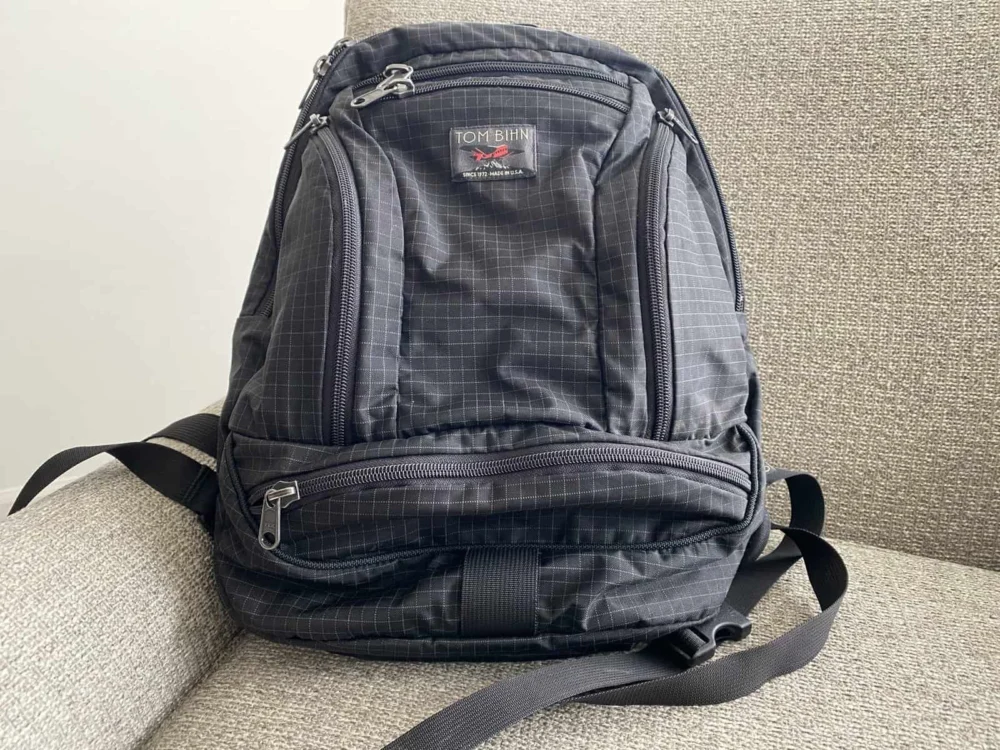
The recovery of a personal backpack, discovered more than three years after it was stolen during a residential burglary in Brooklyn, has brought new attention to the intersection of urban crime, digital communication barriers, and the long-term psychological impact of property loss. The item, a high-end travel bag belonging to former attorney and travel writer Jodi Ettenberg, was located by a maintenance worker on a rooftop in the Park Slope neighborhood, setting off a chain of events that culminated in the return of several personal effects, including prescription eyewear and expired financial documents.
The incident traces back to August 2017, a period that marked a significant turning point in Ettenberg’s life. While she was undergoing a medical procedure at a local hospital—a lumbar puncture that would ultimately lead to a chronic disability—the apartment she was occupying in Brooklyn was breached by an intruder. The timing of the theft was notably precise; security footage from the residence later confirmed that the burglar entered the premises at the exact moment the medical procedure began. Among the items taken was a Tom Bihn Synapse daybag, which the perpetrator reportedly used as a vessel to transport other stolen valuables, including a laptop, jewelry, and cash.
Chronology of the Recovery Process
The timeline of the bag’s recovery began in late 2020, though the owner did not become aware of its discovery until early 2021. According to reports, a homeowner residing a few doors down from the site of the original 2017 burglary hired a professional chimney sweep to perform routine maintenance. During the inspection of the roof, the worker discovered the backpack tucked into the side of a chimney vent. The location suggests the perpetrator may have discarded the bag shortly after the crime to avoid detection or to consolidate stolen goods into a less conspicuous container.
Upon receiving the bag from the chimney sweep, the homeowner identified the owner through credit cards found inside. She attempted to contact Ettenberg via Facebook in December 2020. However, due to the platform’s filtering algorithms, the message was relegated to a "Message Requests" folder, a secondary inbox often referred to as "Facebook purgatory" because it does not trigger standard notifications for users who are not direct connections. It was not until January 2021 that Ettenberg discovered the correspondence, leading to the eventual repatriation of the items.
Inventory of Recovered Items and Condition Reports
While the most high-value electronic and sentimental items from the 2017 burglary remain missing, the recovery provided a snapshot of the items deemed "low-value" by the thief. The inventory of the recovered Tom Bihn bag included:

- Two pairs of prescription glasses.
- Multiple expired credit cards.
- Personal business cards from professional networking events.
- Travel-sized toiletries, including hand lotion and over-the-counter analgesics.
- A blue die, which the owner noted was not her property, suggesting the bag may have been used to store items from other unknown sources.
The physical condition of the items reflected over 40 months of exposure to the elements on a New York City rooftop. The prescription glasses, while intact, suffered from warped frames due to the extreme temperature fluctuations characteristic of the Northeast climate. Professional assessment suggests that while the frames require significant adjustment by an optometrist, the lenses may still be functional. The backpack itself, constructed from ballistic nylon, demonstrated significant durability, surviving years of rain, snow, and UV exposure before being professionally cleaned and restored by a third party.
Crime Statistics and Urban Recovery Trends
The 2017 burglary occurred within the jurisdiction of the NYPD’s 78th Precinct, an area covering much of Park Slope. During that period, New York City was experiencing a complex shift in property crime rates. According to NYPD CompStat data, while overall major crimes in the city were trending downward in the late 2010s, "Burglary" and "Grand Larceny" remained persistent issues in residential neighborhoods.
The likelihood of recovering property stolen during a residential burglary is statistically low. National data from the Federal Bureau of Investigation (FBI) Uniform Crime Reporting (UCR) program typically indicates that the clearance rate for burglaries—the rate at which police identify a perpetrator and bring charges—hovers around 13% to 15%. The actual recovery of physical goods is even rarer, as most items are either fenced, discarded, or destroyed shortly after the commission of the crime. The discovery of a discarded bag three years later is categorized by forensic experts as an "outlier event," usually occurring only when items are hidden in inaccessible areas such as rooftops, crawlspaces, or ventilation shafts.
Digital Communication and the "Filtering" Barrier
The delay between the discovery of the bag and its return highlights a growing issue in modern lost-and-found efforts: the reliance on algorithmic social media filters. Facebook’s "Message Request" system is designed to protect users from spam and harassment by silencing messages from non-friends. However, this feature frequently obstructs legitimate attempts at returning lost property or relaying urgent information.
Technical analysts note that as physical addresses become less common for initial contact, digital "purgatory" becomes a significant hurdle. In this instance, the three-week delay in Ettenberg seeing the message was a direct result of platform architecture. This phenomenon has prompted some privacy advocates to suggest that social media platforms should implement "verified emergency" or "lost property" tags for messages to ensure they reach the intended recipient’s primary inbox.
Psychological Implications of Returned Property
For victims of crime, the return of stolen property is not always a purely positive experience. Psychologists specializing in victimology suggest that the sudden reappearance of items associated with a traumatic event can trigger "secondary distress." In Ettenberg’s case, the burglary was inextricably linked to a medical crisis that resulted in permanent life changes. The return of the bag acted as a catalyst for "resurfaced memories," forcing a confrontation with a period of life that had been largely compartmentalized.

The concept of "liminal weight"—the emotional burden carried by objects during periods of transition—is often cited in such cases. The backpack represented the "old" version of the owner: mobile, healthy, and actively traveling. Its return served as a physical bridge between her past life as a global traveler and her current reality managing a disability. Experts suggest that the act of "transmuting" the object—giving it away or repurposing it—can be a vital step in the healing process, allowing the victim to reclaim agency over the narrative of the crime.
Broader Impact and Industry Responses
The story has also resonated within the travel gear industry. Tom Bihn, the manufacturer of the backpack, gained attention for its corporate response to the initial 2017 incident. Upon learning of the burglary and the owner’s subsequent medical struggles, the company provided a replacement bag at no cost. This gesture is frequently cited in business ethics circles as an example of effective "community-centric" corporate social responsibility.
Furthermore, the durability of the gear—having survived three years of exposure on a Brooklyn rooftop—serves as a testament to the engineering of high-end outdoor and travel equipment. Materials such as 1050d ballistic nylon and YKK zippers, standard in premium bags, are designed for extreme wear, though they are rarely tested in the context of multi-year urban abandonment.
Conclusion and Future Outlook
The recovery of the Park Slope backpack serves as a rare conclusion to a cold case of residential theft. While the perpetrator was never apprehended and the most valuable assets were never found, the return of the bag’s remnants provided a form of closure that is seldom available to victims of urban crime.
For residents of New York City and other major metropolitan areas, the incident serves as a reminder of the importance of checking hidden digital folders and the potential for long-lost items to resurface in the most unexpected of locations. It also underscores the enduring nature of trauma associated with property crime, suggesting that the "value" of a stolen item is often less about its replacement cost and more about the time and circumstances it represents. As Ettenberg moves forward, the "llamafication" of the bag—a term used to describe its cleaning and being filled with supportive gifts by a friend—stands as a final symbolic act of turning a site of trauma into a vessel for community support.
