

The publishing industry in 2022 witnessed a significant shift toward literature that explores the intersection of global heritage, scientific inquiry, and the complexities of human resilience. As the global community navigated the lingering effects of a transformative pandemic, the year’s most notable releases focused heavily on the preservation of cultural identity and the reassessment of historical narratives. This shift is particularly evident in the curated selections of 2022, which highlight a growing demand for works that provide both technical depth and sociopolitical context.
Market Trends and Literary Chronology
The 2022 literary cycle was characterized by a resurgence in physical book sales and a heightened interest in "bibliotherapy"—books aimed at understanding trauma and chronic illness. According to industry data from NPD BookScan, while overall print volumes saw a slight stabilization following the 19% surge in 2021, the categories of narrative non-fiction and specialized cookbooks continued to outperform historical averages. The year began with a focus on historical reassessment, transitioned into a mid-year surge of scientific explorations of the natural world, and concluded with a robust selection of memoirs addressing the "toxic culture" of modern productivity.
This chronology reflects a broader societal movement toward introspection. In the first quarter of 2022, the market saw the release of works like Louisa Lim’s Indelible City, which provided a timely investigation into Hong Kong’s identity. By the third and fourth quarters, the focus shifted toward the science of the human mind and body, with titles such as Gabor Maté’s The Myth of Normal and Ed Yong’s An Immense World dominating the discourse.
Culinary Preservation and Global Gastronomy
The culinary literature of 2022 moved beyond mere recipe collections, evolving into a medium for cultural preservation and historical documentation. Naomi Duguid’s The Miracle of Salt: Recipes and Techniques to Preserve, Ferment, and Transform Your Food serves as a primary example of this trend. Duguid’s work examines the fundamental role of sodium chloride in human civilization, detailing techniques such as the brining of eggs and the production of miso and sauerkraut. Her analysis underscores salt’s utility not just as a seasoning, but as a technological catalyst for food security across continents.

Simultaneously, regional cuisines that have historically been underrepresented in Western media gained significant traction. Cynthia Shanmugalingam’s Rambutan: Recipes from Sri Lanka and Romy Gill’s On the Himalayan Trail: Recipes and Stories from Kashmir to Ladakh provided essential documentation of South Asian foodways. Gill’s work, in particular, highlights the fragility of cultural heritage in conflict zones. By documenting over 80 recipes from the Kashmir and Ladakh regions, Gill aims to preserve the culinary identity of an area frequently destabilized by political uncertainty.
The trend toward comprehensive culinary exploration was further solidified by the release of The Explorer’s Library by the Atlas Obscura and Gastro Obscura teams. This two-volume set emphasizes the "weird and wild" aspects of global food and travel, catering to a market segment that increasingly values experiential knowledge over traditional tourism.
Evolution of Fiction and Narrative Retellings
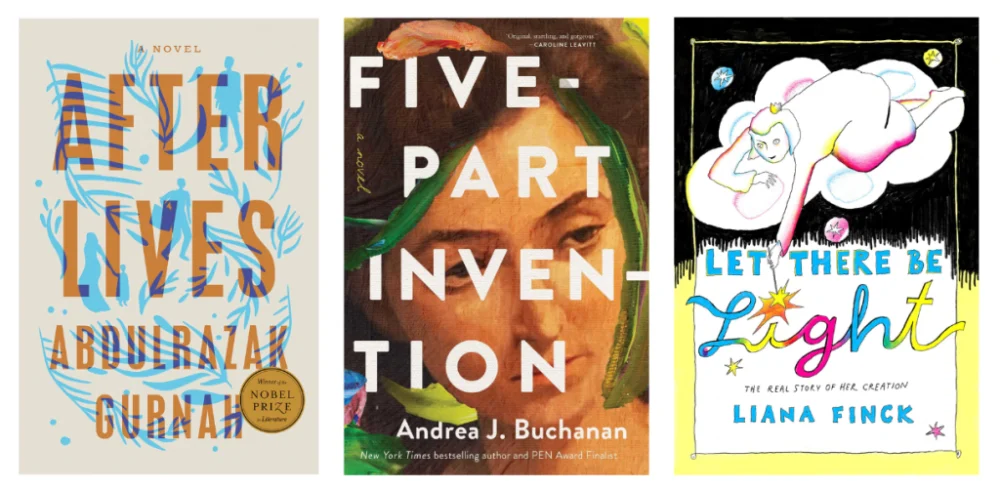
The fiction market in 2022 was marked by a preference for stories that bridge the gap between personal trauma and broader historical movements. Abdulrazak Gurnah’s Afterlives, while originally released in 2020, saw its North American paperback debut in 2022, reaching a wider audience following Gurnah’s Nobel Prize in Literature. The novel provides a critical examination of German colonial rule in East Africa, following characters through the transition to independence in what is now Tanzania.
In the realm of contemporary fiction, Andrea J. Buchanan’s Five-Part Invention explores the concept of intergenerational trauma through five generations of women. This narrative structure reflects a growing literary interest in epigenetics—the study of how environmental factors and trauma can influence gene expression across generations.
Liana Finck’s Let There Be Light: The Real Story of Her Creation represents the year’s most significant contribution to the graphic novel and satirical retelling genres. By reimagining the Book of Genesis from a female perspective and setting Abraham’s story in modern-day New York City, Finck uses humor to prompt inquiries into human behavior and the weight of ancestral "baggage."

Scientific Inquiry and the Sensory Experience
Non-fiction in 2022 was dominated by works that challenged human-centric views of reality. Ed Yong’s An Immense World: How Animal Senses Reveal the Hidden Realms Around Us became a cornerstone of this movement. Yong, a Pulitzer Prize winner, utilizes scientific data to explain the "Umwelt"—the unique sensory world inhabited by different species. The book details how animals perceive reality through vibrations, magnetic fields, and complex olfactory signals, encouraging readers to recognize the limitations of human perception.
Adriana Barton’s Wired for Music: A Search for Health and Joy Through the Science of Sound further expanded the year’s focus on sensory science. Barton’s investigation into neurobiology reveals that music serves as a profound tool for managing pain, improving sleep, and enhancing athletic performance. This work aligns with a 2022 trend in which "wellness" literature began to rely more heavily on peer-reviewed scientific data rather than anecdotal evidence.
The year also saw a critical look at the mechanisms of belief. David McRaney’s How Minds Change: The Surprising Science of Belief, Opinion, and Persuasion analyzes the psychology behind shifts in perspective. In a period defined by political polarization and the rise of conspiracy theories, McRaney’s work offers a fact-based framework for understanding how empathy and rapport are more effective tools for persuasion than logic alone.
Historical Reassessment and Colonial Legacies
Journalistic non-fiction in 2022 continued to dismantle colonial myths. Candice Millard’s River of the Gods: Genius, Courage, and Betrayal in the Search for the Source of the Nile re-examines the 19th-century quest by Richard Burton and John Hanning Speke. Millard’s narrative is notable for its inclusion of Sidi Mubarak Bombay, an enslaved man whose navigational expertise was essential to the expedition’s survival. By centering Bombay’s contributions, Millard provides a more accurate historical record that acknowledges the often-erased roles of indigenous and enslaved people in global exploration.
Similarly, Louisa Lim’s Indelible City: Dispossession and Defiance in Hong Kong offers a dual perspective on the city’s history, blending memoir with investigative reporting. Lim challenges both the British colonial narrative and the current Chinese government’s historical myths, documenting the struggle for cultural identity among Hong Kong’s residents.

Psychology, Trauma, and the Chronic Illness Crisis
A significant portion of 2022’s most impactful literature addressed the intersection of health, trauma, and societal structures. Gabor Maté’s The Myth of Normal: Trauma, Illness, and Healing in a Toxic Culture emerged as a definitive text in this category. Maté argues that Western medicine often fails by treating symptoms in isolation rather than addressing the environmental and emotional trauma that serves as an "epigenetic trigger" for disease.
Meghan O’Rourke’s The Invisible Kingdom: Reimagining Chronic Illness provided a timely analysis of the challenges faced by patients with poorly understood conditions. Released amidst the rise of Long COVID, O’Rourke’s book highlights the systemic marginalization of patients within the Western medical framework. Her work has been praised by medical professionals and patients alike for its rigorous documentation of the "gauntlet" of chronic disease.
The exploration of trauma extended into the realm of ancestry with Maud Newton’s Ancestor Trouble: A Reckoning and a Reconciliation. Newton’s investigation into her family’s history—which includes institutionalization and violence—serves as a case study for how individuals can seek release from inherited legacies.
Broader Impact and Implications
The literary output of 2022 suggests a global audience that is increasingly comfortable with complexity and nuance. The success of books like Susan Cain’s Bittersweet: How Sorrow and Longing Make Us Whole and Yung Pueblo’s Lighter indicates a shift away from "toxic positivity" toward a more balanced understanding of the human experience. These works argue that the acknowledgment of grief and pain is a prerequisite for genuine connection and healing.
Furthermore, Alice Wong’s Year of the Tiger: An Activist’s Life brought essential focus to the issue of accessibility and disability rights. Wong’s collection of creative ephemera challenges the "inspiring" disability memoir trope, instead demanding institutional change and systemic empathy.

In conclusion, the books of 2022 reflect a year of profound intellectual curiosity. From the science of animal senses to the preservation of Sri Lankan recipes and the dismantling of colonial history, these works provide a roadmap for navigating a world in transition. The enduring popularity of these titles suggests that readers are seeking literature that not only informs but also provides the tools necessary for personal and societal evolution. As the industry moves forward, the influence of 2022’s focus on trauma-informed narratives and scientific literacy is expected to shape the publishing landscape for years to come.
