

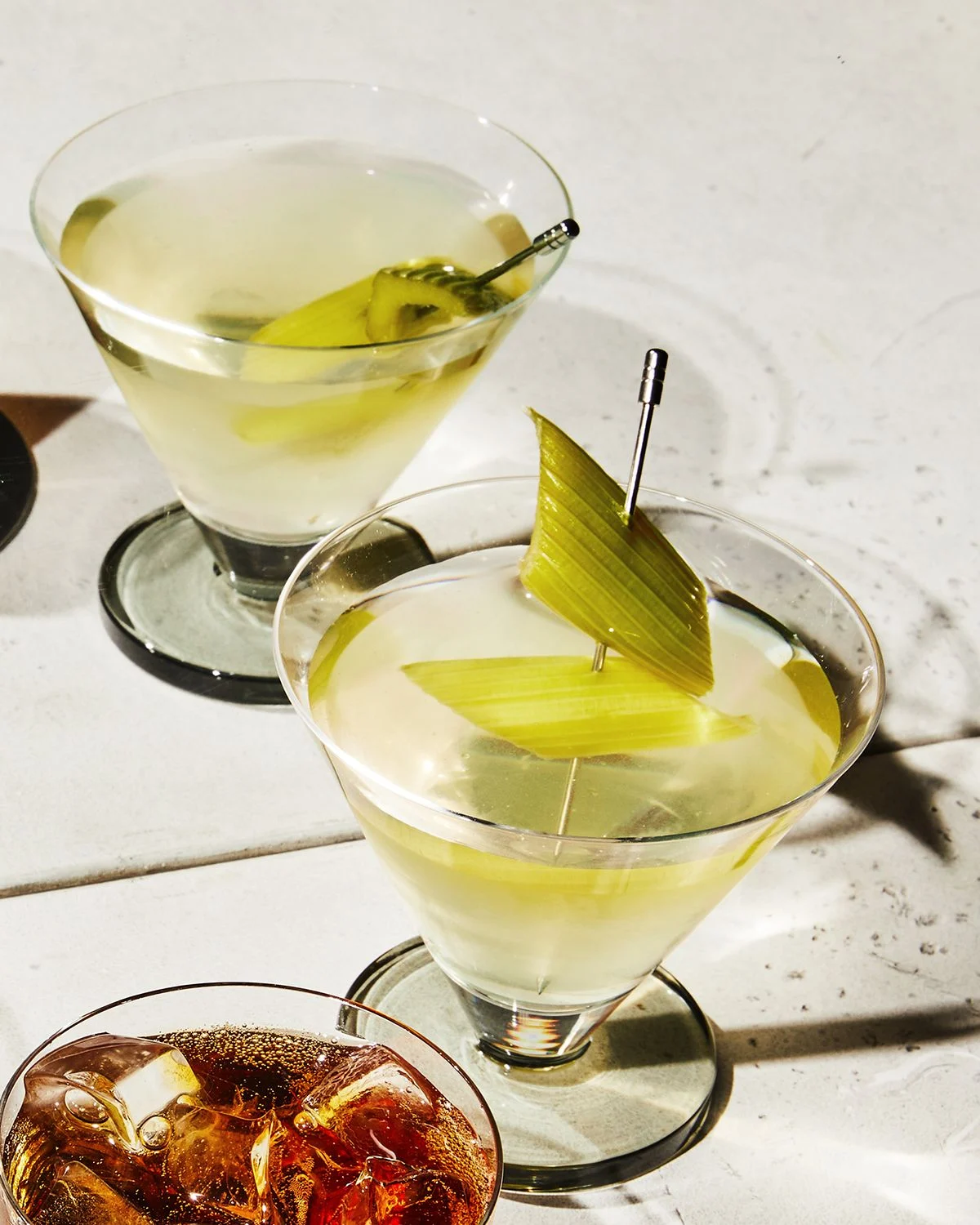
A contemporary reinterpretation of the classic Gibson cocktail introduces homemade pickled celery as a distinctive garnish, offering a clean, briny profile enriched by complex pickling spices and a bright, leafy essence. This innovative approach redefines the savory martini, traditionally distinguished by a cocktail onion in place of an olive, by leveraging an ingredient with deep historical ties to American hospitality. The inclusion of pickled celery not only elevates the cocktail’s flavor spectrum but also resonates with a broader culinary movement that values artisanal preparation, ingredient seasonality, and the thoughtful reinvention of time-honored traditions.
The Gibson’s Enduring Legacy and Its Modern Evolution
The Gibson cocktail holds a revered position within the pantheon of classic cocktails, a sophisticated variation of the ubiquitous martini. Its origins are somewhat shrouded in anecdotal history, with popular lore attributing its creation to San Francisco businessman Walter D. K. Gibson in the late 19th or early 20th century. Another account suggests its naming after Charles Dana Gibson, a prominent illustrator known for the "Gibson Girl" depictions, who reportedly requested a martini with an onion instead of an olive. Regardless of its precise genesis, the Gibson quickly distinguished itself by substituting the martini’s typical olive or lemon twist with a cocktail onion, imparting a subtle allium piquancy that complements the gin (or vodka) and dry vermouth base. This seemingly minor alteration significantly shifts the cocktail’s character, appealing to palates that favor a sharper, more savory finish.
Throughout the 20th century, the Gibson maintained its status as a discerning choice among cocktail connoisseurs, frequently appearing in films, literature, and high-society gatherings as a symbol of understated elegance. Its minimalist composition — typically 2.5 ounces of gin, 0.5 ounces of dry vermouth, stirred with ice, strained, and garnished — belies a complexity that master bartenders meticulously balance. The current culinary landscape, however, continually seeks to innovate within established frameworks. This latest rendition, incorporating homemade pickled celery, marks a deliberate step away from the conventional onion, introducing a fresh botanical dimension. The pickling process infuses the celery with a nuanced blend of spices, such as dill, mustard seed, coriander, and peppercorns, transforming a familiar vegetable into an aromatic and textural counterpoint to the spirit.
Celery: A Staple of American Hospitality Through the Ages
The integration of celery into this modern Gibson is particularly noteworthy given the vegetable’s long and varied history in American entertaining. Far from being merely a garnish, celery has, for generations, held a prominent place at social gatherings, evolving from a symbol of Victorian-era affluence to a wholesome component of mid-century relish trays and a ubiquitous snack at family events.
In the late 19th and early 20th centuries, during the opulent Victorian era, celery was considered a luxury item, particularly in colder climates where its cultivation was challenging. Special "celery vases" made of cut glass, silver, or ceramic were designed to display whole stalks of celery, often chilled in ice water, as a centerpiece on dining tables. This elaborate presentation underscored the host’s wealth and sophistication, as celery was expensive and considered a delicacy. It was often served with salt as an appetizer or palate cleanser, its crisp texture and mild, earthy flavor a welcome contrast to rich Victorian meals. The presence of a celery vase was as much a status symbol as fine china or silverware, reflecting an era where dining rituals were highly formalized and imbued with social meaning.
By the mid-20th century, as agricultural practices advanced and refrigeration became widespread, celery became more accessible and affordable. Its role in hospitality shifted from an exclusive delicacy to a wholesome, everyday vegetable. This period saw the rise of the "relish tray" or "crudités platter" as a staple at American parties, particularly during the post-World War II suburban boom. These trays typically featured an assortment of raw vegetables like carrots, radishes, and, most prominently, celery sticks, often served alongside dips like ranch or onion dip. Celery’s crispness and refreshing qualities made it an ideal accompaniment to richer party foods, functioning as a palate cleanser and a lighter snack option. Its presence was indicative of a more casual, family-centric style of entertaining that prioritized abundance and variety.
This tradition extended into the latter part of the 20th century, as exemplified by observations from family gatherings in the 1990s in western New York. At these events, large stalks of celery were commonly presented in pitchers of salt water, centrally located on tables. This practice served a dual purpose: providing a convenient, hydrating snack that offered a refreshing counterpoint to other dishes, and acting as an unpretentious yet effective centerpiece. The inherent simplicity and accessibility of celery made it an enduring fixture, a testament to its practical utility and broad appeal across different social strata and eras.
The Art and Science of Pickling: A Culinary Renaissance
The preparation of pickled celery, central to this Gibson variation, taps into the ancient culinary art and science of pickling. This method of food preservation, dating back thousands of years, has been independently developed by cultures worldwide, driven by the need to extend the shelf life of seasonal produce. From the fermented vegetables of East Asia (e.g., kimchi) to the brined cucumbers of Eastern Europe (e.g., dill pickles), pickling is a global phenomenon.
At its core, pickling involves preserving food in an acidic solution, typically vinegar, or through anaerobic fermentation in brine. Vinegar pickling, the method most commonly used for quick pickles like the celery in question, involves submerging vegetables in a heated mixture of vinegar, water, salt, sugar, and various spices. The acetic acid in vinegar inhibits the growth of spoilage-causing microorganisms, while the salt draws out moisture and adds flavor. The sugar balances the acidity, and the chosen spices impart distinct aromatic profiles. For celery, common pickling spices include mustard seeds, dill seeds, coriander seeds, black peppercorns, and sometimes a bay leaf or chili flake for a hint of heat.
The resurgence of interest in homemade and artisanal pickling in recent decades can be attributed to several factors. There is a growing consumer demand for foods with transparent ingredient lists and fewer artificial additives. The "farm-to-table" movement has encouraged home cooks and professional chefs alike to utilize fresh, local produce and to explore traditional preservation techniques. Moreover, the act of pickling itself is often viewed as a rewarding culinary craft, allowing for creative experimentation with flavor combinations and spice blends. This movement has not only brought traditional pickles back into vogue but has also inspired innovations, such as pickling lesser-known vegetables or incorporating pickled elements into contemporary dishes and cocktails.
For the pickled celery Gibson, the pickling process transforms the celery from a crisp, mild vegetable into a garnish with enhanced flavor complexity and a unique textural integrity. The brine penetrates the celery, making it tender yet still firm, while the spices impart a savory, tangy, and subtly aromatic quality that interacts dynamically with the botanical notes of gin and the herbal undertones of vermouth.
Crafting the Pickled Celery Gibson: A Detailed Approach
The proposed recipe for the pickled celery Gibson centers on the quality of its key ingredient: the homemade pickled celery. The preparation is described as "very easy," underscoring the accessibility of artisanal techniques to home enthusiasts. The core components of the pickling liquid typically include white vinegar (or apple cider vinegar for a softer edge), water, salt, and sugar, brought to a simmer to dissolve the solids before being poured over fresh celery stalks. The magic, however, lies in the specific blend of pickling spices. A thoughtful combination—perhaps a mix of dill seed, mustard seed, coriander seed, and black peppercorns—is crucial for achieving the desired depth of flavor that distinguishes this garnish from a simple raw celery stick.
Once prepared and cooled, the pickled celery acquires a distinctive character: clean, bright, and assertively briny, yet with an underlying sweetness and the aromatic complexity of the spices. This profile is ideally suited to complement the crisp, often juniper-forward notes of gin in a Gibson. The suggestion to incorporate celery leaves, if available, further enhances the cocktail’s fresh, verdant essence. Celery leaves, often discarded, possess a more concentrated, peppery celery flavor than the stalks and can contribute an additional layer of brightness and aroma when stirred into the drink or used as a subtle garnish alongside the pickled stalk. This detail highlights a broader trend in modern mixology towards minimizing waste and utilizing every part of an ingredient for maximum flavor extraction.
Beyond its role as a Gibson garnish, the homemade pickled celery demonstrates remarkable versatility. Its function extends to other cocktail applications, such as a robust accompaniment to a Bloody Mary, where it can be skewered with a cornichon and a cherry tomato, offering a tangy counterpoint to the spicy, savory beverage. Furthermore, it can be integrated into canapés, adding a zesty crunch to small bites, or simply served on its own as a palate-cleansing snack. This multi-functionality underscores the value proposition of artisanal ingredients, which can elevate multiple culinary experiences.
Expert Perspectives and Industry Trends
The emergence of cocktails like the pickled celery Gibson reflects several significant trends within the global mixology and culinary industries. Mixologists and food critics often observe a growing consumer appetite for savory cocktails, moving beyond traditionally sweet or sour profiles. "Savory elements like brines, vegetable infusions, and umami-rich ingredients are becoming increasingly popular," notes a hypothetical leading mixologist, "They offer a depth and complexity that can be incredibly satisfying, especially when paired with food."
The "garden-to-glass" movement, emphasizing fresh, seasonal, and often locally sourced produce in cocktails, finds a natural expression in this recipe. Using fresh celery and pickling it in-house aligns perfectly with this ethos, providing a transparent and high-quality ingredient. "Custom infusions and homemade garnishes are what truly differentiate a bar program today," comments a hypothetical prominent food journalist. "Bartenders are becoming more like chefs, focusing on ingredient quality and bespoke preparations." This artisanal approach allows for greater control over flavor profiles and ensures a unique offering that cannot be replicated with mass-produced ingredients.
Moreover, the increasing preference for healthful and vegetable-forward options in diets is subtly influencing beverage choices. While a cocktail is an indulgence, incorporating a vegetable-based garnish like pickled celery can appeal to consumers who are more conscious about their food choices, even within the realm of alcoholic beverages. The perception of freshness and natural ingredients contributes to a more elevated and thoughtful drinking experience. The potential implications for the industry are manifold. Bars and restaurants that embrace such innovations can differentiate themselves in a competitive market, attracting patrons seeking unique and high-quality experiences. It may also inspire a broader adoption of similar techniques, leading to an expansion of artisanal pickled products and specialized cocktail ingredients in retail and foodservice.
The Broader Culinary Landscape: Reinventing Classics
The pickled celery Gibson serves as a microcosm for a broader culinary trend: the thoughtful reinvention of classics. In an era where culinary boundaries are constantly being pushed, chefs and bartenders are engaging in a delicate balance between honoring tradition and embracing innovation. The enduring popularity of classic cocktails and dishes provides a stable foundation, but contemporary palates and ingredient availability necessitate continuous evolution.
This process involves deconstructing familiar flavors and textures, identifying opportunities for enhancement or surprise, and often reintroducing forgotten techniques or ingredients. The success of such reinventions often lies in their ability to maintain the essence of the original while introducing a novel, yet harmonious, element. In the case of the Gibson, the fundamental gin-and-vermouth structure remains, but the garnish—a critical component of any martini-style cocktail—is reimagined with a homemade, flavor-packed alternative. This not only breathes new life into an established drink but also educates consumers about the versatility of humble ingredients like celery and the rich heritage of food preservation.
Ultimately, the pickled celery Gibson is more than just a cocktail; it is a narrative of culinary evolution, a testament to the enduring appeal of classic American hospitality, and a reflection of contemporary desires for quality, craftsmanship, and innovation in our food and drink. It bridges centuries of tradition with modern sensibilities, offering a sophisticated and uniquely flavored experience that is both familiar and excitingly new.
