

The European Union’s 2019 overhaul of spirit drink regulations, specifically Regulation 2019/787 and its subsequent 2021 amendments, has reinforced a long-standing but frequently misunderstood reality of the spirits industry: "London Dry Gin" is a technical process designation rather than a geographic or flavor-based one. Despite the name, the designation does not require the spirit to be produced in London, nor does it mandate a specific sensory profile beyond a "predominant" taste of juniper. Instead, it serves as a rigorous quality control framework that dictates how the spirit is distilled, what can be added to it, and the purity of its base components. This regulatory landscape remains a cornerstone of the global spirits trade, even as the United Kingdom maintains its own version of these rules following its departure from the EU.
The Technical Framework of Production
To understand the modern "London Gin" designation, one must first look at the broader category of "Distilled Gin," as defined under Section 21.a of Regulation 2019/787. All London Gins are distilled gins, but not all distilled gins qualify as London Gins. The production process begins with a base spirit of agricultural origin—typically grain, but potentially sugar beet, grapes, or even whey—that must be distilled to an initial alcoholic strength of at least 96% alcohol by volume (ABV). This high threshold ensures that the base spirit is a "neutral" alcohol, stripped of the heavy congeners and impurities that characterized lower-quality spirits of the past.
The defining stage of production involves the redistillation of this neutral spirit in the presence of Juniperus communis L. and other natural botanicals. While "Distilled Gin" allows for the addition of flavoring substances or preparations after this redistillation, the London Gin designation is far more restrictive. For a bottle to bear the "London" name, all flavors must be imparted exclusively through the distillation process. No flavorings can be added to the final distillate. Furthermore, the resulting spirit must come off the still at no less than 70% ABV.
The "Dry" component of the name refers specifically to sweetening. Under EU law, a distilled gin may be designated as "dry" if it contains no more than 0.1 grams of sweetening products per liter of the final product, expressed as invert sugar. While a standard London Gin is already restricted in what can be added, the law codifies that it must meet this dryness threshold, effectively making "London Gin" and "London Dry Gin" synonymous under the 2019/787 framework.
A Chronology of Purity: From the Gin Craze to the Column Still
The stringent requirements for 96% ABV base spirits are a direct response to the volatile and often dangerous history of gin production. During the 18th-century "Gin Craze" in London, the spirit was frequently a crude, unrefined product distilled from poor-quality grain or waste materials. To mask the harsh, often putrid flavors of these "rotgut" spirits, producers would add heavy amounts of sugar, turpentine, or sulfuric acid.
The technological turning point arrived in the 1830s with the refinement of the continuous column still by Aeneas Coffey. Unlike the traditional pot still, which produces a lower-proof spirit with more "character" (and more impurities), the column still allowed for the production of highly rectified, near-pure ethanol. This innovation birthed the "London Dry" style, as distillers no longer needed to add sugar or masking agents to hide the flaws of the base spirit.
Historically, the designation also served as a safety guarantee. Distillation produces both ethanol and methanol; the latter is a toxic "wood alcohol" that can cause blindness or death. While ethanol boils at 78.2°C, methanol boils at 64.7°C. The London Gin specification limits methanol content to a maximum of 5 grams per hectoliter of 100% vol. alcohol. While modern distillation technology makes such contamination rare, the regulation remains a vestigial but important marker of consumer safety and chemical purity.
The Juniper Debate and the Subjectivity of Flavor
Perhaps the most contentious aspect of the current legislation is the "predominant flavor" clause. Regulation 20.c states that for any product to be labeled as gin, the taste must be "predominantly that of juniper." This requirement is inherited by both Distilled Gin and London Gin. However, the law provides no numerical or chemical metric for what constitutes "predominant."
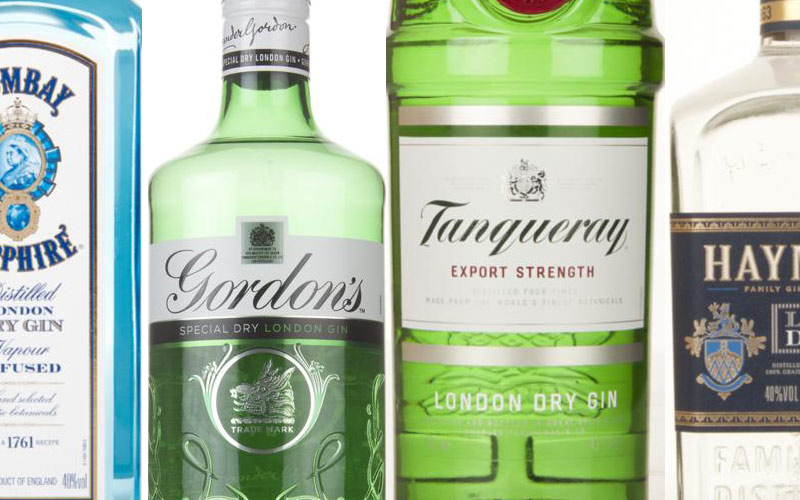
In the absence of a legal definition for "juniper-forward," the industry has seen a proliferation of "contemporary" or "New Western" style gins. These spirits often feature heavy notes of citrus, florals, or spice, pushing juniper into the background. While purists argue that many of these products should not qualify as London Dry, the lack of enforceable flavor standards makes the designation largely a matter of process.
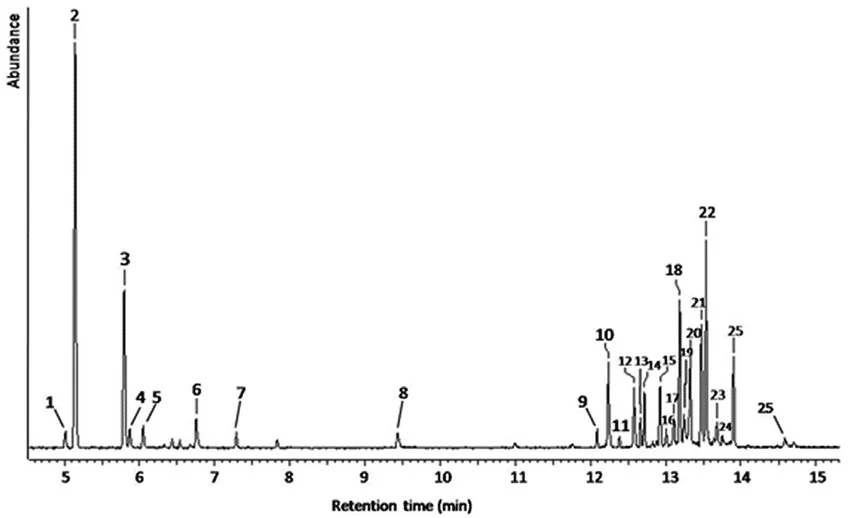
To maintain consistency, large-scale distillers like Bombay Sapphire at Laverstoke Mill utilize Gas Chromatography-Mass Spectrometry (GC-MS). This technology allows chemists to identify the volatile compounds in a gin sample—such as alpha-Pinene and limonene—creating a chemical "fingerprint." By comparing new batches against a standard-bearer, distillers ensure that despite the natural variance in botanical harvests, the product remains consistent. However, such technology is expensive and remains out of reach for many boutique distilleries and regulatory agencies, leaving the "predominant juniper" rule largely symbolic.
The Botanical Restriction: Plants vs. Others
A nuanced but critical detail in the London Gin designation is the requirement that flavor be imparted through the distillation of "natural plant materials." This phrasing creates a technical barrier for experimental distillers. For instance, spirits distilled with mushrooms (which are fungi, not plants) or honey (an animal byproduct) technically fall outside the strict definition of London Gin, even if they follow every other distillation rule.
A notable example of this boundary is the "Pechuga-style" gin. Inspired by mezcal production, some distillers suspend raw meat, such as poultry or ham, in the still to allow the vapors to pass through it. Because the flavor is derived from an animal source rather than a plant, these spirits cannot be legally designated as London Dry Gin in the EU or the UK. This also applies to popular brands like Hendrick’s or Martin Miller’s. Hendrick’s adds essences of Bulgarian rose and cucumber after distillation, while Martin Miller’s is shipped to Iceland to be blended with glacial water after its initial distillation. Because these flavors or processes occur post-still, they are classified as "Distilled Gins" rather than "London Dry."
The Role of Sugar: Tracers and Anti-Counterfeiting
A common point of confusion is why any sugar is allowed in a "dry" spirit. The 0.1 gram per liter allowance is rarely used for sweetening. Instead, it often facilitates the use of "sugar dyes" or chemical tracers. Large global brands, such as Gordon’s, utilize these microscopic tracers to deter counterfeiters. By adding a specific, legally permitted "marker" to the spirit, companies can verify the authenticity of a bottle in the field. Without this small allowance for additives, these anti-fraud measures would be technically illegal under the London Dry designation.
Global Variations and the Status of "London"
While the EU and UK share a similar technical definition, other markets operate under different rules. In the United States, the Alcohol and Tobacco Tax and Trade Bureau (TTB) does not recognize "London Dry" as a distinct legal category with the same level of granularity as the EU. The TTB defines gin more broadly as a spirit with a characteristic flavor derived from juniper berries, bottled at not less than 40% ABV. This lack of international harmony means that a spirit labeled "London Dry" in the U.S. might not meet the strict distillation requirements of the EU.
Furthermore, the industry has debated whether "London Dry Gin" should receive Geographical Indication (GI) status, similar to Champagne or Scotch Whisky. Efforts to do so, most notably around 2015, were ultimately unsuccessful. GI status requires a "technical file" that specifies the exact geographic region of production and highly specific methods. Given that London Dry Gin is produced everywhere from Japan to South Africa, and that distillers are protective of their proprietary botanical blends, the industry could not reach a consensus. The current EU regulation is thus a "de facto" encoding of the term—protecting the process while allowing for geographic flexibility.
Industry Impact and Future Outlook
The 2019/787 legislation has succeeded in preserving the prestige of the London Dry name by ensuring it remains a hallmark of distillation excellence. However, as the category of "Gin" continues to expand into flavored liqueurs and "pink gins," the distinction between a "London Dry" and a "Distilled Gin" has become a vital tool for consumer education.
Industry analysts suggest that the next frontier for gin regulation will likely involve more concrete measures for flavor profile testing. As consumer requests for transparency increase, the "predominant juniper" clause may eventually move from a subjective sensory test to a measurable chemical standard. For now, the London Dry designation remains the "gold standard" for purists—a testament to a 19th-century technological revolution that transformed a rough, sweetened medicine into one of the world’s most sophisticated and strictly regulated spirits.
