

The contemporary bar landscape recognizes the Purl as a straightforward, rugged combination of British ale fortified with a measure of gin. Historically linked to the public houses of 18th and 19th-century Britain, the modern iteration typically utilizes an Old Tom style gin—a botanically intense, slightly sweetened precursor to London Dry—paired with a traditional British Bitter served at cellar temperature. While this two-ingredient specification dominates modern mixology guides, historical records reveal a significantly more intricate lineage. Far from being a mere "beer cocktail," the Purl originated as a medicinal necessity during the Great Plague of London, evolved into a complex, spiced "flip" during the Victorian era, and eventually underwent a radical simplification that stripped away its original herbal identity.
The Medicinal Genesis: Wormwood and the Great Plague
The earliest iterations of the Purl bear little resemblance to the gin-based drinks of today. In 17th-century London, the term "Purl" referred to an infusion of wormwood (Artemisia absinthium) in either ale or wine. This bitter botanical was prized for its purported antiseptic and digestive properties. The association between the Purl and public health became codified during the catastrophic outbreak of the bubonic plague in 1665.
A primary historical text from that year, titled Directions for the Prevention and Cure of the Plague Fitted for the Poorer Sort, specifically advocated for the consumption of the beverage. The manual suggested that citizens partake in "a draught or two of Purle," particularly in the morning, as a prophylactic measure against infection. The targeting of this advice toward the "poorer sort" indicates that Purl was an accessible, low-cost commodity. During this era, the beverage was effectively a bittered herbal beer, serving as a rudimentary health tonic for a population living in constant fear of contagion.
The use of wormwood was not limited to ale. Historical records from 1684, specifically Aphorisms upon the New Way of Improving Cyder, suggest that the cider industry also utilized the Purl method. The text affirms that "purl made with cider" was considered just as efficacious as the ale-based version, demonstrating that "Purl" was initially a category of herbal infusion rather than a specific recipe tied to a single type of alcohol. By 1690, An English Herbal continued to document the benefits of wormwood when consumed in a Purl, cementing its status as a staple of English folk medicine.
The 18th Century: Social Stigma and the Introduction of Spirits
As the threat of the plague receded, the Purl transitioned from a medicinal necessity to a recreational habit, often consumed as a "morning constitutional." This shift brought with it a growing social stigma. By the early 1730s, the Purl had become synonymous with the "Gin Craze" that gripped London’s lower classes. The drink was increasingly fortified with spirits to enhance its potency, leading to a rise in public intoxication.

In a 1733 edition of The Grub Street Journal, the Purl was mentioned in a disparaging context, linked to a lifestyle of smoking and excessive gin consumption. The "Purl-shops" of London were frequently characterized as dens of vice. At this stage in its chronology, the drink began to lose its strictly medicinal reputation, becoming a vehicle for early-morning alcohol consumption. The transition from a simple wormwood-ale infusion to a spirit-fortified beverage marked the first major evolutionary leap toward the modern recipe, though it remained far more bitter and herbal than the versions served in 21st-century establishments.
The Victorian Transformation: The Era of the "Flip"
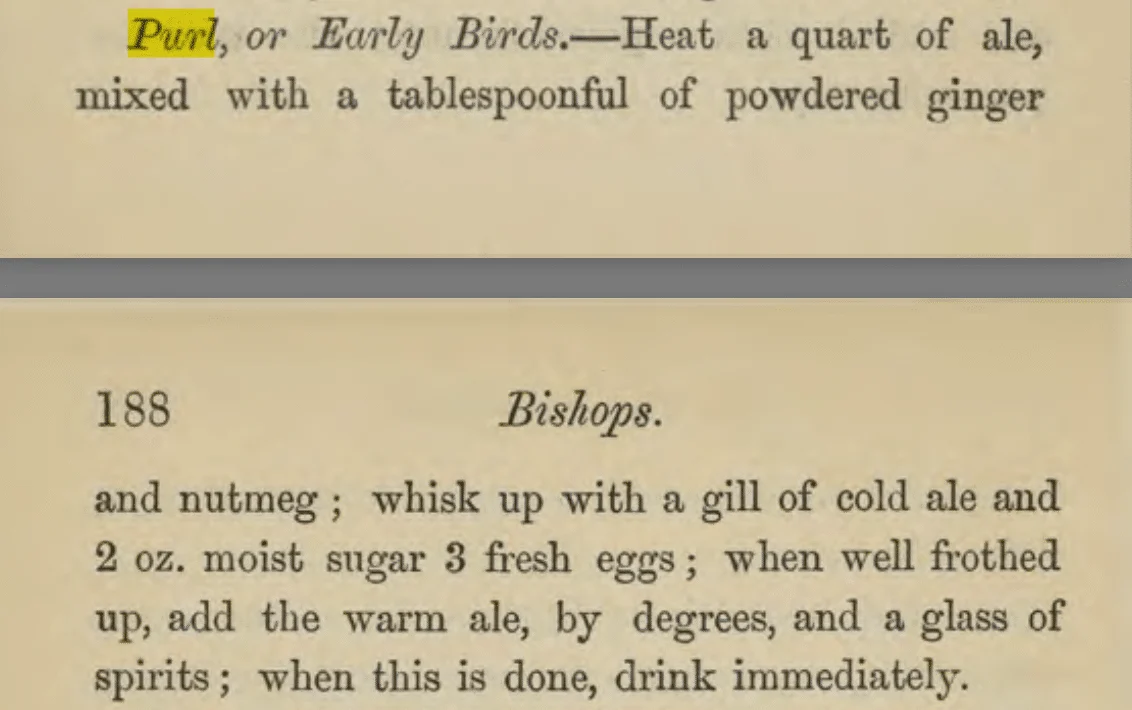
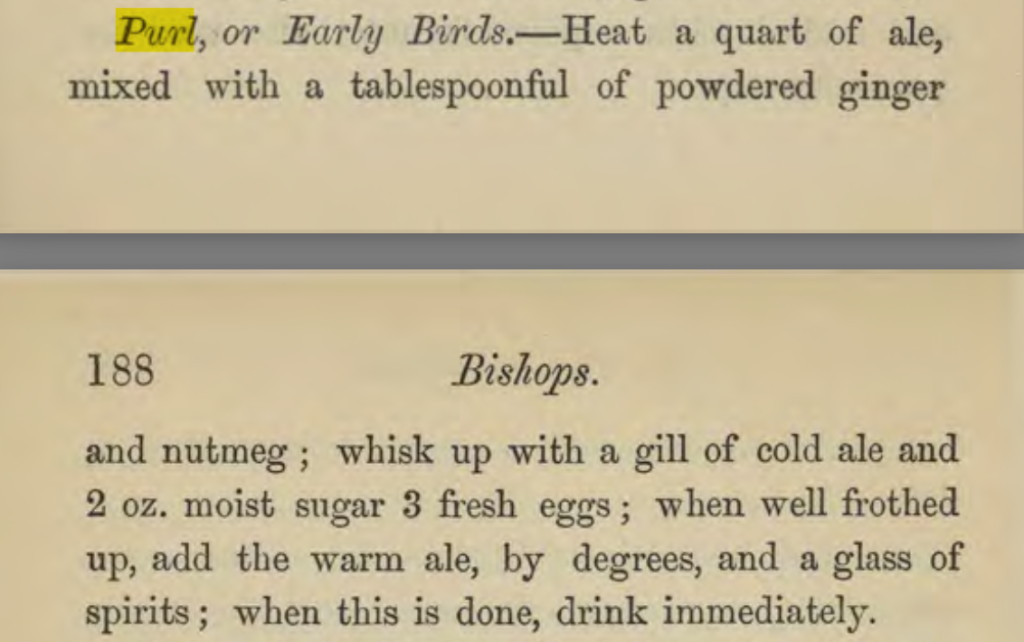
By the mid-19th century, the Purl had evolved into a sophisticated, labor-intensive preparation that resembled a "flip"—a category of drinks characterized by the addition of eggs and heat. This era is best documented by William Terrington’s 1869 volume, Cooling Cups and Dainty Drinks, widely regarded as the first definitive British cocktail manual.

Terrington’s recipes illustrate a high level of culinary complexity. His version of the Purl involved warming the ale and whisking in multiple eggs, sugar, and spices such as nutmeg or ginger. Notably, gin was not yet the mandatory spirit. Terrington noted that while a glass of spirits was added to the mixture, it could just as easily be brandy or whisky, depending on the drinker’s preference or the barkeep’s inventory.
Furthermore, Terrington identified a distinct but related beverage called the "Ale Cup." While the Ale Cup specifically demanded gin and ale, the Purl remained a broader designation for a warmed, fortified, and often emulsified beer drink. This Victorian period represents the height of the Purl’s complexity, where the focus shifted from the bitterness of wormwood to the rich, creamy texture provided by eggs and the aromatic warmth of spices.

The 20th Century: Simplification and the Dominance of Gin
The 20th century oversaw the "Great Simplification" of the Purl. As the fast-paced culture of the modern cocktail bar emerged, the time-consuming process of heating ale and whisking eggs began to fade. The wormwood—once the defining ingredient of the 17th-century Purl—vanished entirely from standard recipes.
Several key publications from this era track the decline of the drink’s complexity:

- 1925: Summer Drinks and Winter Cordials by Mrs. C.F. Leyel still acknowledged the warming of the ale but showed a reduction in the use of eggs and heavy spices.
- 1935: The Art of Mixing Drinks began to standardize the recipe around the combination of gin and ale, though it often still recommended the addition of bitters to mimic the lost herbal profile of the original wormwood.
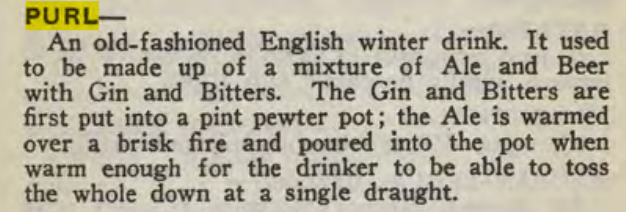
- 1966: The Barman’s Bible (from the Cocktail and Wine Digest) presented the Purl in its most truncated form: a simple mix of ale and gin, occasionally served cold, marking the final departure from its roots as a heated, medicinal tonic.
This transition solidified the "canonical" version of the Purl known today. The choice of gin as the primary spirit likely persisted due to its historical availability in London and its botanical synergy with the hops found in British Bitters.
Technical Analysis of Ingredients and Preparation
The modern Purl relies on a specific chemical and sensory balance between its two primary components.

- The Spirit (Old Tom Gin): Unlike London Dry Gin, which is crisp and heavy on juniper, Old Tom Gin provides a bridge between malt wine and modern gin. Its slight sweetness and viscous mouthfeel are essential for counteracting the astringency of the ale. In historical contexts, this sweetness would have replaced the sugar added in Victorian recipes.
- The Base (British Bitter): A traditional British Bitter, typically ranging from 3.5% to 5% ABV, provides the backbone. The hop profile of a Bitter offers a faint echo of the bitterness originally provided by wormwood. Serving the ale at cellar temperature (approximately 12–14°C or 54–57°F) allows the malt characteristics to remain prominent, preventing the gin from overpowering the palate.
- The Missing Link (Bitters): Many craft bartenders today add Angostura or wormwood-based bitters to a Purl. This is a conscious effort to reintroduce the "missing" third dimension of the drink—the herbal complexity that defined the beverage for the first 200 years of its existence.
Broader Impact and Cultural Legacy
The history of the Purl serves as a microcosm for the evolution of British drinking culture. It reflects the shift from alcohol as medicine to alcohol as a social lubricant and, eventually, to alcohol as a culinary craft. The Purl’s survival, albeit in a simplified form, highlights the enduring British preference for "fortified" sessions—the practice of adding strength to low-ABV beers to extend the drinking experience.
The social history of the Purl also provides insight into class dynamics. Originating as a drink for the "poorer sort" during the plague, it ascended to the sophisticated cocktail books of the Victorian middle class before settling into its current role as a niche historical curiosity for gin enthusiasts.

Today, the Purl is experiencing a minor resurgence in "heritage" bars and gin-focused establishments. However, modern consumers rarely encounter the true 17th-century version. To order a Purl today is to receive a "gin and bitter," a far cry from the pungent, wormwood-laden ale that Londoners once drank in hopes of surviving the Black Death. The trajectory of the Purl remains a testament to how names and traditions persist in the bar world, even as the liquids themselves undergo radical transformation over the centuries.
