

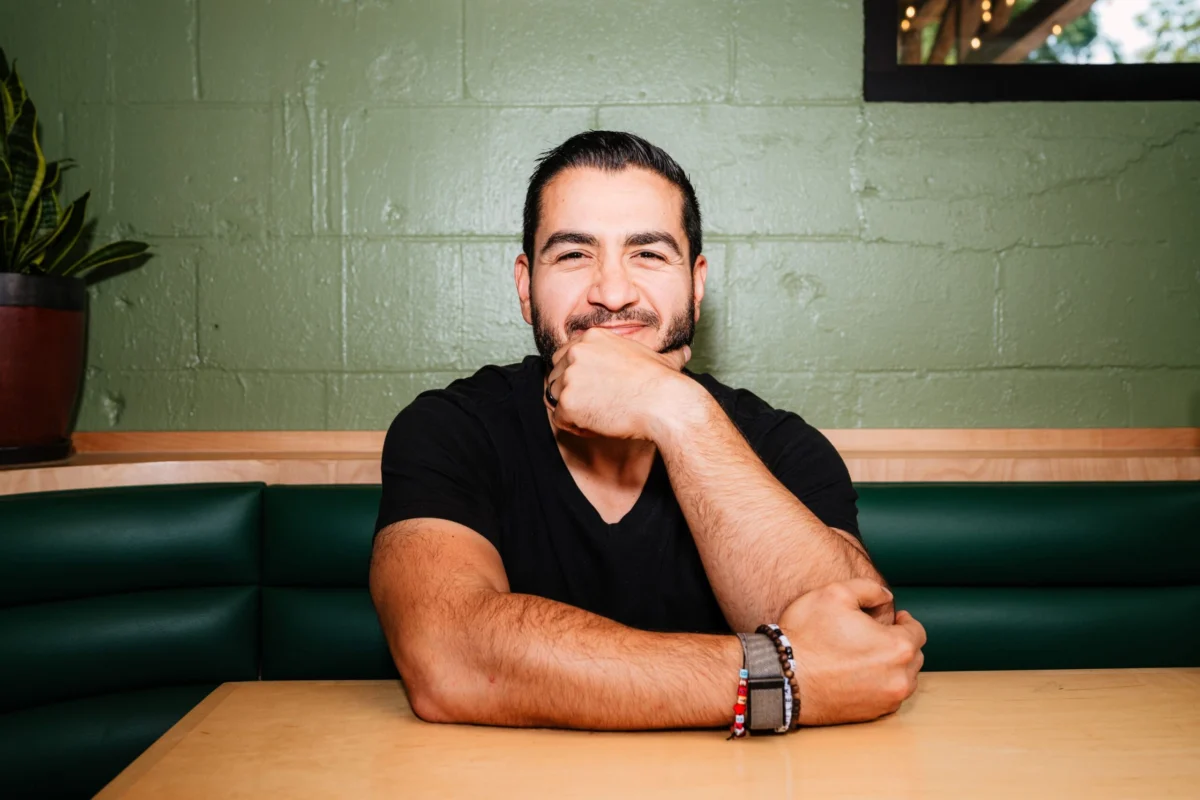
As the crucial November 3 election approaches, Abdul El-Sayed, the Michigan US Senate candidate, is employing a unique blend of cultural outreach and progressive policy advocacy, notably leveraging the universal language of food to connect with voters. In the closing weeks of a high-stakes campaign that could determine control of the Senate and potentially make him the nation’s first Muslim senator, El-Sayed has taken to platforms like TikTok to address everything from food affordability to his personal identity, often with a culinary twist. His recent appearance in an April cooking video, preparing beef shawarma alongside Lebanese American food creator Summer Homayed, quickly garnered attention, offering a flavorful counter-narrative to political attacks and illuminating his campaign’s core tenets.
A Culinary Response to Political Scrutiny
The TikTok video, published by Summer Homayed of Summer’s Homemade Meals, showcased El-Sayed, an Egyptian American, in a Detroit Lions apron, grilling marinated flank steak for shawarma—a staple of Metro Detroit’s vibrant Arab food scene. While the method deviated from the traditional vertical spit, El-Sayed used the casual setting to deliver pointed political messages. He quipped that the steak was purchased without corporate money, mirroring his campaign’s funding philosophy, and declared his willingness to compromise on shawarma preparation but "never on Medicare for All." This lighthearted yet firm stance encapsulates his campaign’s strategy: engaging on cultural terms while steadfastly advocating for his progressive agenda.
The video also provided a direct platform to address one of the more contentious elements of the campaign. Homayed directly questioned El-Sayed about concerns over "Sharia law," a frequent point of attack employed by his Republican opponent, former congressman Mike Rogers. Rogers’ campaign has sought to cast suspicion on El-Sayed’s Muslim identity by invoking alleged ties to extremist groups, claims that have been consistently challenged by independent fact-checkers. El-Sayed’s response was swift and culturally resonant: "Look, I was born and raised in America. I believe deeply in the U.S. Constitution. So Sharia law? No, I’m here for Shawarma law." This retort, widely shared and debated, served to disarm the accusation with humor and a clear affirmation of his American identity and constitutional values, simultaneously celebrating his heritage through food.
Abdul El-Sayed: From Public Health to Progressive Politics
Abdul El-Sayed’s journey to the US Senate race is marked by a distinctive background in public health and a consistent progressive voice. Born to Egyptian immigrants and raised in suburban Detroit by his father and white stepmother, El-Sayed’s upbringing provided a unique blend of cultural experiences, including his stepmother’s Midwestern meatloaf and his father’s traditional Egyptian ful medames. Before his current Senate bid, El-Sayed served as the Director of the Detroit Health Department, where he played a pivotal role in rebuilding the city’s public health infrastructure after its municipal bankruptcy. His tenure focused on addressing health disparities, environmental justice, and promoting access to care for Detroit residents.
His political career gained national prominence during his 2018 gubernatorial campaign in Michigan. Though ultimately unsuccessful, his progressive platform—centered on issues like Medicare for All, a $15 minimum wage, and environmental protection—mobilized a significant grassroots movement and established him as a rising figure within the Democratic Party. This Senate campaign represents a continuation of those efforts, aiming to translate local success and a strong progressive vision into federal policy. The Michigan Senate race itself is considered one of the most competitive and crucial in the nation, with analysts predicting it could be instrumental in determining which party controls the Senate. This heightened scrutiny amplifies the impact of every campaign message, making El-Sayed’s cultural outreach particularly strategic.
The Economic Imperative: Food Affordability on the Campaign Trail
Beyond the cultural repartee, El-Sayed’s campaign has heavily emphasized "bread-and-butter issues," chief among them the rising cost of groceries and general affordability for Michigan families. This focus resonates deeply with voters facing persistent inflation and economic pressures. Recent data from the U.S. Bureau of Labor Statistics indicates that food prices have seen significant increases over the past few years, with many staple items costing substantially more than pre-pandemic levels. For average Michigan households, this translates to tangible stress on budgets, forcing difficult choices between necessities.
In an interview with Bon Appétit, El-Sayed outlined several policy interventions he would pursue if elected to the Senate to alleviate these burdens:
- Addressing Geopolitical Impacts on Supply Chains: El-Sayed highlighted the ripple effects of global conflicts, such as the "war in Iran" (a likely reference to broader Middle Eastern geopolitical instability impacting oil prices or the Russia-Ukraine war’s effect on global supply chains), on domestic grocery costs. Diesel fuel, essential for transporting nearly every item to grocery shelves, has experienced volatility due to these conflicts. By advocating for diplomatic solutions and stable international relations, El-Sayed argues for mitigating these external pressures on consumer prices.
- Re-evaluating Tariffs: He specifically called out tariffs on essential agricultural inputs like potash fertilizer, much of which is imported from Canada. Tariffs increase the cost of these inputs for local farmers, who then must pass those costs onto consumers. El-Sayed proposes a re-evaluation of such trade policies to reduce the financial burden on the agricultural sector and, consequently, on grocery shoppers.
- Combating Corporate Monopolies: A core tenet of El-Sayed’s economic platform is challenging the concentration of power within the food industry. He pointed out that 85% of the U.S. meat supply comes from just four dominant meatpackers. This market concentration, he argues, allows these corporations to suppress prices paid to farmers while simultaneously raising prices for consumers, eroding fair competition and consumer choice. He advocates for stronger antitrust enforcement and policies to break up these monopolies.
- Investing in Local Agriculture: El-Sayed champions investment in local food systems as a multifaceted solution. By creating opportunities for local farmers to sell their products directly to local school districts and communities, and by supporting policies like the "right to repair" for agricultural equipment, he believes costs can be reduced, local economies strengthened, and food security enhanced. This approach reduces reliance on long, vulnerable supply chains and empowers small and medium-sized farms.
- Supporting Small Businesses and Restaurants: Recognizing that rising input costs also severely impact small businesses, including restaurants, El-Sayed highlighted the growing difficulty of operating profitably. His proposals aim to create an economic environment where independent businesses can thrive without being squeezed by corporate giants or volatile market conditions.
Strengthening the Safety Net: Universal Programs for a Changing Workforce
El-Sayed’s policy vision extends to a broader re-imagining of America’s social safety net, particularly for a workforce increasingly characterized by freelancing and contract work. He articulated a strong critique of the current system, which he believes expends excessive resources on gatekeeping rather than provision. He shared the anecdote of a long-time journalist forced to apply for food stamps after losing their job, illustrating the precariousness even for educated professionals.
The candidate expressed concern over rising work requirements for programs like Medicaid and SNAP (Supplemental Nutrition Assistance Program), which pose significant burdens on workers with fluctuating incomes or non-traditional employment. Documenting income and employment for these requirements can be a complex and time-consuming process, often creating barriers for those who need assistance most.
El-Sayed’s solution is a move towards universal programs, arguing that a truly robust safety net should be accessible to all without onerous bureaucratic hurdles. His proposals include:
- Medicare for All: He views universal healthcare as foundational, eliminating the time and effort individuals spend navigating complex insurance systems and providing a stable health foundation for all.
- Free Childcare and Education: Extending the principle of universality to childcare and education, El-Sayed argues that these essential services should be free. This would not only reduce financial strain on families but also enable greater workforce participation and educational attainment.
- Redefining "Waste, Fraud, and Abuse": He challenges the conventional narrative around "waste, fraud, and abuse" in social programs, suggesting that the true waste lies in the extensive administrative apparatus designed to deny services, rather than in providing basic necessities. He posits that a universal system would be far more efficient and equitable, ensuring that people have the food, healthcare, and support they need, rather than channeling resources into maintaining a punitive system. This approach, he contends, allows resources to be redirected from fighting unnecessary wars or cutting taxes for the wealthiest, towards investing in the well-being of all citizens.
Detroit’s Dynamic Food Scene: A Mirror of Michigan’s Diversity
Beyond policy, El-Sayed’s connection to food is deeply personal and cultural, reflecting the rich tapestry of Metro Detroit. He shared fond childhood memories of visiting the Eastern Market with his father, sampling cheeses, and the tradition of family meals—his mother’s Midwestern meatloaf or tuna noodle casserole, and his father’s Sunday morning ful. This blend of culinary traditions speaks to his own upbringing and the broader cultural landscape of Michigan.
El-Sayed observed the remarkable evolution of Metro Detroit’s food scene, particularly the explosion of halal restaurants. He recalled a time when finding a straightforward halal burger was a rare treat, a stark contrast to today’s diverse ecosystem catering to a wide array of tastes. He celebrated the emergence of fusion restaurants, citing Warda Patisserie as a phenomenal example of blending different cultures and emotions through food. This culinary dynamism, he believes, mirrors Michigan’s broader history and culture of bringing diverse people together.
For El-Sayed, food is more than sustenance; it is a "profoundly universal human language," a tool for communication that conveys history, culture, and traditions. He views sharing food as an amazing way to gather community, fostering dialogue about shared values and charting a collective future. This perspective underpins his campaign’s use of food as a bridge—connecting his identity, his policy agenda, and his vision for Michigan.
Implications for the Election and Beyond
Abdul El-Sayed’s campaign represents a significant test of how a progressive platform, coupled with a distinctive cultural approach, can resonate in a pivotal swing state like Michigan. His willingness to directly address identity-based attacks with cultural confidence, while simultaneously championing comprehensive economic and social reforms, offers a compelling model for engaging voters. The strategy of leveraging platforms like TikTok and framing policy through personal and cultural narratives speaks to a modern campaign playbook designed to humanize candidates and bypass traditional media filters.
Should El-Sayed succeed, his election would carry historical weight, marking a significant moment for Muslim representation in the U.S. Senate. His policy proposals, particularly on food affordability and universal programs, could also inject new energy into national debates, pushing for more systemic solutions to economic inequality and social welfare. The Michigan Senate race, therefore, is not merely about partisan control; it is also a bellwether for evolving political discourse, the power of cultural identity in campaigning, and the national appetite for bold progressive policy. As the November election draws closer, all eyes will be on Michigan, and on how El-Sayed’s blend of shawarma and universal healthcare policies translates into voter support.
