

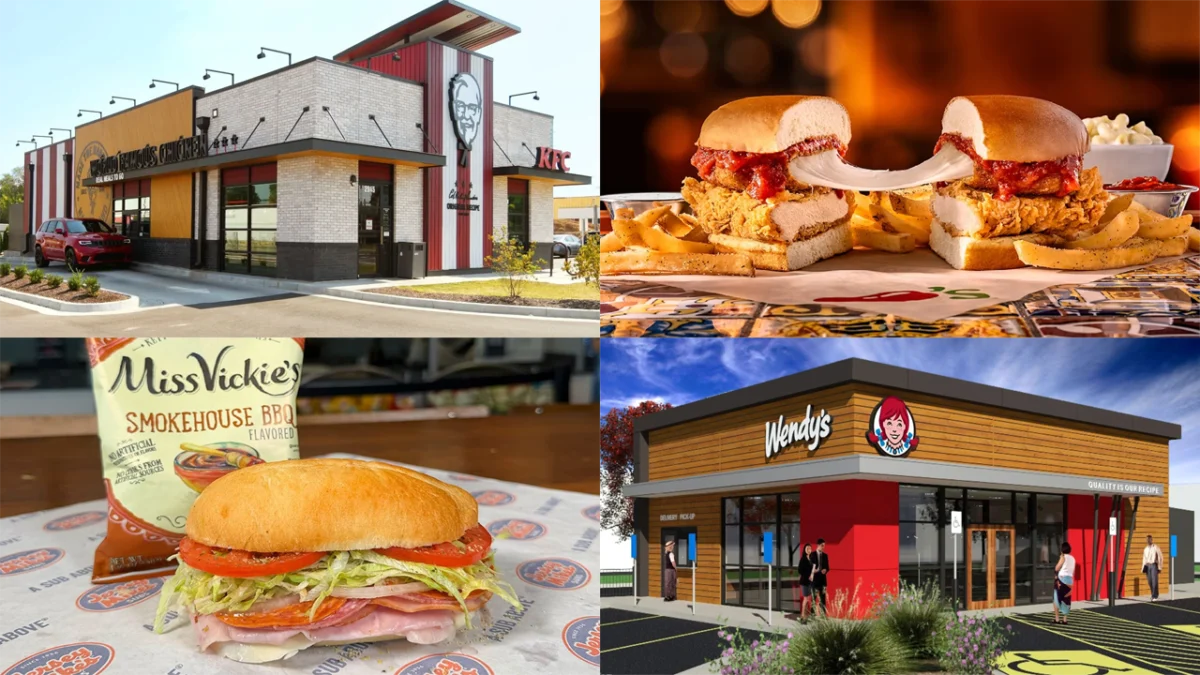
The precarious financial situation of Meritage Hospitality Group, a significant Wendy’s franchisee, has ignited a contentious dispute with the franchisor, Wendy’s International. As Meritage navigates a Chapter 11 bankruptcy, a series of disagreements over store closures and operational strategies have surfaced, complicating an already intricate legal and business process. The friction between the struggling operator and the established brand underscores the delicate balance of power within the franchise model, particularly when financial distress enters the equation.
Meritage Hospitality Group, which operates a substantial number of Wendy’s locations across multiple states, filed for Chapter 11 bankruptcy protection in late 2023. This filing allows the company to restructure its debts while continuing its operations, a process that often involves shedding underperforming assets. However, the proposed closures of ten Meritage-operated Wendy’s restaurants in Oklahoma, Michigan, Georgia, and Florida have become a major point of contention, drawing a formal objection from Wendy’s International.
The franchisor’s objection, lodged with the bankruptcy court, signals a clear divergence in opinion regarding the future of these specific locations. Wendy’s International has not only opposed the blanket closure of these ten restaurants but has also put forth a counter-proposal. The company has offered to facilitate the reopening of seven of these locations under different franchisees in alternative markets. This move suggests that Wendy’s International believes these markets, or the operational models of different franchisees, could be more successful than continuing with Meritage at these specific sites.
The Complexities of Franchise Bankruptcy
Chapter 11 bankruptcy for a large franchisee like Meritage Hospitality Group presents a unique set of challenges. The franchisor, Wendy’s International, has a vested interest in the success and brand integrity of its restaurants. When a franchisee faces financial hardship, it can lead to store closures, reduced brand visibility, and potential negative impacts on customer perception. For Wendy’s, the ability to control which entities operate its restaurants and where those restaurants are located is paramount to maintaining its brand equity and overall market presence.
The bankruptcy court acts as an arbiter in these situations, balancing the rights of creditors and the need for business restructuring with the contractual obligations between franchisor and franchisee. Wendy’s objection highlights the franchisor’s contractual rights, which may include stipulations on store closures, transfers of ownership, and the overall operational health of its branded locations. The company’s offer to find alternative franchisees for seven of the proposed closures indicates a strategic approach to minimizing brand disruption and potentially salvaging revenue streams from those specific markets.
Meritage’s Financial Straits and Operational Challenges
While the specific details of Meritage Hospitality Group’s financial difficulties are complex and subject to ongoing court proceedings, several factors are common in franchisee bankruptcies. These can include increasing operational costs (labor, ingredients, rent), declining sales volumes in specific markets, an inability to secure financing for necessary renovations or upgrades, and challenges in adapting to evolving consumer preferences and competitive pressures. The COVID-19 pandemic, while now receding as a primary driver of business disruption, had lasting impacts on the restaurant industry, exacerbating existing financial vulnerabilities for many operators.
The decision to close ten restaurants suggests that these locations may be underperforming, either due to market saturation, intense local competition, or issues with management and operational efficiency. For Meritage, closing these stores is likely a necessary step to conserve capital and focus resources on its more viable locations. However, Wendy’s International’s objection suggests they believe these closures might be too extensive, too hasty, or that alternative solutions could preserve more of the brand’s footprint.
Wendy’s Strategic Response and Market Considerations
Wendy’s International’s proactive objection and counter-proposal demonstrate its commitment to safeguarding its brand and market share. By offering to replace closures with new operators in different markets, Wendy’s is attempting to:
- Maintain Market Presence: Preventing a complete exit from certain geographic areas.
- Ensure Brand Consistency: Placing the restaurants under the management of potentially more stable and aligned franchisees.
- Maximize Revenue Potential: Identifying markets where the concept might thrive with a different operator.
- Control Brand Image: Preventing underperforming or potentially poorly managed stores from tarnishing the overall Wendy’s brand.
The specific markets where closures were proposed – Oklahoma, Michigan, Georgia, and Florida – are diverse in terms of economic conditions, population density, and competitive landscapes. The success of a restaurant can be highly localized, and what proves unsustainable for one operator might be viable for another. Wendy’s likely possesses extensive market data and franchise performance metrics that inform its decision-making regarding these proposed closures.
Broader Implications for the Franchise Model
The situation with Meritage Hospitality Group and Wendy’s International serves as a case study for the inherent complexities and potential conflicts within large-scale franchise systems. Franchise agreements are designed to create a mutually beneficial relationship, with the franchisor providing brand support, operational guidance, and marketing, while the franchisee invests capital and manages day-to-day operations. However, when one party experiences significant financial distress, the alignment of interests can fray.
For franchisors, the ability to influence or override decisions that could harm the brand is crucial. For franchisees, the right to make operational decisions, including store closures, is often seen as essential to managing their business effectively and minimizing losses. The bankruptcy court becomes the venue where these competing interests are adjudicated.
Other Notable Developments in the Restaurant Industry
Beyond the Meritage-Wendy’s dispute, the broader restaurant landscape continues to evolve with strategic moves from other major players.
Jersey Mike’s Targets Younger Diners with Value-Oriented Promotion
Jersey Mike’s Subs has introduced a new limited-time offer designed to attract and retain younger customers by emphasizing value and accessibility. The chain rolled out "The Mini Bundle," which features any "mini" cold sub paired with a bag of chips for $7.99. This initiative appears to be a strategic effort to build frequency among a demographic that is often price-sensitive and seeks convenient, affordable meal options.
The "mini" size is a smaller iteration of Jersey Mike’s standard sub offerings. The company highlights that each mini sub contains at least 18 grams of protein, a nutritional detail that can appeal to health-conscious consumers. By bundling a sub and chips at a specific price point, Jersey Mike’s aims to simplify the ordering process and provide a clear value proposition. This move aligns with a broader trend in the fast-casual sector to develop promotions that resonate with Gen Z and Millennial consumers, who are increasingly influential in shaping dining trends and brand loyalty. Building frequency among these demographics is critical for long-term growth and market share.
KFC U.S. Switches Beverage Partners After Four Decades
In a significant shift for the fast-food industry, KFC U.S. has announced it will transition its beverage partnership from PepsiCo to The Coca-Cola Company, ending a 40-year exclusive relationship with Pepsi. This change is slated to take effect in January 2027, with Coca-Cola products expected to be available in all KFC restaurants by the spring of 2027.
This is a monumental change for both companies. For PepsiCo, the loss of such a long-standing and prominent partner represents a considerable blow. For The Coca-Cola Company, it signifies a major win, gaining access to KFC’s extensive U.S. footprint. Such shifts in beverage partnerships can be driven by a variety of factors, including:
- Negotiated Terms and Pricing: Coca-Cola may have offered more favorable financial terms or marketing support.
- Product Innovation and Alignment: Changes in product portfolios or a better strategic fit between brands.
- Market Dynamics: Evolving consumer preferences or competitive pressures that make one partnership more attractive than another.
- Franchisee Input: Franchisees, who often bear the cost of stocking beverages, may have had a voice in the decision.
The transition period, spanning from January to spring 2027, will allow for a phased rollout and logistical coordination to ensure a smooth changeover in more than 4,000 KFC locations across the United States. This will involve updating equipment, training staff, and managing inventory. The long lead time suggests a complex undertaking, reflecting the scale of the partnership.
Avolta’s Post-Merger Performance
In related news concerning the broader travel retail and food service industry, Avolta, a prominent player formed by the merger of Dufry and Autogrill, has been demonstrating its strategic capabilities approximately three years after its significant merger. The integration of these two entities created a global leader in travel retail and food & beverage outlets, operating in airports, train stations, and other tourist destinations.
The performance and strategic maneuvers of Avolta following this substantial consolidation are being closely watched. Mergers of this magnitude often involve intricate operational adjustments, brand rationalization, and the pursuit of synergies. Avolta’s continued "flexing of its muscles" suggests a successful integration and an active approach to leveraging its expanded market reach and portfolio. This could involve pursuing new concessions, optimizing existing retail formats, and enhancing the customer experience across its diverse network of outlets. The travel retail and food service sectors are highly dynamic, influenced by global travel patterns, economic conditions, and evolving consumer demands, making strategic agility crucial for companies like Avolta.
The ongoing developments in the restaurant industry, from franchise disputes to strategic partnership shifts and market consolidation, highlight a sector in constant flux. Each of these stories underscores the intricate web of business relationships, financial pressures, and strategic decisions that shape the dining and consumer experience. The bankruptcy proceedings of Meritage Hospitality Group and its confrontation with Wendy’s International are a stark reminder of the challenges faced by franchisees and the critical role franchisors play in brand management and market oversight.
