

This classic gluten-free baked mac and cheese is a versatile and comforting dish, perfect for any occasion. Whether you choose to include crispy pancetta or bacon or opt for a vegetarian version, this casserole-style preparation delivers creamy, crusty perfection. It’s a go-to meal for families when hunger strikes and pantry shelves are looking a little sparse, offering a satisfying and accessible option for those adhering to a gluten-free diet.
The Enduring Appeal of Baked Mac and Cheese
Baked macaroni and cheese has long been a cornerstone of comfort food across many cultures. Its warm, inviting aroma and rich, cheesy flavor evoke feelings of home and nostalgia. The casserole format offers a practical advantage for home cooks, allowing for assembly ahead of time and a simple bake at the last minute, making it ideal for busy weeknights or casual gatherings. This gluten-free adaptation ensures that individuals with celiac disease or gluten sensitivities can enjoy this beloved classic without compromise.

For a complete and balanced meal, this baked mac and cheese pairs beautifully with a simple house salad. Alternatively, for added nutritional value and a touch of green, lightly blanched broccoli can be folded directly into the casserole before baking. This adaptability makes it a flexible foundation for various meal preferences.
The beauty of this recipe lies in its straightforward approach and the strategic use of ingredients. The only component requiring active cooking is the pancetta or bacon, which imparts a deep, savory flavor. However, its inclusion is entirely optional, allowing for customization based on dietary needs or personal preference. The core ingredients, such as shredded cheese and eggs, are readily available, and the use of canned evaporated milk provides a long shelf life, making it a reliable option even when fresh ingredients are limited.
Recipe Ingredients: The Foundation of Flavor
Crafting the perfect gluten-free baked mac and cheese begins with selecting high-quality ingredients. Each component plays a crucial role in achieving the desired creamy texture and savory depth.

- Gluten-Free Elbow Macaroni: The pasta is the backbone of this dish. Opting for a high-quality gluten-free elbow macaroni ensures a texture that holds up well to baking without becoming mushy.
- Pancetta or Bacon (Optional): For those who enjoy a savory, smoky element, finely diced pancetta or bacon adds a rich depth of flavor. Rendering the fat from the pork is key to infusing the pasta with its essence.
- Butter: Unsalted butter provides richness and helps to create a smooth sauce base. It also aids in preventing the pasta from sticking and contributes to a desirable mouthfeel.
- Evaporated Milk: This pantry staple is crucial for creating the creamy custard that binds the mac and cheese. Its concentrated nature adds richness without thinning the sauce too much.
- Eggs: Eggs act as a binder, ensuring the casserole sets up beautifully in the oven. They contribute to the creamy texture and prevent the dish from becoming too loose.
- Shredded Cheese: A blend of cheeses offers complexity in flavor and meltability. Cheddar is a classic choice, but Gruyere, Monterey Jack, or a combination can elevate the dish. It is recommended to shred cheese from a block for optimal melting.
- Salt: Salt enhances all the flavors in the dish, bringing out the cheesiness and the savory notes from the pork, if used.
The Culinary Process: Step-by-Step Perfection
Creating this gluten-free baked mac and cheese involves a series of carefully executed steps designed to maximize flavor and texture.
1. Sautéing the Pork (Optional)
If using pancetta or bacon, begin by rendering it in a large pot over medium heat until crisp. This process releases the flavorful fat. Once cooked, remove the crispy pork pieces with a slotted spoon, leaving the rendered fat in the pot. This fat will be used to coat the pasta, infusing it with savory notes. Discard any excess fat to avoid a greasy final product.
2. Preparing the Custard Base
In a separate bowl or large measuring cup, whisk together the eggs, evaporated milk, and salt until thoroughly combined and smooth. This mixture will form the creamy custard that holds the mac and cheese together. Ensuring the eggs are evenly distributed prevents them from cooking into scrambled bits in the oven.

3. Cooking the Gluten-Free Pasta
Cook the gluten-free elbow macaroni according to package directions, but aim to undercook it by about one minute. Gluten-free pasta can be more delicate than its traditional counterpart, and slightly undercooking it prevents it from becoming mushy during the baking process. Do not rinse the pasta after draining; the residual heat and starch will help melt the butter and bind the ingredients.
4. Combining Pasta, Fat, and Pork
Return the warm, drained pasta to the pot. Add the butter and any reserved rendered pork fat (if using). Stir gently until the butter is completely melted and the pasta is evenly coated. If not using pork, use the full amount of butter. Then, add the cooked and drained pancetta or bacon, if desired, and gently fold it into the pasta to avoid breaking the delicate gluten-free noodles.
5. Tempering the Egg Mixture
To prevent the eggs from scrambling when introduced to the warm pasta, it’s essential to temper them. Whisk a small amount of the warm pasta mixture into the egg and milk custard. This gradually raises the temperature of the egg mixture, making it safer to incorporate into the main dish.

6. Incorporating the Egg Mixture
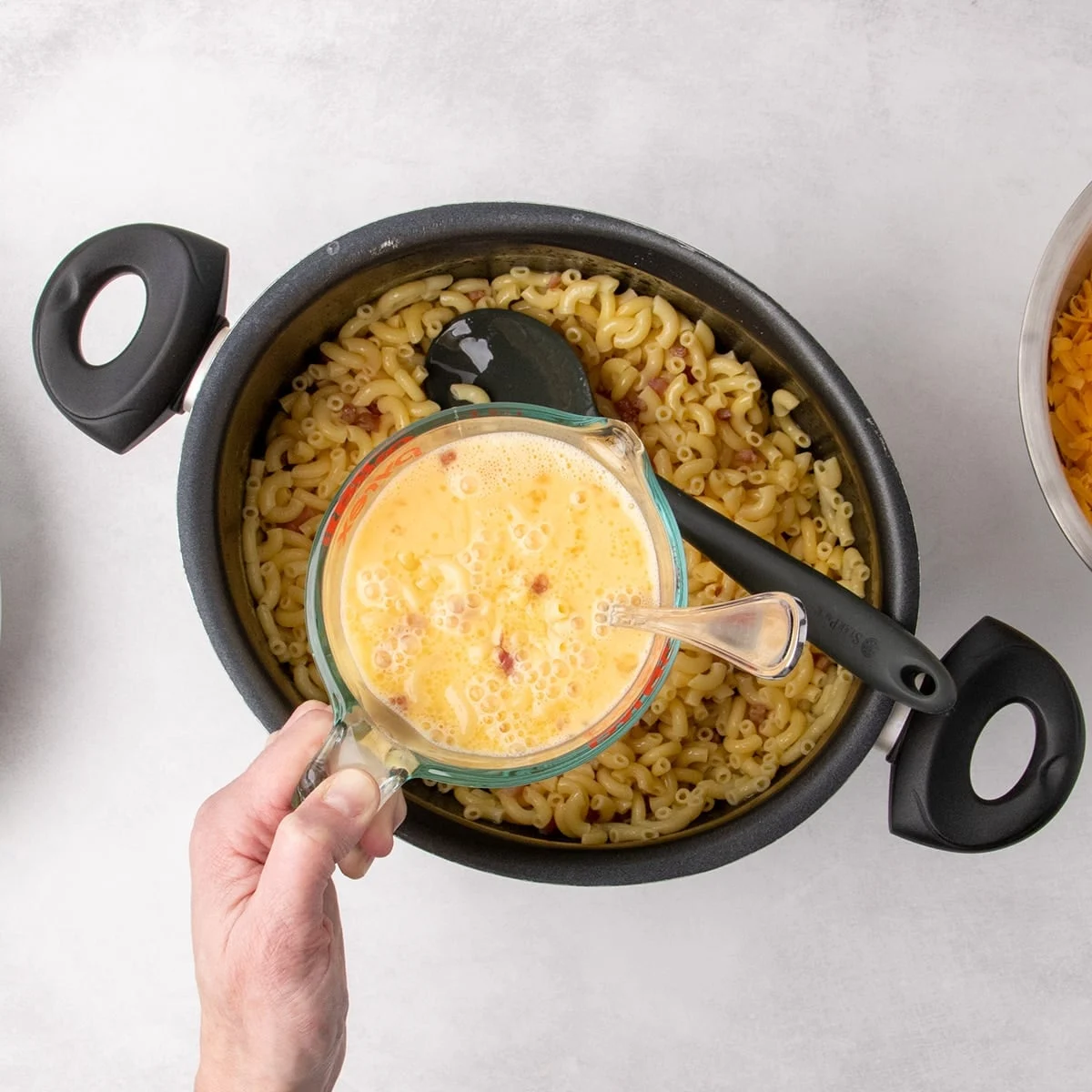
Pour the tempered egg and milk mixture over the pasta and pork. Gently fold everything together. The goal is to evenly distribute the custard without breaking the pasta.
7. Folding in the Cheese
Add most of the shredded cheese to the pot and fold it in until it is almost evenly distributed. Again, handle the pasta gently to maintain its integrity. Leaving some cheese for the topping will ensure a beautifully melted and slightly crispy cheese crust.
8. Assembling the Casserole
Preheat your oven and grease a casserole dish. Pour the mac and cheese mixture into the prepared dish, spreading it gently into an even layer.

9. Topping for a Golden Crust
Scatter the remaining shredded cheese evenly over the top of the mac and cheese. This will create a delicious, bubbly, and golden-brown crust during baking.
10. Baking to Perfection
Cover the casserole dish with greased or nonstick aluminum foil. This initial covering helps the custard set gently and the cheese to melt thoroughly without over-browning the top. Bake for the specified time.
11. Uncovering and Finishing
Remove the foil and continue baking until the custard is fully set and the cheese on top is beautifully melted and begins to brown. For a crispier top, you can bake for a few extra minutes, but be mindful not to overcook, which can lead to a dry texture.

12. Garnishing and Serving
Once baked, allow the mac and cheese to rest for a few minutes before serving. Garnish with fresh parsley or chives for a pop of color and freshness. Serve hot and enjoy the comforting embrace of this gluten-free classic.
Expert Tips for Mac and Cheese Mastery
Achieving restaurant-quality gluten-free baked mac and cheese at home is within reach with a few insider tips:
Shred Your Own Cheese
For the creamiest, most cohesive cheese sauce, always shred your own cheese from a block. Pre-shredded cheeses often contain anti-caking agents like cellulose, which can prevent them from melting smoothly and may contribute to a drier final dish. If you must use pre-shredded cheese, consider adding an extra tablespoon or two of evaporated milk to compensate for the drier texture.

Do Not Overcook the Pasta
While gluten-free pasta has improved significantly in texture and stability, it still requires careful attention during cooking. Overcooking can lead to a mushy texture that will disintegrate when mixed with other ingredients, regardless of how gently you stir. Cook the pasta just until al dente, allowing it to finish cooking in the oven.
Prep Ahead for Convenience
This recipe is an excellent candidate for meal preparation. You can assemble the entire dish up to the point of baking, cover it tightly, and refrigerate it for up to two days or freeze it for longer storage. When ready to bake, allow the dish to come to room temperature while the oven preheats, and adjust baking time as needed. This makes it a lifesaver for busy families.
Ingredient Substitutions for Dietary Needs
The beauty of this recipe lies in its adaptability, allowing for various dietary preferences and restrictions.

Dairy-Free Adaptation
For a dairy-free version, substitute block-style vegan butter for dairy butter. Replace the evaporated cow’s milk with evaporated coconut milk, which tends to be richer and less sweet than evaporated oat milk. For cheese alternatives, consult resources dedicated to dairy-free cheese options; many brands now offer excellent melting capabilities that mimic dairy cheese.
Egg-Free Considerations
If an egg-free preparation is necessary, it is generally recommended to opt for a different recipe specifically designed to be egg-free. While some egg replacers might work, the custard-like quality of this baked mac and cheese relies heavily on the eggs, and their absence can significantly alter the texture and structure of the dish. A stovetop mac and cheese recipe might be a more suitable alternative in this case.
Vegetarian Option
To create a delicious vegetarian version, simply omit the pancetta or bacon. In its place, use the full recommended amount of butter (six tablespoons) to ensure adequate richness and coating for the pasta. This simple adjustment transforms the dish into a satisfying vegetarian meal without sacrificing flavor.

Storage and Reheating Instructions
Proper storage and reheating are key to enjoying leftovers of this comforting dish.
Refrigeration
The unbaked casserole can be covered tightly and stored in the refrigerator for up to two days, provided all perishable ingredients were fresh at the time of preparation. Once baked and cooled, leftovers can be stored in an airtight container in the refrigerator for up to five days.
Reheating
To reheat refrigerated leftovers, sprinkle the mac and cheese lightly with lukewarm water. Warm it in the microwave or in a 300°F (150°C) oven until heated through. If reheating an unbaked casserole, you may need to add a few extra minutes to the baking time to ensure it cooks through properly.

Freezing
For longer-term storage, both baked and unbaked versions of the mac and cheese can be frozen for up to two months. Thaw overnight in the refrigerator before baking as directed. Ensure the dish is tightly covered to prevent freezer burn.
This gluten-free baked mac and cheese stands as a testament to the fact that dietary restrictions need not limit culinary enjoyment. With its adaptable nature and classic comfort, it is a recipe destined to become a cherished staple in any kitchen.