

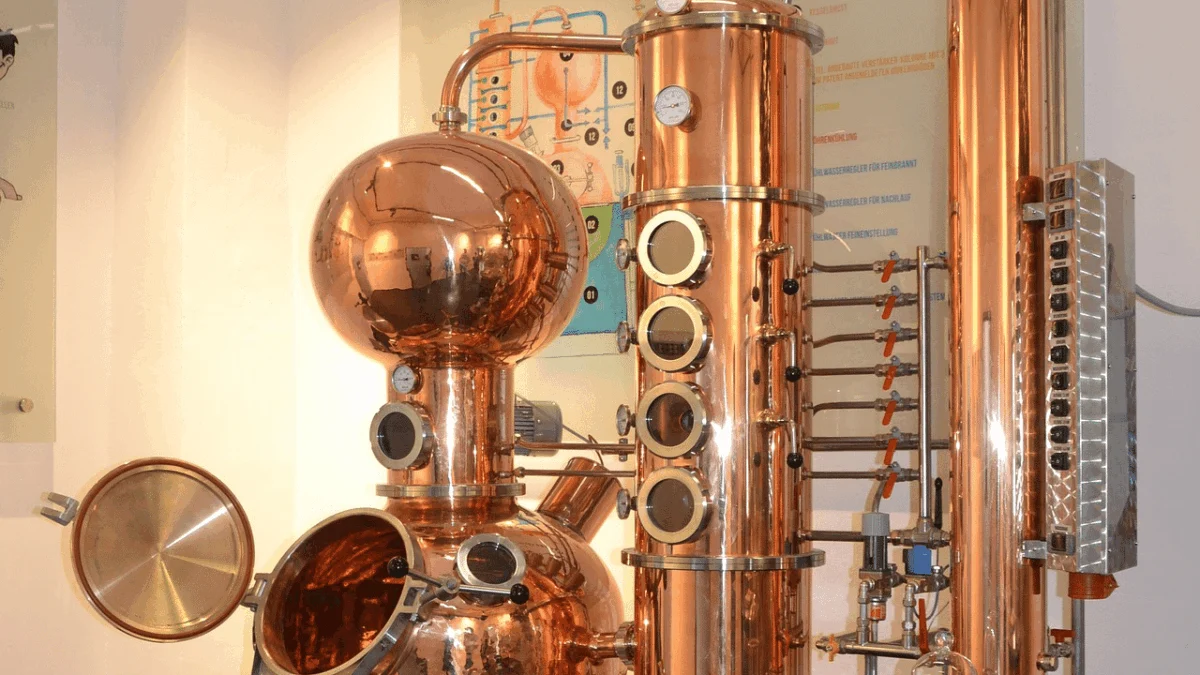
The production of gin is a sophisticated interplay of chemistry, tradition, and technical precision, where the final sensory profile of the spirit is determined by a series of critical decisions made long after the selection of botanicals. While the consumer often focuses on the list of ingredients—ranging from traditional juniper to exotic citrus and spices—the distiller’s true craft lies in the manipulation of physical and chemical variables during the distillation process. By altering ratios, extraction methods, and the timing of "cuts," a distiller can utilize an identical set of raw materials to produce vastly different spirits, ranging from heavy, traditional styles to light, contemporary expressions.
The Foundation of the Spirit: Neutral Grain Spirits and the Essential Juniper
The production of most modern gins begins with Neutral Grain Spirit (NGS), a high-proof ethanol (typically 95% to 96% alcohol by volume) that has been distilled to a point of near-total purity, removing the flavors of the original grain. This serves as a "blank canvas," allowing the distiller to introduce complex aromatic compounds without interference from the base spirit. While some craft distillers choose to ferment and distill their own base spirit from scratch—using grapes, apples, or barley—the use of NGS remains the industry standard for its consistency and clean profile.
In the global regulatory landscape, the defining characteristic of gin is the presence of juniper berries (Juniperus communis). According to European Union and United States regulations, the flavor of juniper must be "predominant." For most professional distillers, this translates to a botanical bill where juniper accounts for approximately 60% of the total volume. Beyond juniper, the benchmark for botanical quantity is generally cited as 20 to 35 grams of dry botanical material per liter of spirit. However, this is merely a baseline; the artistry of gin production begins with the nuanced ratios of secondary and tertiary ingredients.
The Mathematical Precision of Botanical Ratios
The construction of a gin recipe is often a mathematical exercise in balance. Once the juniper quantity is established—for instance, at a benchmark of 20 grams—distillers typically scale secondary botanicals relative to that weight. Coriander seed, the second most common botanical, is frequently used at half the weight of juniper (10 grams). Root botanicals and barks, such as angelica, cassia, or cinnamon, which provide "base notes" and fixative qualities to hold the more volatile aromas, are often used at one-tenth the weight of juniper (1 gram).
More potent ingredients, such as dried citrus peel, cardamom, or floral elements, may be used in even smaller increments, sometimes as low as one-hundredth of the juniper quantity. At this level of precision, minor adjustments can radically alter the gin’s "nose" and "finish." The industry has seen a shift toward "botanical-forward" gins where these traditional ratios are subverted to highlight specific regional or seasonal ingredients, a trend that has driven the "ginnaissance" of the last two decades.
Extraction Methodologies: Maceration versus Vapor Infusion
A pivotal technical decision in gin production is how the aromatic compounds are extracted from the botanicals. There are two primary schools of thought: maceration and vapor infusion.
Maceration (The "Steep" Method)
In maceration, botanicals are soaked directly in the spirit. This process can occur at room temperature or within the still itself. Some distillers, such as the producers of Beefeater, employ a 24-hour maceration period before heat is applied. This extended contact allows for a deep extraction of heavier, more oily compounds, resulting in a gin with significant "weight" and a long finish. After maceration, the botanicals may be removed (using a "tea bag" method) or left in the still during distillation, a technique known as "steeping and boiling."
Vapor Infusion (The "Basket" Method)
Conversely, vapor infusion involves suspending the botanicals in a basket within the neck of the still. As the ethanol is heated and turns to vapor, it passes through the botanicals, volatilizing the aromatic oils without boiling the plant matter. This method, famously utilized by Bombay Sapphire, tends to produce a lighter, more ethereal spirit. Because the botanicals are not subjected to the intense heat of the liquid spirit, the resulting flavors are often described as "brighter" or more "floral." The height of the basket in the still also plays a role; higher placements subject the botanicals to slightly lower temperatures, further refining the extraction of delicate volatiles.
A Chronology of the Distillation Run: The Art of the "Cut"
Distillation is a time-dependent process, and the distiller’s most critical task is determining the "cuts"—the moments when the liquid flowing from the still is either kept or discarded. To understand the chronology of a distillation run, one must view it as a progression of flavors.
- The Foreshots and Heads: These are the first liquids to emerge. They are high in alcohol but also contain low-boiling-point compounds like methanol and ethyl acetate. In gin production, the "heads" often carry harsh, aggressive citrus notes or chemical aromas. These are typically discarded or recycled.
- The Heart: This is the "sweet spot" of the distillation. The flavors are balanced, the alcohol is clean, and the botanical profile is at its peak. The distiller must decide exactly when the heart begins and ends to ensure consistency.
- The Tails: As the distillation nears its end, the temperature rises, and heavier, less volatile compounds emerge. These "tails" often carry bitter, earthy, or "cardboard-like" notes. While some distillers include a small portion of the tails to add complexity and mouthfeel, excessive tails can ruin the clarity of the gin.
This process is often compared to cooking; just as a chef must decide when garlic is perfectly sautéed versus burnt, a distiller must use sensory analysis—smelling and tasting the distillate in real-time—to make the perfect cut.
Structural Variations: One-Shot, Multi-Shot, and Individual Distillation
The regulatory definition of "London Dry Gin" requires that all botanicals be distilled together in a single process. However, outside of this specific designation, distillers have more flexibility.
Individual Botanical Distillation
Some modern distillers choose to distill each botanical separately. This allows for total control over the "cuts" for every individual ingredient. For example, the optimal "heart" cut for a delicate flower like lavender is vastly different from the optimal cut for a woody botanical like cassia bark. Once all individual distillates are created, the distiller blends them to create the final product. While labor-intensive, this method offers unparalleled precision.
One-Shot vs. Multi-Shot Methods
The "one-shot" method is the traditional approach, where the botanical recipe is scaled exactly to the volume of the still. The resulting distillate is then diluted with water to reaching bottling strength.
In contrast, the "multi-shot" method involves distilling a highly concentrated "botanical spirit" by using a much higher ratio of botanicals to ethanol. This concentrate is then diluted with additional Neutral Grain Spirit and water before bottling. While purists often argue that one-shot gin is superior, the multi-shot method is a common industry practice that allows for greater production volume from smaller stills without necessarily compromising quality, provided the dilution is handled with expertise.
Market Implications and Economic Analysis
The global gin market has undergone a significant transformation, with a projected compound annual growth rate (CAGR) of nearly 5% over the next five years. This growth is driven by the "premiumization" of the category, where consumers are willing to pay a higher price for gins with unique production stories.
The technical choices made by a distiller have direct economic implications. A "one-shot" vapor-infused gin requires more time and energy per bottle than a "multi-shot" macerated gin. Furthermore, the choice of botanicals—such as rare hand-foraged ingredients versus bulk-purchased spices—impacts the cost of goods sold (COGS). However, as the market becomes increasingly crowded, the ability to articulate these technical nuances has become a vital marketing tool. Distilleries that can demonstrate a mastery of "cuts" and extraction methods are better positioned to capture the "connoisseur" segment of the market.
Conclusion: The Future of Distillation Innovation
As the industry evolves, distillers are increasingly experimenting with vacuum distillation (which allows for extraction at lower temperatures to preserve fresh flavors) and ultrasonic maceration. Yet, the core principles remains the same: the manipulation of heat, time, and ratios to extract the soul of the botanicals.
The flavor of a gin is not merely a list of ingredients on a label; it is the physical manifestation of a distiller’s technical decisions. From the initial selection of the neutral spirit to the final dilution with water, every step in the chronology of production serves to refine the character of the spirit. Understanding these variables provides a deeper appreciation for the complexity of gin, elevating it from a simple cocktail base to a masterpiece of liquid engineering.
