

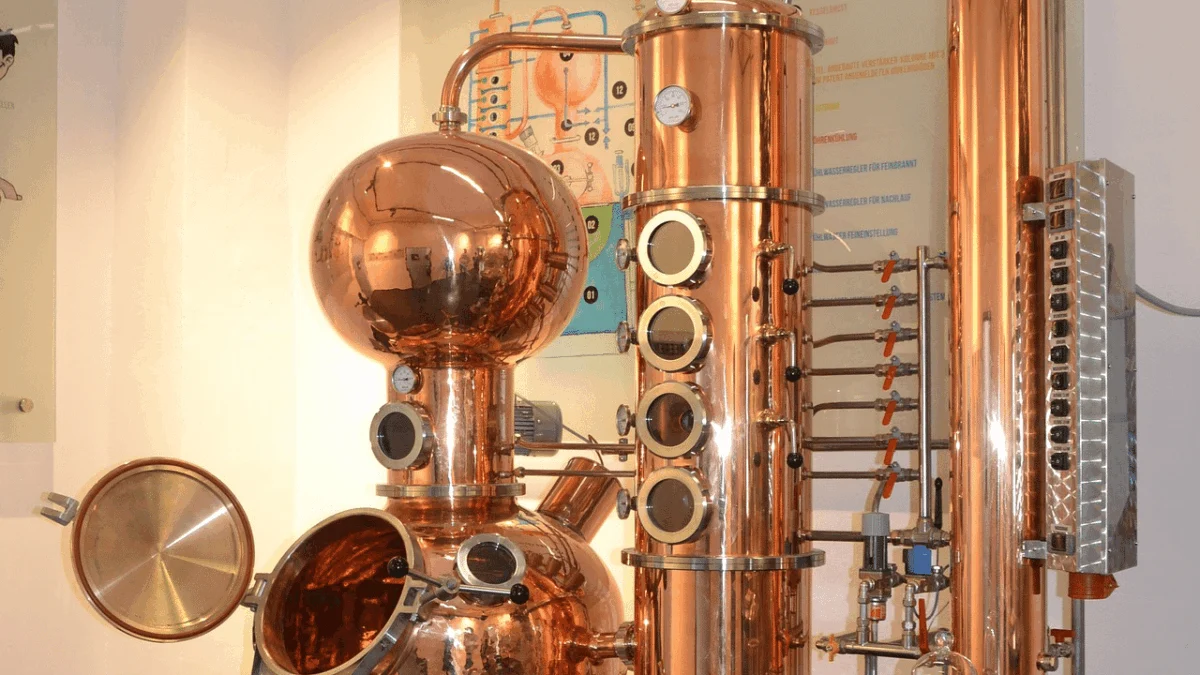
The production of gin represents one of the most complex intersections of chemistry and sensory art in the spirits industry, where the final flavor profile is determined by a series of critical technical decisions made long after the selection of raw botanicals. While the choice of ingredients—juniper, coriander, citrus, and various roots—provides the foundational palette, the distiller’s manipulation of ratios, extraction methods, distillation cuts, and dilution techniques ultimately defines the character of the finished product. Industry experts note that two distillers using identical botanical bills can produce vastly different spirits based on the thermal dynamics and physical architecture of their distillation process.
The Foundational Matrix: Neutral Grain Spirits and Botanical Ratios
Most modern gin production begins with a Neutral Grain Spirit (NGS), a highly rectified ethanol typically distilled to 95% or 96% alcohol by volume (ABV). This "blank canvas" is essential for ensuring that the delicate volatile oils of the botanicals are not obscured by the congeners—impurities like esters and fusel oils—found in less refined base spirits. In the European Union and the United States, regulations dictate that gin must possess a predominant flavor of juniper, yet the specific concentration of this botanical remains at the discretion of the producer.
A standard industry benchmark for botanical density is approximately 20 to 35 grams of total botanical material per liter of spirit. Within this formulation, juniper typically accounts for at least 60% of the volume. However, the secondary and tertiary ingredients require precise mathematical calibration. Coriander, the second most common botanical, is frequently utilized at a ratio of 50% relative to the juniper weight. In contrast, "fixative" botanicals like angelica root or cassia bark are often measured at one-tenth of the juniper’s mass, while high-potency ingredients such as cloves or dried citrus peels may be introduced at levels as low as one-hundredth of the primary botanical weight.
The decision to utilize a "single-shot" or "multi-shot" method also impacts these ratios. In single-shot distillation, the botanicals are distilled with the exact amount of spirit required for the final batch. In the multi-shot method, the botanical concentration is significantly increased—sometimes by a factor of ten—to create a "gin concentrate." This concentrate is later blended with additional NGS and water to reach the desired profile. While multi-shot distillation is more energy-efficient and allows for higher volume production on smaller stills, purists often argue that single-shot distillation preserves a more integrated and nuanced flavor structure.
Thermal Extraction: Maceration Versus Vapor Infusion
The method by which ethanol interacts with botanical matter is perhaps the most significant variable in determining a gin’s mouthfeel and aromatic intensity. Distillers generally employ one of two primary techniques, or a hybrid of both: maceration (steeping) and vapor infusion.
Maceration involves soaking the botanicals directly in the NGS within the pot still. This process, which can last anywhere from a few hours to 24 hours—as exemplified by Beefeater’s signature 24-hour steeping period—allows for a deep extraction of heavier, earthier compounds. When the still is heated, the ethanol acts as a solvent, pulling essential oils and resins from the plant matter. This typically results in a "bolder," more robust spirit with a significant presence on the palate.
Conversely, vapor infusion isolates the botanicals from the liquid spirit. The botanical charge is placed in "Carter-head" baskets or similar containers located in the neck of the still or the Lyne arm. As the ethanol boils and turns into vapor, it passes through the botanical basket, gently volatilizing the most delicate aromatic compounds without "stewing" the ingredients. This method, famously utilized by Bombay Sapphire, tends to produce a lighter, more floral, and more top-note-heavy gin.
The height and placement of these baskets are critical. Higher placement in the still’s neck subjects the botanicals to slightly cooler vapors and less pressure, whereas lower placement or placement in a pressurized environment can alter the rate of extraction. Some modern craft distillers have begun using "split-distillation," where hearty roots are macerated while delicate florals are vapor-infused, with the two distillates blended post-production.
The Chronology of the Cut: Managing the Distillation Timeline
Distillation is a temporal process where the chemical composition of the output changes every second. As the temperature in the still rises, different compounds reach their boiling points and transition into the condenser. The distiller must make "cuts"—deciding which portions of the run to keep and which to discard or recycle.
The process begins with the "foreshots" and "heads." These are the first liquids to emerge from the still and are rich in low-boiling-point compounds like methanol and certain harsh aldehydes. In gin production, the heads often contain an overwhelming intensity of citrus top-notes that can be metallic or "solventy" if over-represented.
The "heart" of the run is the desired fraction. This is where the juniper’s alpha-pinene and the coriander’s linalool are most balanced. The transition from heads to hearts is a sensory decision; the distiller monitors the ABV and the aroma, waiting for the harshness to subside into a clean, botanical sweetness.
Finally, as the ethanol concentration in the still drops, the "tails" or "feints" emerge. These contain heavier, higher-boiling-point compounds such as sesquiterpenes. While some of these provide necessary base notes and "fix" the lighter aromas, an excess of tails introduces bitter, vegetal, or "cardboard-like" flavors. The skill of the distiller lies in identifying the "cut point" where the complexity of the heart is maximized before the bitterness of the tails compromises the spirit.
Regulatory Standards and the London Dry Designation
The technical choices available to a distiller are often constrained by the specific category of gin they aim to produce. The "London Dry" designation, widely considered the gold standard of the industry, is a process-defined category rather than a geographical one. Under EU and UK law, London Dry Gin must be made from a high-quality NGS, all botanicals must be introduced during the distillation process, and no flavorings or colorings can be added after distillation. Only a minute amount of sugar (0.1 grams per liter) is permitted for rounding.
This creates a high-stakes environment for the distiller. Because no corrections can be made after the spirit leaves the still (other than dilution with water), the ratios and the timing of the cuts must be perfect. In contrast, "Distilled Gin" allows for the addition of post-distillation flavors or essences, providing a safety net for consistency but often lacking the integrated "soul" of a London Dry.
Data-Driven Dilution and Final Stabilization
The final stage of gin production is the reduction of the "still-strength" spirit—which usually exits the condenser at 70% to 80% ABV—to a bottling strength, typically between 40% and 47% ABV. This is not merely a matter of volume; it is a critical chemical transformation.
When water is added to a high-proof spirit, a process called "louching" or "the ouzo effect" can occur. If the botanical oil concentration is too high, the oils will drop out of the solution, creating a cloudy appearance. Distillers must calculate the "critical micelle concentration" to ensure the spirit remains bright and clear even when chilled.
Furthermore, the choice of water—whether demineralized, spring water, or distilled—affects the mouthfeel. Many premium distillers argue that the mineral content of their local water supply is a key component of their gin’s "terroir," even though the base spirit itself is neutral.
Broader Implications: The Evolution of the Global Gin Market
The technical rigor involved in gin production has fueled a global "Gin Renaissance." According to market analysis data, the global gin market was valued at approximately $15.3 billion in 2023, with a projected compound annual growth rate (CAGR) of over 5% through 2030. This growth is driven largely by the "premiumization" trend, where consumers are increasingly interested in the technical provenance of their spirits.
The rise of vacuum distillation (or "cold distillation") represents the next frontier in this evolution. By reducing the pressure inside the still, distillers can lower the boiling point of ethanol to room temperature. This prevents the "thermal degradation" of botanicals, allowing for the use of fresh ingredients like cucumber, mint, or snap peas that would otherwise taste "cooked" in a traditional pot still.
As the industry moves forward, the ability to manipulate these variables—ratio, extraction, and timing—will continue to separate industrial-grade spirits from artisanal benchmarks. The modern distiller is no longer just a cook following a recipe; they are a thermal engineer and a chemist, balancing the volatile nature of organic compounds against the rigid physics of the still to capture a fleeting sensory experience in a bottle.
