

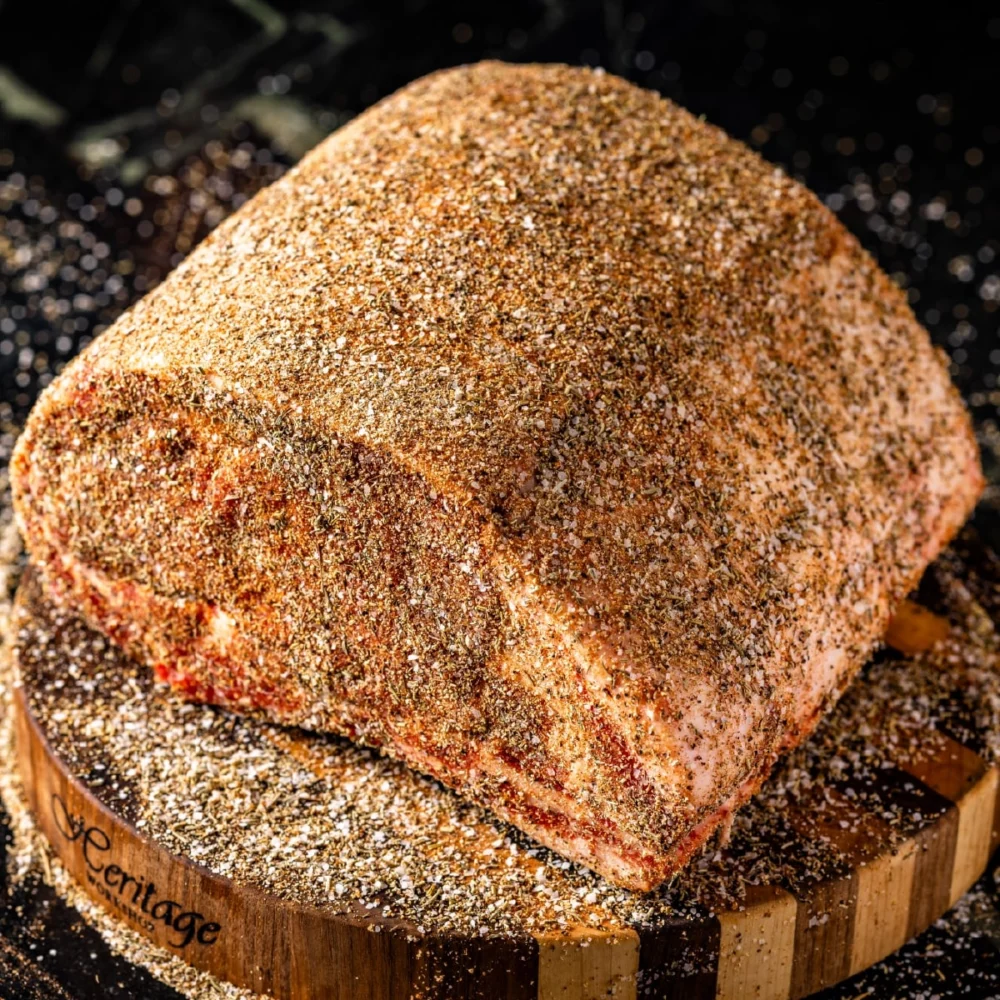
The preparation of a prime rib roast, often regarded as the "King of Roasts," represents a significant financial and culinary investment for the domestic cook and professional chef alike. Given the premium market valuation of the subprimal rib cut, the application of a scientifically balanced seasoning rub is essential to enhancing the natural lipid profile and protein structure of the beef without overwhelming its inherent characteristics. A specialized homemade rub formulation—comprising a foundational salt-and-pepper base augmented by garlic, onion, and a specific selection of woody herbs—serves as a chemical catalyst for the Maillard reaction and flavor development during the roasting or smoking process. This journalistic analysis explores the components, historical context, and technical application of a seven-ingredient prime rib rub designed to maximize the sensory output of high-grade beef.
Culinary Framework and Ingredient Composition
The efficacy of a dry rub for premium beef is predicated on the synergy between its constituent parts. In the "Hey Grill Hey" methodology, the formulation focuses on seven primary ingredients that align with traditional steakhouse flavor profiles. While the specific ratios may vary according to personal preference, the structural components typically include coarse kosher salt, cracked black pepper, garlic powder, onion powder, dried rosemary, dried thyme, and often a color-enhancing agent such as smoked paprika or dried parsley.
Salt serves as the most critical component in this matrix. From a biochemical perspective, salt facilitates the process of osmosis. When applied to the surface of the meat, it draws out moisture, dissolves into a concentrated brine, and is subsequently reabsorbed into the muscle fibers. This process seasons the interior of the roast and denatures proteins, leading to a more tender final product. The inclusion of coarse black pepper provides piperine, which offers a sharp contrast to the rich, intramuscular fat (marbling) found in the ribeye muscle.

The aromatic profile is established through the use of granulated garlic and onion, which provide a savory depth that survives the long cooking times associated with large roasts. The botanical element is introduced via rosemary and thyme. These herbs contain volatile oils that are particularly compatible with beef tallow. When subjected to heat, these oils are released, infusing the exterior crust—commonly referred to as the "bark"—with an earthy, resinous aroma that defines the classic prime rib experience.
Historical Evolution of the Standing Rib Roast
The standing rib roast has a long-standing association with British and American culinary traditions, particularly as a centerpiece for festive occasions. Historically, the "Sunday Roast" emerged in Industrial Revolution-era Britain, where the communal baking of large joints of meat became a weekly ritual. The rib section, specifically ribs six through twelve, was prized for its tenderness and fat content.
As the cut migrated into the American culinary landscape, the method of seasoning evolved from simple salt-and-pepper applications to more complex dry rubs. The rise of the American steakhouse in the mid-20th century standardized the "herb-crusted" profile, utilizing rosemary and thyme to evoke a sense of rustic luxury. The modern transition toward homemade rub formulations reflects a broader consumer trend toward "clean labeling" and the avoidance of anti-caking agents and excessive sodium found in commercial, pre-packaged seasoning blends.
Technical Application and Quantitative Ratios
Achieving the optimal crust requires precise application techniques. Culinary experts suggest that for a standard 8 to 10-pound prime rib roast, a volume of 1/4 to 1/2 cup of dry rub is required. The method of cooking dictates the density of the application. In a traditional high-heat roasting environment, a thicker layer of seasoning is used to develop a heavy crust. Conversely, when employing a "low and slow" smoking technique—such as a garlic butter smoked prime rib—the rub application may be more moderate to allow the smoke particulates to penetrate the meat surface.

The timeline for seasoning is also a point of technical debate among pitmasters. "Dry brining," the practice of applying the salt-based rub 12 to 24 hours prior to cooking, is increasingly recommended. This allows the salt to penetrate deeply and ensures the surface of the meat is dry, which is a prerequisite for a successful Maillard reaction—the chemical reaction between amino acids and reducing sugars that gives browned food its distinctive flavor.
Market Analysis: The Economics of Premium Beef
The necessity for a high-quality homemade rub is underscored by the current economic landscape of the beef industry. According to data from the United States Department of Agriculture (USDA), the price of "Prime" and "Choice" graded beef has seen significant fluctuations due to supply chain variables and grain costs. As of 2024, a whole prime rib roast can retail anywhere from $15 to $30 per pound, depending on the grade and regional market.
Because the meat itself is a "splurge" item, the "DIY" seasoning movement has gained traction as a cost-effective way to ensure culinary success. Analysts suggest that the homemade spice market is growing at a compound annual growth rate (CAGR) of approximately 5.1%, driven by home cooks who seek professional-grade results without the markup of boutique spice brands. By utilizing pantry staples, consumers can redirect their budget toward higher-quality meat grades, such as USDA Prime or Wagyu-cross breeds.
Storage and Chemical Stability
One of the primary advantages of the homemade prime rib rub is its shelf stability. Dried herbs and granulated aromatics possess low water activity, which inhibits microbial growth. However, the degradation of flavor occurs through oxidation and light exposure.

To maintain the integrity of the volatile oils in the rosemary and thyme, the rub should be stored in an airtight container—ideally glass—and kept in a cool, dark environment. While the rub remains safe for consumption indefinitely, culinary professionals note a significant decline in potency after three months. The salt remains stable, but the "bright" notes of the herbs and the "bite" of the pepper diminish as the organic compounds break down.
Broader Impact on Home Gastronomy
The democratization of professional grilling and smoking techniques, fueled by platforms such as Hey Grill Hey and the proliferation of digital recipe apps, has transformed the role of the "backyard BBQ hero." The shift from store-bought marinades to sophisticated dry rubs represents an increase in the culinary literacy of the general public.
This trend has implications for the spice trade and the meat industry alike. Retailers are seeing increased demand for bulk spices and high-quality "primal" cuts as consumers move away from processed convenience foods in favor of artisanal home cooking. The prime rib rub, while simple in its ingredient list, is a symbol of this shift—a move toward intentionality, flavor precision, and the celebration of high-quality raw materials.
Expert Perspectives and Industry Responses
Culinary educators emphasize that the success of a rub is not merely in the ingredients, but in the balance of the "Big Four": salt, heat, acid, and fat. While a dry rub provides the salt and heat (via pepper and garlic), the fat is provided by the roast itself, and the acid is often added at the table through a horseradish cream sauce or a red wine au jus.

Susie Bulloch, a prominent figure in the barbecue community and founder of Hey Grill Hey, has advocated for the "simple yet effective" approach to seasoning. Her philosophy suggests that the role of a rub is to "highlight the natural flavor of your beef without stealing the show." This sentiment is echoed by many in the industry who argue that over-complicating a rub with sugar or heavy spices can mask the expensive flavor of the aged beef.
Conclusion: The Final Analysis
The formulation and application of a homemade prime rib rub is a vital intersection of chemistry, history, and economics. By understanding the role of each ingredient—from the osmotic power of salt to the aromatic contribution of rosemary—home cooks can protect their investment in premium beef. As the culinary world continues to embrace the "back-to-basics" approach, the seven-ingredient rub remains a gold standard for achieving restaurant-quality results in a domestic setting. Whether the roast is prepared in a traditional oven or a modern pellet smoker, the application of a scientifically sound rub ensures that the prime rib remains the definitive centerpiece of the modern feast.