

The legal and technical landscape governing the production of London Dry Gin has undergone significant refinement in recent years, yet its core identity remains rooted in a strict process-based designation rather than a geographical or flavor-specific one. In 2019, the European Union implemented Regulation 2019/787 to clarify the standards for spirit drinks, following extensive feedback from consumers and the international distilling industry. This legislation, later amended by Regulation 2021/1465, serves as the definitive framework for gin production within the EU. Meanwhile, in the United Kingdom, the retained version of the 2019 act continues to govern the industry post-Brexit, ensuring that the "London Dry" label remains a hallmark of quality control rather than a regional indicator.
To understand the modern stringency of London Dry Gin regulations, one must examine the historical context of the spirit’s evolution. During the 18th and 19th centuries, gin production was largely unregulated, leading to a period often described as "Mother’s Ruin." Distillers frequently used low-quality base spirits derived from tainted grains, masking the harsh, often toxic impurities with heavy sweetening agents or adulterants like turpentine and sulfuric acid. The invention of the continuous column still by Aeneas Coffey in the 1830s revolutionized the industry. This technology allowed distillers to produce highly rectified, neutral spirits at a strength of up to 96% alcohol by volume (ABV), effectively stripping away the foul-tasting congeners and impurities associated with traditional pot stills. This leap in purity birthed the "London Dry" style—a spirit that was "dry" because it no longer required sugar to be palatable and "London" because the city was the epicenter of this technological advancement.
The Technical Framework of Regulation 2019/787
Under current EU and UK law, the designation "London Gin" is a subcategory of "Distilled Gin," and it carries the most rigorous production requirements in the spirits world. The primary requirement, as outlined in Section 21.a of Regulation 2019/787, is that the base spirit must be of agricultural origin. This neutral alcohol must be distilled to an initial strength of at least 96% ABV. This high threshold ensures that the base spirit is entirely neutral, providing a clean canvas for the botanical flavors.
The second phase of production involves the redistillation of this neutral spirit in the presence of natural botanicals. Specifically, the law mandates the use of Juniperus communis L. (juniper berries). While other "Distilled Gins" allow for the addition of flavorings or aromatic preparations after the distillation process, London Gin is strictly prohibited from such practices. Every nuance of flavor in a London Dry Gin must be imparted exclusively through the distillation process. If a distiller adds a botanical essence, a tincture, or even a minute amount of flavoring after the spirit leaves the still, the product may be labeled as "Distilled Gin," but it forfeits the right to the "London" designation.
The Methanol Standard and Chemical Purity
A critical component of the London Gin designation is the limit on methanol content. The regulation specifies that the ethyl alcohol used must have a maximum methanol content of 5 grams per hectoliter of 100% vol. alcohol. Methanol, or "wood alcohol," is a toxic byproduct of fermentation. While modern distillation techniques naturally remove methanol during the "heads" cut of a distillation run, the inclusion of this limit in the law serves as a historical and quality-focused safeguard.
In the 1800s, unscrupulous producers would retain methanol to increase their yields, often leading to blindness or death among consumers. By codifying a near-zero tolerance for methanol, the London Gin designation provides a chemical guarantee of safety and purity. While most modern craft and industrial distillers meet these standards regardless of their gin’s classification, the London Dry label remains the industry’s formal certification of this high-purity threshold.
The Definition of "Dry" and the Sugar Threshold
One of the most common misconceptions regarding London Dry Gin is the meaning of the word "dry." In the context of spirits, "dry" refers to the absence of sugar. According to the 2019/787 legislation, a London Gin must not be sweetened in excess of 0.1 grams of sweetening products per liter of the final product, expressed as invert sugar.
Interestingly, the law does not mandate zero sugar. The allowance of 0.1 grams per liter is not intended to alter the flavor profile or mouthfeel of the gin. Instead, it exists to accommodate the use of "tracer molecules" or sugar dyes. Large-scale producers often include these invisible markers to deter counterfeiters and protect their brand integrity in international markets. Because these tracers are often sugar-based, a total ban on sweetening would render these security measures illegal. Therefore, the "dry" designation in London Dry Gin is essentially a technicality that ensures the spirit remains unsweetened for the consumer while allowing for modern anti-fraud technology.
Distinguishing London Dry from Contemporary Distilled Gins
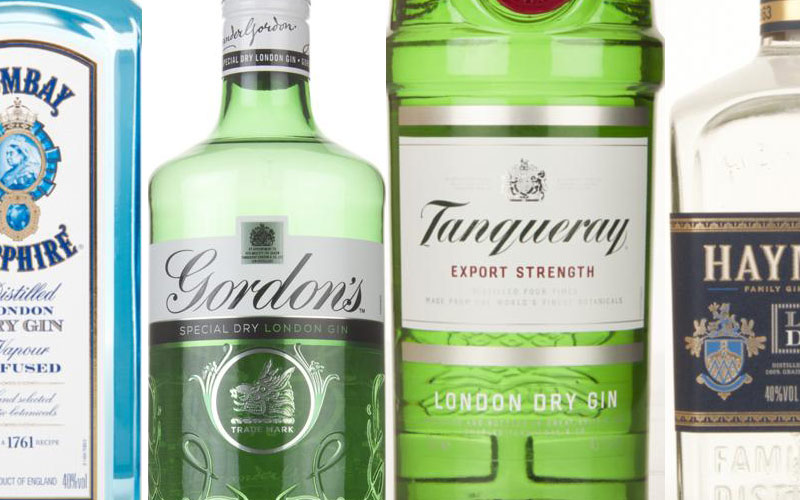
The distinction between "Distilled Gin" and "London Dry Gin" is often misunderstood by the general public, leading to the misclassification of several world-famous brands. For instance, Hendrick’s Gin and Martin Miller’s Gin are frequently referred to as London Dry Gins in casual conversation. However, neither brand carries the designation on its label.
Hendrick’s Gin undergoes a process where essences of cucumber and Bulgarian rose are added after the distillation of the botanical spirit. Similarly, Martin Miller’s Gin distills its citrus and earthy botanicals separately and then blends them before shipping the distillate to Iceland to be cut with glacial water. Because these flavor elements are introduced post-distillation, they fail the "exclusively through distillation" requirement of the London Gin category. These products are high-quality "Distilled Gins," but they do not meet the process-based criteria for the London Dry designation.
Furthermore, the regulation stipulates that London Gin must come off the still at a minimum of 70% ABV. It also prohibits the addition of any coloring agents. This means that the recent trend of "color-changing" gins, often infused with butterfly pea flower after distillation, cannot be labeled as London Dry. Even if the base spirit and distillation process meet all other criteria, the post-distillation infusion of color-altering botanicals disqualifies the spirit from the category.
The "Predominant Juniper" Clause: A Subjective Challenge
Despite the technical rigor regarding alcohol purity and production methods, the legislation remains notably vague concerning flavor. Both the EU and UK regulations state that for a spirit to be classified as gin, the "juniper taste must be predominant." This clause has become a point of contention within the industry as the "Contemporary" or "New Western" style of gin has gained popularity. These gins often emphasize citrus, floral, or spicy notes, sometimes pushing the piney, resinous flavor of juniper into the background.
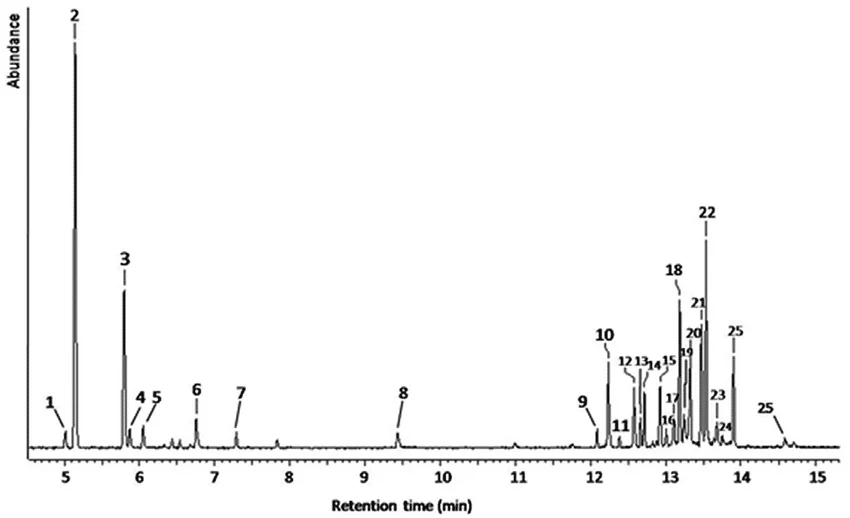
The challenge for regulators is that "predominance" is subjective. While large distilleries like Bombay Sapphire use advanced Gas Chromatography-Mass Spectrometry (GC-MS) to analyze the volatile compounds in their gin to ensure consistency, most regulatory bodies do not have the resources or the numerical benchmarks to enforce a specific juniper-to-botanical ratio. Until the law specifies a minimum concentration of alpha-pinene (the primary aroma compound in juniper), the "predominant flavor" requirement remains symbolic and largely unenforceable.
The Global Perspective and Geographical Misconceptions
A persistent myth is that London Dry Gin must be produced in London. In reality, the term is a "Process Indication," not a "Geographical Indication" (GI). Unlike Champagne, which must come from the Champagne region of France, or Scotch Whisky, which must be produced in Scotland, London Dry Gin can be made anywhere in the world. From Japan to the United States, any distiller who follows the prescribed distillation methods and purity standards can legally use the term "London Dry Gin."
In the United States, the Alcohol and Tobacco Tax and Trade Bureau (TTB) maintains a more inclusive definition. The TTB defines gin as a spirit with a main characteristic flavor derived from juniper berries, produced either by distillation or by the mixing of spirits with juniper and other aromatics. The U.S. standards do not place the same emphasis on the "London" process, though many American craft distillers adopt the EU standards to facilitate international export.
In 2015, there were brief discussions within the industry to seek GI status for London Dry Gin. However, this was largely abandoned because the requirements for a GI are incredibly onerous. A Geographical Indication would require a "technical file" specifying exact maceration times, botanical sources, and potentially even the specific type of still used. Given the diversity of methods used by established brands—ranging from the vapor infusion of Bombay Sapphire to the one-shot distillation of Beefeater—reaching a consensus on a single protected process proved impossible.
Future Implications and the "Gin-naissance"
The global "Gin-naissance" of the last decade has seen a massive influx of new producers and styles. As the market becomes increasingly crowded, the "London Dry" designation serves as an essential tool for consumer transparency. While it does not guarantee that a consumer will prefer the flavor of one gin over another, it does guarantee that the spirit was produced to the highest technical standards of purity, without post-distillation additives or artificial shortcuts.
As of 2024, the industry continues to debate whether more concrete numerical measures should be added to the law to address the "predominant juniper" issue. Some industry analysts suggest that if "Contemporary" gins continue to distance themselves from the traditional juniper profile, a new legal category may be required to prevent consumer confusion. For now, however, the London Dry Gin designation remains a testament to the 19th-century pursuit of purity, ensuring that even in a modern market filled with innovation, the traditional, unsweetened, and highly rectified "gold standard" of gin remains protected by law.