

In the contemporary landscape of mixology and global bar culture, the Purl is frequently characterized by a singular, straightforward preparation: a measure of gin added to a pint of ale. This combination, often cited by beverage historians as a staple of 18th and 19th-century British public houses, typically utilizes an Old Tom style gin—a slightly sweetened precursor to London Dry—and a traditional British Bitter served at cellar temperature. However, archival evidence and historical cocktail manuals suggest that the Purl’s lineage is far more intricate than this modern distillation implies. Rather than a simple two-ingredient fortification, the Purl represents a multi-century evolution that saw it transform from a bitter medicinal decoction used to combat the Great Plague into a complex, egg-thickened recreational "flip," before finally settling into its current, simplified form.
The trajectory of the Purl offers a unique window into the intersection of public health, social class, and the shifting preferences of the British palate over three centuries. By examining primary sources ranging from 17th-century herbalist guides to 20th-century barman’s bibles, researchers can trace how the drink’s identity was reshaped by the availability of spirits, the industrialization of brewing, and the changing definition of a "morning constitutional."
The Medicinal Origins: A 17th-Century Prophylactic
The earliest recorded iterations of the Purl bear little resemblance to the gin-heavy concoctions of the Victorian era. In the mid-17th century, the term "Purl" referred primarily to an infusion of wormwood (Artemisia absinthium) in ale or wine. This preparation was fundamentally medicinal, valued for its bitter properties which were believed to aid digestion and ward off infection.
The significance of the Purl as a health tonic reached its zenith during the mid-1600s. A seminal 1665 publication, Directions for the Prevention and Cure of the Plague Fitted for the Poorer Sort, explicitly recommended the consumption of the drink. On its opening page, the manual advised the lower classes to take "a draught or two of Purle… especially in the morning." At a time when water sources were frequently contaminated, fermented beverages like ale provided a safer alternative, and the addition of wormwood was thought to provide a protective barrier against the miasmas believed to carry the plague.
The accessibility of the Purl during this era is evidenced by its targeted audience: the "poorer sort." Unlike expensive imported wines or distilled liqueurs, Purl was an affordable staple for London’s laboring classes. Its role as a morning beverage established a cultural precedent that would persist for over two hundred years, though its purpose would eventually shift from the prophylactic to the recreational.

Diversification and the Influence of the Cider Industry
By the late 17th century, the definition of Purl began to expand beyond ale. As the brewing and orcharding industries vied for market share, regional variations emerged. In 1684, the text Aphorisms upon the New Way of Improving Cyder noted that cider-based Purl was gaining traction, asserting that a "purl made with cider" was just as efficacious as the traditional ale-based version.
This period also saw the formalization of the drink’s herbal components. The 1690 volume An English Herbal detailed the specific benefits of wormwood-infused Purl, cementing its status in the British pharmacopeia. The bitterness of the wormwood not only served a perceived medical purpose but also acted as a preservative for the ale, mirroring the role that hops would eventually dominate in the brewing process.

The 18th-Century Transition: From Medicine to Vice
As the 18th century dawned, the Purl began its transition from a medicinal necessity to a recreational indulgence. This shift coincided with the "Gin Craze" in London, a period of widespread social upheaval driven by the mass production and consumption of cheap grain spirits. It was during this time that the Purl began to incorporate distilled spirits, significantly increasing its potency.
The social perception of the drink soured accordingly. By 1733, the Purl was no longer viewed solely as a plague preventative but as a hallmark of the idle and the intemperate. A report in The Grub Street Journal from September of that year characterized the consumption of "Pots of Purle" as a vice associated with smoking and excessive gin drinking. The "morning constitutional" had transformed into a "morning dram," and the Purl-shops of London became synonymous with the lower-class urban struggle.

Despite this negative reputation, the drink continued to evolve in complexity. The simple infusion of wormwood was supplemented with various spices and, eventually, spirits. The addition of heat became a defining characteristic, as the drink was often served warm to provide comfort to workers in the damp London climate.
The 19th-Century Flourish: Eggs, Spices, and the "Flip" Style
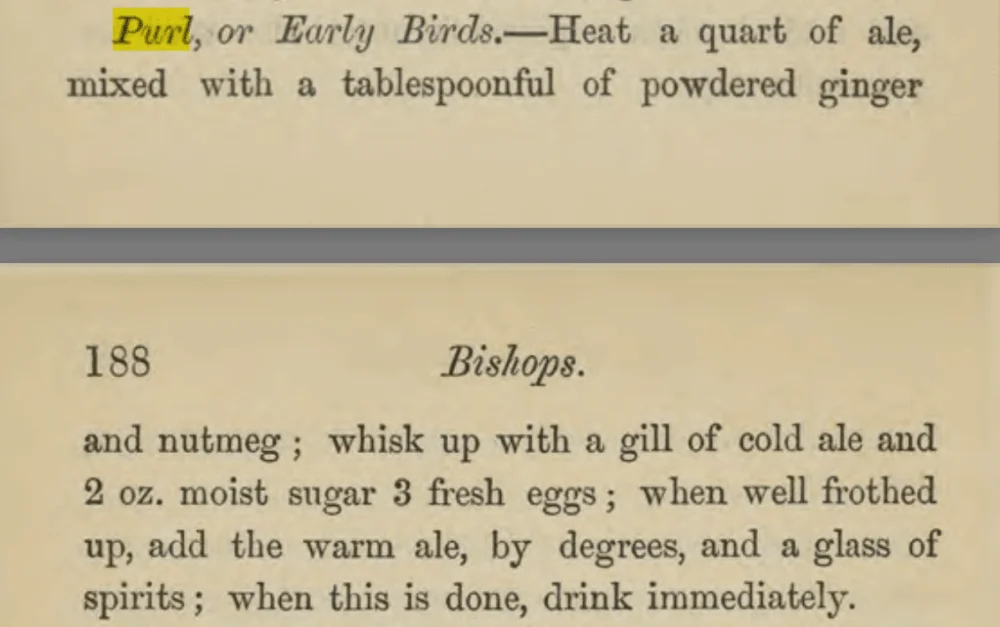
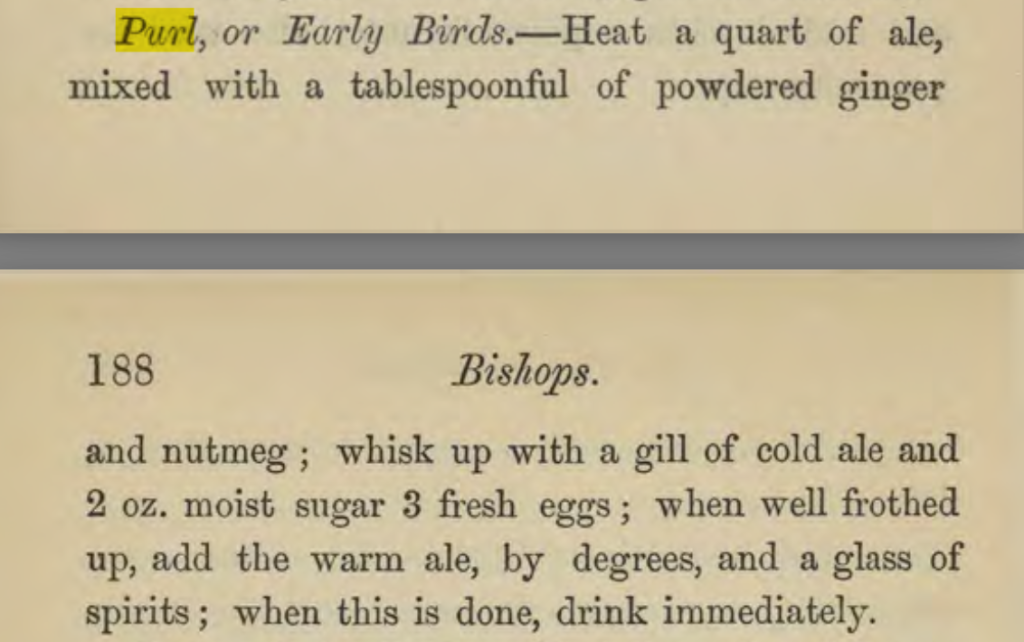
The Victorian era saw the Purl reach its most complex form, often overlapping with the category of drinks known as "flips." William Terrington’s 1869 manual, Cooling Cups and Dainty Drinks—frequently cited as the first British cocktail book—provides a glimpse into this sophisticated version of the beverage.

In Terrington’s recipes, the Purl had moved far beyond its two-ingredient roots. His instructions often called for warmed beer, multiple beaten eggs, sugar, and ginger. Crucially, while modern interpretations assume gin as the standard spirit, Terrington’s era was more flexible. While a "glass of spirits" was a required component, this could just as easily have been brandy or whiskey depending on the patron’s preference and the establishment’s inventory.
Terrington also documented a related beverage known as the "Ale Cup," which more closely mirrors the modern Purl. This recipe specifically called for gin and ale, indicating that while the complex, egg-based Purl was popular, a simpler spirit-and-beer combination was also establishing a foothold in the British bar repertoire.

The 20th-Century Standardization
The 20th century marked the final major transformation of the Purl. Several factors contributed to the simplification of the recipe:
- The Decline of Wormwood: As modern medicine advanced, the perceived necessity of wormwood infusions vanished. Furthermore, the association of wormwood with absinthe led to a general decline in its use in mainstream British brewing and mixing.
- Hygiene and Convenience: The use of raw eggs in drinks became less common in high-volume public houses, leading to the disappearance of the "flip" style Purl.
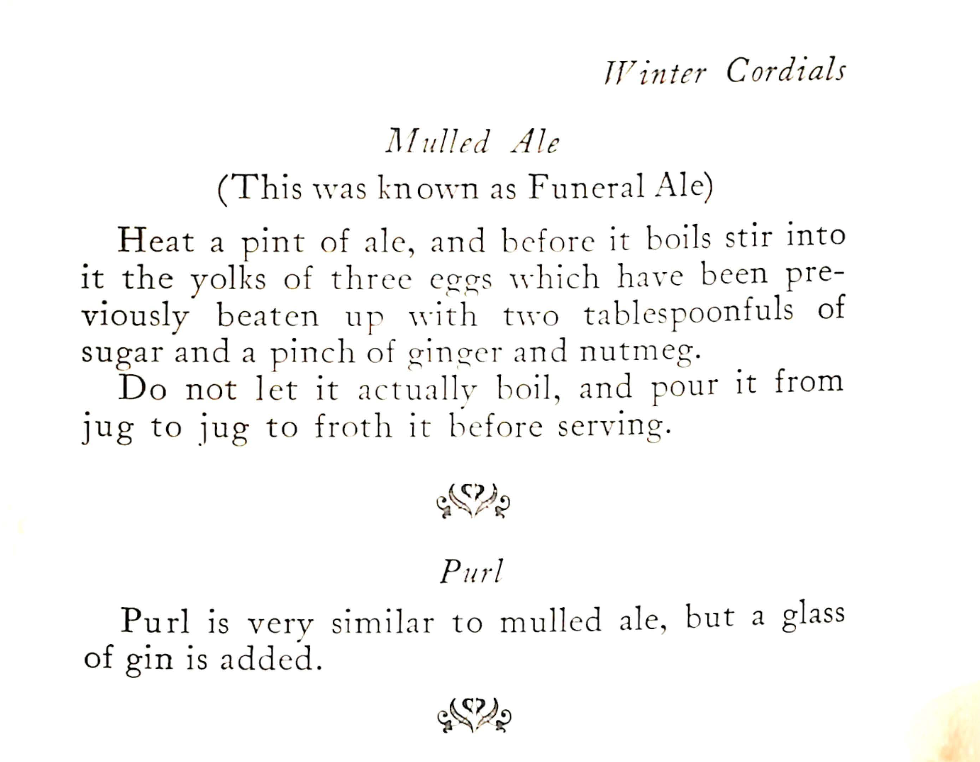
- The Rise of Gin: Gin solidified its position as the quintessential British spirit. By the time 20th-century cocktail books like Summer Drinks and Winter Cordials (1925) and The Art of Mixing Drinks (1935) were published, gin had become the canonical spirit for the Purl.
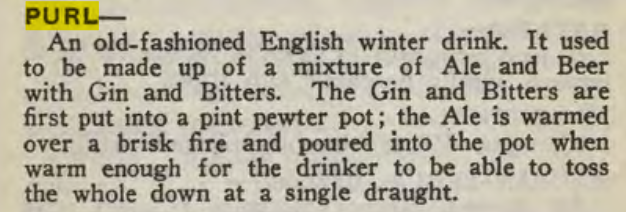
By the mid-20th century, as seen in the 1966 edition of The Barman’s Bible, the Purl had been codified as a simple mixture of ale, gin, and occasionally bitters. The heating of the ale remained a common practice, particularly in winter, but the herbal complexity of the 17th century and the culinary richness of the 19th century had largely been stripped away.

Chronology of the Purl’s Evolution
- 1665: The Purl is recommended as a plague preventative for the poor, consisting of ale or wine infused with wormwood.
- 1684–1690: Regional variations like cider Purl emerge; the drink is solidified in herbalist literature.
- 1733: The drink becomes associated with urban vice and the "Gin Craze" in London.
- 1869: William Terrington publishes the complex, egg-and-spice "flip" version of the Purl.
- 1925–1935: Modern cocktail manuals begin to standardize the recipe as a simple mix of gin, ale, and bitters.
- 1966: The Purl is codified in international barman guides as a two-ingredient beer cocktail.
Analysis of Implications and Broader Impact
The evolution of the Purl is emblematic of the broader history of British social life. Its transformation from a "poorer sort" medicine to a standardized cocktail reflects the democratization of spirits and the industrialization of the bar trade. The fact that the drink survived for over 350 years, albeit in vastly different forms, speaks to the enduring British preference for fortified malt beverages.
From a mixological perspective, the Purl is a precursor to the modern "Boilermaker" or the "Dog’s Nose" (a similar mixture of gin and stout). However, unlike the Boilermaker, where the spirit is often served as a sidecar, the Purl was always intended as an integrated mixture, often enhanced by temperature and aromatics.
The modern revival of craft cocktails has seen a slight resurgence of interest in the "authentic" Purl. Some contemporary bartenders have begun reintroducing wormwood bitters or botanical syrups to mimic the 17th-century profile, while others experiment with the warmed, egg-thickened Victorian versions. This suggests that while the 20th-century definition of "ale + gin" remains the standard, the drink’s rich and bitter history continues to offer a fertile ground for culinary exploration.
In conclusion, the Purl is not merely a relic of 19th-century pub culture but a resilient beverage that has adapted to the medical, social, and economic realities of every era it has inhabited. Whether served as a bitter defense against the plague or a warming winter draught in a modern gastropub, the Purl remains a foundational element of the British drinking tradition.