

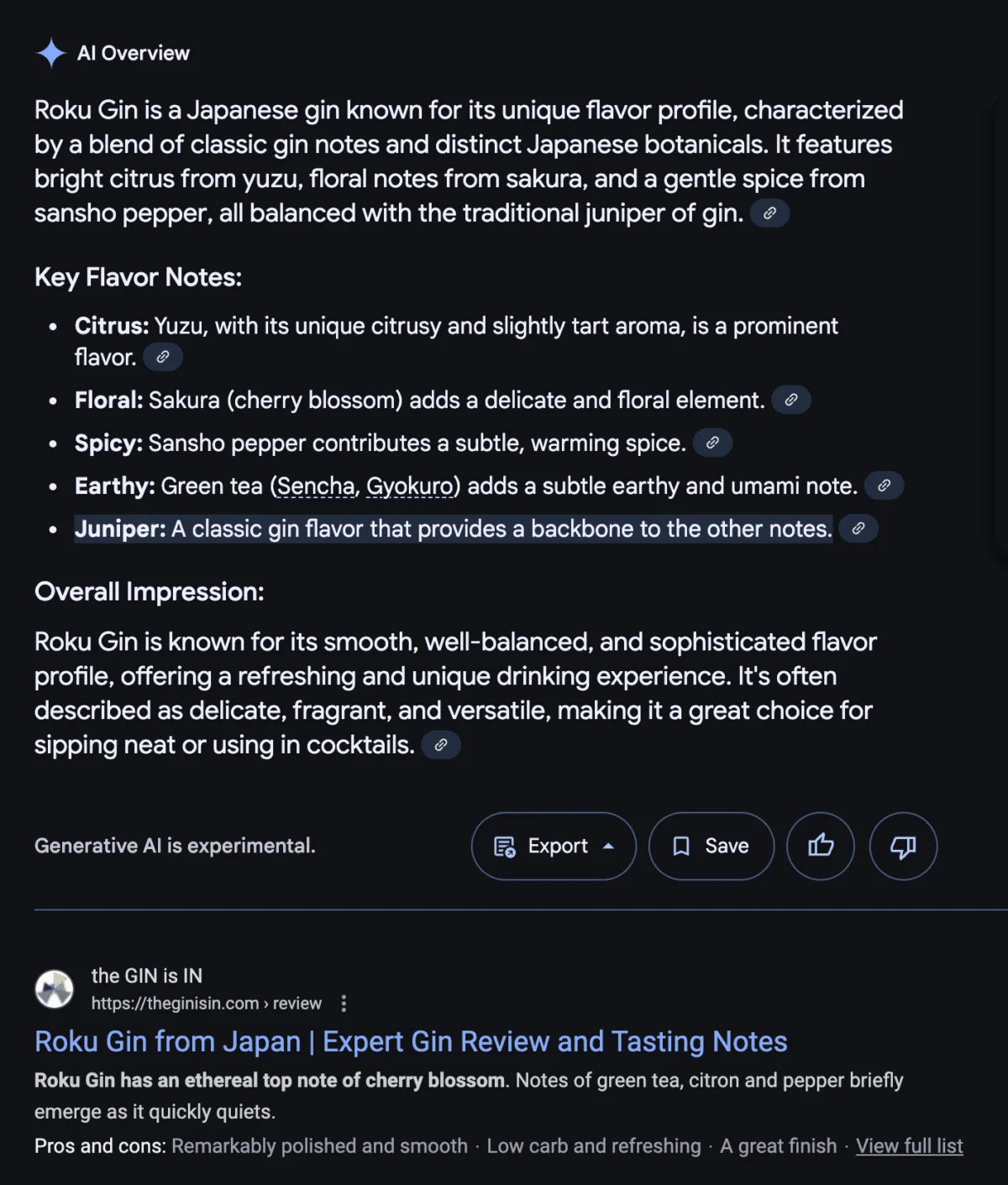
The digital publishing landscape is currently navigating a period of profound instability as independent, niche-focused media outlets report a catastrophic decline in referral traffic, attributed primarily to the rise of generative artificial intelligence (AI) in search engines. Aaron Knoll, the founder and primary author of the long-standing gin review platform The GIN is IN, recently issued a public appeal for financial support, highlighting a paradigm shift in how information is consumed online. After 16 years of independent operation, the site—renowned for its non-sponsored, objective reviews of distilled spirits—has become a prominent example of the collateral damage caused by "zero-click" searches and AI-generated summaries.
The crisis facing The GIN is IN is not an isolated incident but rather a symptom of a broader transformation in the search engine optimization (SEO) ecosystem. For nearly two decades, independent creators relied on a symbiotic relationship with search engines: creators provided high-quality, original content, and search engines provided the visibility necessary to generate advertising revenue or affiliate income. However, the introduction of Google’s AI Overviews and OpenAI’s ChatGPT has disrupted this cycle. By scraping original content and presenting a synthesized summary directly on the search results page, these technologies often satisfy the user’s query without requiring a visit to the source website.
The Evolution of Independent Spirit Journalism
The GIN is IN was established in 2008, during the early stages of what would later be termed the "Gin-aissance"—a global resurgence in the popularity of gin characterized by the rise of craft distilleries and botanical experimentation. Over the ensuing 16 years, the platform built a reputation for integrity by adhering to a strict ethical code: it does not charge distillers for reviews, refuses promotional "guest posts" from brands, and remains entirely independent of corporate ownership.
At its peak, the site’s influence was significant, attracting nearly one million visitors annually. This volume of traffic presented its own set of challenges, particularly regarding infrastructure costs. The transition from a hobbyist blog to a high-traffic resource necessitated substantial investments in hosting and security. To defray these costs, the publication initially turned to programmatic advertising, specifically Google Ads. While this model was initially effective, the creator noted that the proliferation of advertisements eventually degraded the user experience, leading to a search for more sustainable, less intrusive revenue streams.
The Impact of May 2024: The AI Turning Point
The trajectory of independent digital publishing changed significantly in May 2024, when Google began the wide-scale rollout of AI Overviews (formerly known as the Search Generative Experience, or SGE). This update integrated Gemini-powered summaries at the top of search results. While initial reactions from some creators were cautiously optimistic regarding the potential for better discovery, the practical reality has proven detrimental to click-through rates (CTR).
Data from various SEO analytical firms, including SparkToro and Gartner, suggest that "zero-click" searches—queries that end without the user clicking on any result—now account for a majority of search sessions. For a specialized site like The GIN is IN, the impact is quantifiable. When a user searches for a specific product review, such as "Roku Gin Review," the AI now provides an elaborate summary of the gin’s flavor profile, botanicals, and rating, often using the exact descriptive language found in Knoll’s original work. Because the user receives the "answer" immediately, the incentive to click through to the full article is eliminated, resulting in what Knoll describes as a "plummet" in traffic despite maintaining high search impressions.
A Chronology of the Search Engine Shift
The current crisis is the culmination of a decade-long shift in how search engines treat third-party content:

- 2008–2014: The era of organic growth. Search engines prioritized relevant, high-quality links, driving significant traffic to independent blogs and niche review sites.
- 2015–2020: The introduction of "Featured Snippets." Google began extracting small portions of text to answer queries directly. While this reduced some traffic, the "source link" remained prominent, often driving a net increase in authority for the cited site.
- 2021–2023: The rise of Large Language Models (LLMs). Tools like ChatGPT demonstrated the ability to synthesize information from across the web, though they lacked real-time search integration initially.
- May 2024–Present: The integration of Generative AI into primary search interfaces. This move effectively turned search engines from "pointers" to "answers," utilizing the open web as a training set and a real-time database to generate competing content.
The Economic Dilemma of the "Open Web"
The financial implications for independent creators are severe. As traffic declines, ad revenue follows suit, making it impossible to cover the costs of hosting, professional equipment, and the products themselves. For The GIN is IN, the founder faced a strategic crossroad: implement a paywall or transition to a reader-supported model.
The rise of platforms like Substack has popularized the "newsletter-first" model, where content is hidden behind a subscription fee. However, Knoll has expressed reservations about this approach. The core mission of the site is to serve as a public resource and a bridge between distillers and consumers. By paywalling reviews, the publication would effectively limit the visibility of the craft distillers it seeks to highlight, many of whom provide sample bottles with the expectation of reaching a broad audience.
Consequently, the site has opted for a "voluntary contribution" model, utilizing platforms such as Patreon, Venmo, and Ko-fi. This approach relies on the altruism of a loyal community rather than a transactional gatekeeping of information. It is a gamble on the value of human-centric expertise in an era of automated synthesis.
Industry Reactions and the Broader Impact
The plight of The GIN is IN reflects a growing sentiment among digital journalists and content creators who argue that AI companies are engaging in a form of digital "strip-mining." By utilizing copyrighted content to train models that then compete directly with the original creators, tech giants are accused of undermining the very ecosystem that provides their data.
While Google and OpenAI have recently begun implementing better attribution and, in some cases, licensing deals with major media conglomerates (such as News Corp and Axel Springer), small, independent publishers are largely left out of these negotiations. There are no collective bargaining units for niche reviewers or independent bloggers, leaving them to navigate the disruption individually.
Industry analysts warn that if the current trend continues, the "information desert" phenomenon—previously associated with the decline of local newspapers—could spread to specialized interest areas. If independent experts are forced to cease operations due to a lack of traffic and revenue, the AI models will eventually lack new, high-quality human data to summarize, potentially leading to a "model collapse" where AI-generated content is recycled and degraded over time.
Fact-Based Analysis of Future Implications
The survival of independent platforms like The GIN is IN will likely depend on three factors:
- Regulatory Intervention: Governments in various jurisdictions, including the EU and Canada, are exploring "Link Taxes" or mandatory bargaining codes that would require tech companies to compensate publishers for the use of their content in AI summaries.
- Platform Loyalty: As search becomes less reliable for discovering authentic human opinions, users may shift toward direct-to-consumer models, such as bookmarks, dedicated apps, or direct email newsletters, bypassing search engines entirely.
- The "Human Premium": There is a growing segment of the audience that actively seeks out human-verified content as a reaction against the perceived blandness or inaccuracy of AI-generated summaries. In the spirits industry, where sensory experience and subjective nuance are paramount, the "human touch" remains a significant competitive advantage, provided it can be monetized.
For now, Aaron Knoll and The GIN is IN remain operational, but the shift to a donation-based model highlights the fragility of the independent web. The transition from a platform supported by its own popularity to one supported by the charity of its readers is a stark reminder of the changing economics of information. As generative AI continues to evolve, the central question for the media industry remains: how can original reporting and expert analysis survive when the tools used to find that information are designed to keep the user from ever seeing the original source?