

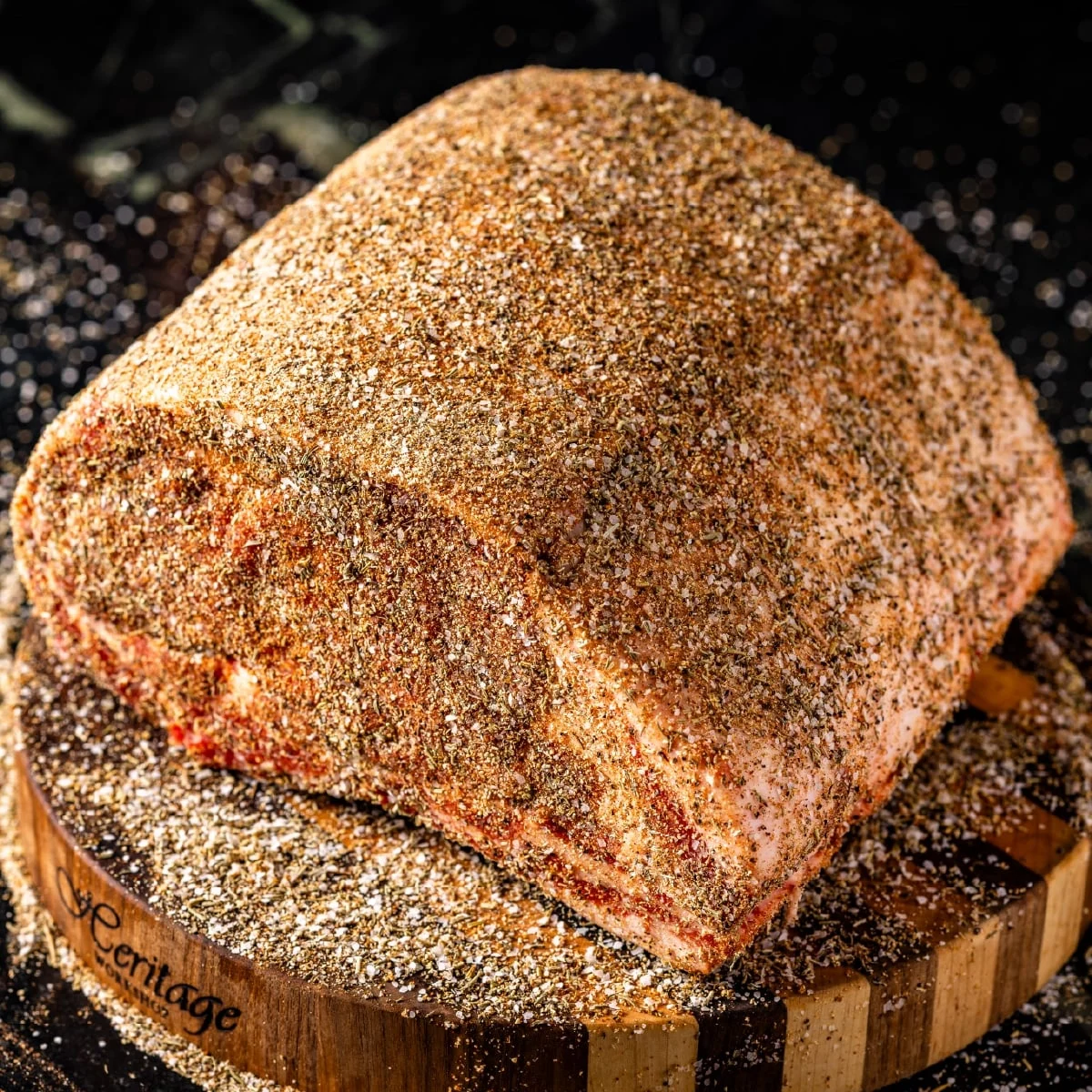
The preparation of a prime rib roast, historically regarded as the "King of Roasts," represents one of the most significant financial and culinary investments a home cook can undertake. As inflation and fluctuating market prices for AAA and Choice-grade beef continue to influence household grocery budgets, the demand for high-quality, cost-effective seasoning solutions has seen a marked increase. Professional pitmaster and culinary developer Susie Bulloch, founder of the "Hey Grill Hey" platform, has released a comprehensive methodology for a seven-ingredient dry rub specifically engineered to enhance the natural flavor profile of prime rib without overshadowing the premium qualities of the meat. This artisanal approach to seasoning emphasizes a savory, herbaceous profile that utilizes common pantry staples to achieve a steakhouse-quality crust, providing a strategic alternative to expensive, preservative-laden commercial spice blends.
The Composition and Chemistry of the Prime Rib Rub
The efficacy of a dry rub on a high-fat-content cut like the prime rib—technically the subprimal rib—relies on a specific ratio of salinity, aromatics, and herbs. The Bulloch formulation utilizes a foundational "Dalmatian" base of salt and pepper, which serves as the primary vehicle for moisture extraction and crust formation. According to culinary science, salt is the only ingredient in a rub capable of penetrating deep into the muscle fibers via osmosis, which seasons the meat internally while denaturing proteins to improve moisture retention during the roasting process.

Supplementing the salt and pepper foundation are garlic powder and onion powder, which provide a savory depth often referred to as umami. These granulated aromatics are preferred over fresh counterparts in high-heat roasting or long-duration smoking because they do not burn as easily and distribute more evenly across the surface area of the roast. The inclusion of rosemary and thyme—staples of continental steakhouse traditions—introduces volatile oils that are released during the cooking process. These herbs are chemically predisposed to pair with the heavy fats found in the ribeye, cutting through the richness with a refreshing, piney, and earthy finish.
Chronology of Preparation and Application
The lifecycle of the prime rib rub begins with the precise blending of ingredients, a process that can be executed either immediately before cooking or months in advance. The chronological steps for achieving the "Backyard BBQ Hero" status, as defined by the Bulloch method, are as follows:
- Assembly and Integration: The seven ingredients are combined in a mixing bowl. This stage is critical for ensuring that the finer powders (garlic and onion) do not settle at the bottom, which would lead to inconsistent seasoning.
- Surface Preparation: Before the rub is applied, the roast must be assessed for moisture. While some chefs prefer a "binder" such as olive oil or mustard, the natural moisture of a tempered roast is often sufficient to adhere the dry rub.
- The Seasoning Phase: For a standard 8 to 10-pound roast, the recommended application volume ranges from one-quarter to one-half cup of the rub. This amount is calibrated to ensure full coverage of the exterior fat cap and the exposed muscle meat, facilitating the development of a "bark" or crust.
- The Resting Interval: Once seasoned, the roast can be cooked immediately, though many professional pitmasters recommend a "dry brine" period of 12 to 24 hours in refrigeration. This allows the salt to penetrate the meat and the surface to dry out, which results in a superior Maillard reaction (browning) during the sear.
- Thermal Processing: The rub is designed to be versatile, performing consistently whether the roast is subjected to the high-heat environment of a traditional oven, the indirect heat of a grill, or the low-and-slow atmospheric conditions of a smoker.
Supporting Data and Market Context
The economic implications of home seasoning preparation are supported by current retail trends in the spice industry. On average, a 4-ounce jar of "gourmet" prime rib seasoning can retail for between $8.00 and $15.00, often containing fillers like silicon dioxide or excessive sugar. In contrast, the Bulloch homemade rub utilizes bulk pantry staples, reducing the cost per application by an estimated 60-75%.

Furthermore, the nutritional profile of the rub provides transparency for health-conscious consumers. A single serving of the rub (calculated at a standard application rate) contains approximately 133 kcal, with a significant portion of the weight attributed to carbohydrates (30g) and fiber (9g) from the dried herbs and spices. Notably, the sodium content is high, at 13,976 mg for the total batch, which is intentional; the salt serves as the primary functional ingredient for a roast that may serve up to 10-12 people. The rub also contributes trace minerals, including 158 mg of calcium and 6 mg of iron, alongside 3596 IU of Vitamin A, primarily derived from the herbal components.
Storage Logistics and Shelf Life Stability
One of the primary advantages of this dry rub is its chemical stability. Unlike wet marinades or compound butters, which have limited lifespans due to moisture and dairy content, the Prime Rib Rub is designed for long-term storage.
- Airtight Sealing: The use of glass jars with airtight lids is recommended to prevent the oxidation of the essential oils in the rosemary and thyme.
- Environmental Factors: Storage in a cool, dry place (the "spice rack" standard) prevents clumping caused by humidity.
- Viability Window: The rub maintains peak potency for approximately three months. While the mixture remains safe for consumption indefinitely due to the preservative nature of salt, the volatile compounds in the ground spices begin to dissipate after 90 days, leading to a flatter flavor profile.
Expert Insights and Brand Philosophy
Susie Bulloch, the architect of this recipe, has established a significant footprint in the outdoor cooking industry. Her background includes appearances on the Food Network and the successful pursuit of Guinness World Records in the culinary space. The "Hey Grill Hey" philosophy centers on the democratization of professional BBQ techniques, stripping away the gatekeeping often found in competitive smoking circuits to provide "simple ingredients" that yield "delicious results."

Bulloch’s recommendation to adjust the volume of rub based on the cooking method reflects a nuanced understanding of meat science. For a "dry rub prime rib," a heavier coating is encouraged to build texture. Conversely, when preparing a "garlic butter smoked prime rib," she advises a lighter hand with the dry rub to allow the fats in the butter to interact more directly with the beef’s surface.
Broader Impact on the Home Culinary Landscape
The release of specialized rub recipes like this one reflects a broader shift in American food culture. As digital platforms like the "Hey Grill Hey" app and social media channels on Facebook, Instagram, and YouTube gain influence, the knowledge gap between professional chefs and backyard enthusiasts is closing. This "Backyard BBQ Hero" movement emphasizes the ritual of preparation, where the act of making a rub from scratch is seen as an integral part of the "special occasion" associated with prime rib.
The implications of this shift are twofold. First, it empowers consumers to take control of the additives in their food, avoiding the "anti-caking agents" common in commercial products. Second, it fosters a deeper appreciation for the raw materials of cooking. By understanding how seven simple ingredients—salt, pepper, garlic, onion, rosemary, and thyme—can transform a multi-hundred-dollar piece of meat, home cooks are more likely to invest in higher-quality proteins and more sophisticated cooking equipment.

In conclusion, the Homemade Prime Rib Rub is more than a mere recipe; it is a strategic tool for the modern home cook. It balances the high-stakes financial investment of a prime rib roast with a scientifically sound, flavor-forward seasoning profile that is accessible, affordable, and adaptable. As the culinary world continues to move toward transparency and DIY artisanal techniques, such foundational recipes serve as the bridge between amateur efforts and professional-grade results.