

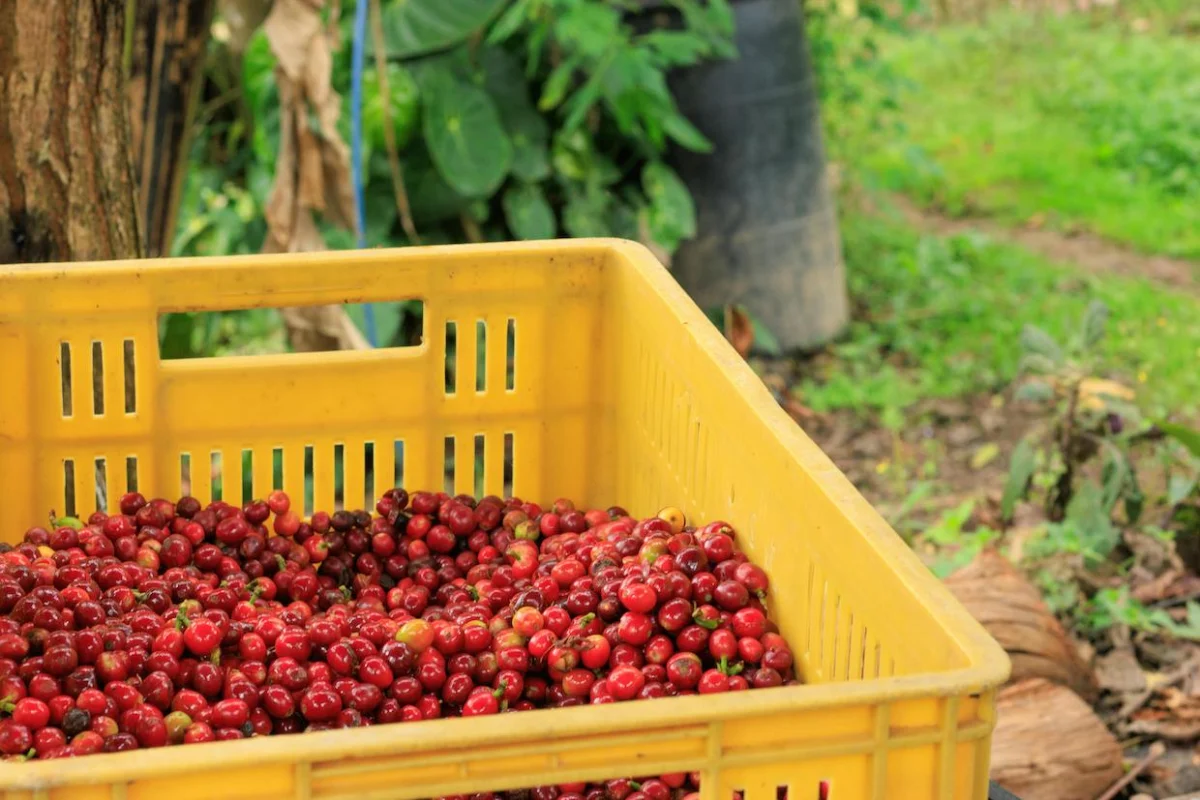
A groundbreaking study conducted in Colombia has unveiled a promising technique for elevating the quality of natural-process coffees, demonstrating that controlled fermentation using carbon dioxide (CO2) can significantly enhance sensory attributes and boost scores within the specialty coffee market. Researchers from Colombia’s Servicio Nacional de Aprendizaje (SENA) and Universidad del Valle have provided empirical evidence suggesting that a simple, sealed-container method infused with CO2 can lead to more consistent and higher-quality outcomes in a processing method traditionally characterized by variability. The findings, published in the December 2025 issue of The Scientific World Journal, offer practical guidance for coffee producers aiming to refine their natural processing techniques and achieve greater market recognition.
The study meticulously compared five distinct fermentation approaches applied to whole coffee cherries from a single lot of the Colombia cultivar, grown in El Águila, Valle del Cauca. These methods included a baseline control with no fermentation, open-air (aerobic) fermentation for durations of 24 and 48 hours, and sealed-container fermentation under a modified atmosphere of CO2 for 24 and 60 hours. Following fermentation, the cherries underwent drying, and the resulting roasted coffee was evaluated by three certified Q Graders using the Specialty Coffee Association’s (SCA) established 100-point cupping protocol.
The results indicated a clear advantage for the CO2-assisted fermentation. The most successful treatment, involving a 24-hour CO2 modified atmosphere, yielded an impressive average final score of 86.90. This significantly outperformed the unfermented control group, which averaged 82.15. The open-air fermentations, while showing some improvement over the control, fell in between, scoring 84.70 for the 24-hour period and 85.10 for the 48-hour period. This measurable uplift in scores directly correlates to enhanced quality markers such as fragrance/aroma, flavor, acidity, body, and overall balance, core components that define high-end specialty coffee.
The Science Behind Enhanced Natural Processing
Natural processing, also known as dry processing, involves drying the coffee cherry with the fruit intact. This method is known for imparting complex fruity and wine-like characteristics to the coffee but is also susceptible to inconsistent fermentation, leading to undesirable defects and variability in the final cup. The study’s authors highlighted a critical gap in existing research: "Despite advances in coffee fermentation research, most studies have been conducted under laboratory-controlled or wet fermentation conditions, limiting their applicability to natural (dry) processing systems," they stated. "There is still scarce empirical evidence on how modified-atmosphere fermentation, particularly with CO2, affects the chemical and sensory quality of dry-processed coffees under real production settings."
This Colombian study directly addresses this limitation by conducting trials under conditions reflective of actual farm-level operations. By introducing CO2 into sealed containers, researchers aimed to create an anaerobic or near-anaerobic environment, which alters the microbial activity during fermentation compared to open-air methods. The CO2 acts as a barrier, displacing oxygen and potentially favoring specific yeast and bacterial strains that contribute to desirable flavor compounds.
The researchers employed a practical method for generating CO2 on-site. By reacting sodium bicarbonate with acetic acid, they produced approximately 20 liters of CO2. This gas was then used to displace air within sealed fermentation containers, creating the modified atmosphere. This approach is scalable and can be integrated into existing processing infrastructure without requiring overly specialized or expensive equipment, making it an accessible innovation for producers.
Unpacking the Chemical and Sensory Correlations
Beyond the impressive sensory scores, the study delved into the chemical changes occurring during fermentation, linking them to the observed improvements in cup quality. Researchers analyzed sugar consumption patterns and found that CO2 fermentation tended to slow the breakdown of sucrose, particularly in the 24-hour CO2 treatment. This slower sugar metabolism could contribute to a more controlled fermentation, preventing the over-production of undesirable volatile compounds that can lead to defects.
While the fermentation processes did not significantly alter the overall levels of chlorogenic acid, a key antioxidant in coffee known for its contribution to bitterness and astringency, the study noted that the lowest concentrations were observed in the open-air fermentation treatments. This suggests that the anaerobic conditions created by CO2 might help preserve certain compounds or influence their transformation in ways that contribute to a cleaner, more balanced flavor profile.
The authors emphasized the importance of this linkage between chemical analysis and sensory outcomes: "The authors of this study said it links a simple modified-atmosphere setup to measurable gains in SCA scores for natural-process coffee, while also tying parts of the chemical profile – sugars and fatty acids – to sensory outcomes under real production conditions on a working farm." This connection is crucial for understanding why certain fermentation techniques yield better results, moving beyond anecdotal evidence to a more scientific basis for quality improvement.
A Framework for Reproducibility and Scalability
The inherent variability of natural processing has long been a challenge for producers seeking to consistently produce high-quality coffee. Small-scale experimentation, while driving innovation, often lacks the rigor and reproducibility needed for broader industry adoption. The SENA and Universidad del Valle study aims to bridge this gap by providing a scientific framework that can inform more standardized and scalable approaches.
"The findings will broaden the current understanding of fermentation biochemistry in dry-processed coffees and offer practical guidance for producers seeking to standardize natural profiles and reduce quality variability in the field," the researchers stated. By demonstrating that a controlled CO2 environment can lead to predictable improvements, this research empowers producers to move away from purely empirical methods towards scientifically-backed practices. This is particularly relevant in a specialty coffee market that increasingly demands transparency and consistency in sourcing.
The implications extend beyond individual farms. As climate change and evolving consumer preferences place greater demands on coffee production, innovative processing techniques that enhance quality while potentially reducing resource intensity become invaluable. CO2-modified atmosphere fermentation, if proven to be robust across different varietals and terroirs, could become a standard tool in the specialty coffee producer’s arsenal, contributing to a more sustainable and high-quality coffee landscape.
Future Directions and Broader Impact
While the study represents a significant step forward, the researchers acknowledged the need for further investigation. The current findings are based on a single coffee lot and a panel of three certified Q Graders. Future research could expand to include a wider range of coffee cultivars, different geographic locations, and a larger, more diverse group of sensory evaluators to confirm the universality of these results. Additionally, more in-depth chemical analyses, exploring the volatile organic compounds and microbial communities involved in the different fermentation processes, could provide a deeper understanding of the biochemical pathways at play.
The practical application of this research hinges on its accessibility and cost-effectiveness for producers. The on-site generation of CO2 using readily available materials suggests a low barrier to entry. However, the long-term effects of CO2 fermentation on shelf life, bean stability, and its interaction with different drying methods will require further exploration.
Nevertheless, the study’s contribution is undeniable. It provides concrete evidence that simple, controlled modifications to the fermentation process can yield substantial improvements in natural-process coffee quality. This research not only advances the scientific understanding of coffee post-harvest processing but also offers a tangible pathway for producers to achieve higher scores, command premium prices, and meet the discerning demands of the global specialty coffee market. The pursuit of excellence in coffee production is a continuous journey, and this Colombian study marks a significant and promising milestone.