

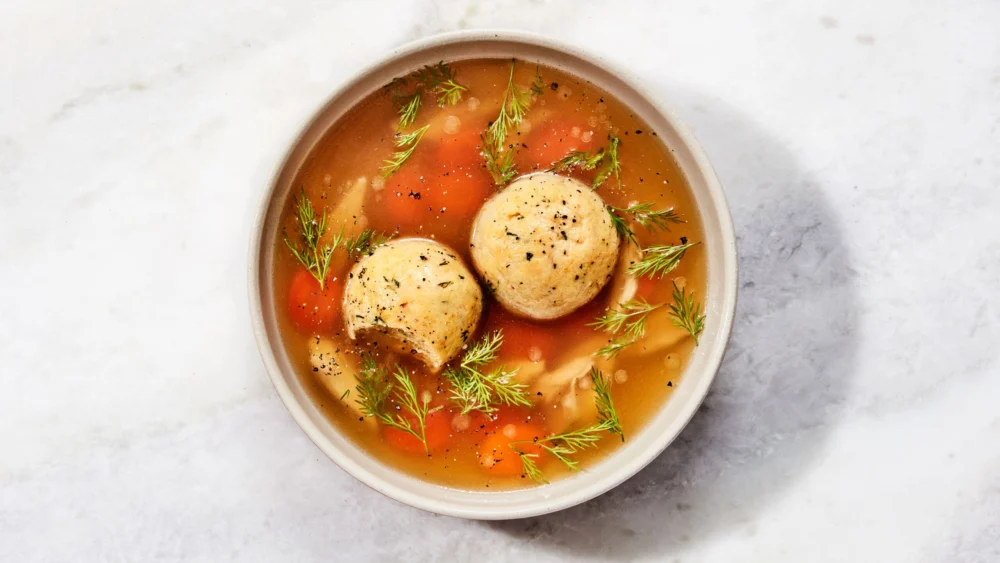
In a significant development for home cooks and culinary enthusiasts, Bon Appétit has released a meticulously developed recipe for matzo ball soup, spearheaded by renowned recipe developer Molly Baz, that purports to deliver consistently light and tender matzo balls without relying on conventional leaveners or other common ‘gimmicks.’ Titled "No-Nonsense Matzo Balls," the recipe is positioned as a definitive answer to the long-standing culinary debate between proponents of "floaters"—light, airy matzo balls—and "sinkers," their denser, more substantial counterparts. This new approach, refined through extensive testing of hydration levels, fat content, and various cooking methods, seeks to establish a new standard for a beloved comfort food, promising a reliable outcome that satisfies the preference for a tender, fluffy dumpling.
The Matzo Ball Dichotomy: A Culinary Conundrum
The division between "floaters" and "sinkers" is more than a mere preference; it represents distinct culinary philosophies and textural experiences deeply ingrained in the traditions of Jewish cuisine. Matzo ball soup, a quintessential dish often served during Passover, Shabbat, and as a general comfort food, holds a revered place in many households. The texture of the matzo ball itself is frequently the subject of passionate discussion, with families often passing down recipes and techniques that favor one style over the other. "Floaters" are typically achieved by incorporating ingredients like seltzer water, baking powder, or whipped egg whites, aiming for an ethereal, cloud-like consistency that almost dissolves in the mouth. Conversely, "sinkers" are denser, often heartier, providing a more substantial bite, and are typically made with a simpler mixture of matzo meal, eggs, and fat. This divergence has historically meant that achieving a universally acclaimed matzo ball has been a challenge, with many recipes requiring a delicate balance of ingredients and often unpredictable results.
Molly Baz’s Methodical Approach: A Deep Dive into Recipe Development
The creation of Bon Appétit’s "No-Nonsense Matzo Balls" was not an accidental discovery but the result of a rigorous, scientific approach to recipe development, characteristic of the Bon Appétit test kitchen’s commitment to culinary excellence. Molly Baz, known for her precise and often unconventional methods, embarked on a comprehensive testing phase to isolate the key variables that dictate matzo ball texture. Her iterative process focused intensely on three primary areas: hydration, the role of fats, and the optimal cooking environment.
Hydration, in this context, refers to the precise ratio of liquid to matzo meal. Matzo meal, essentially finely ground unleavened bread, absorbs liquid differently from conventional flour. Over-hydration can lead to a mushy, disintegrated ball, while under-hydration can result in a hard, crumbly texture. Baz’s testing involved incremental adjustments to liquid volumes, observing how the matzo meal absorbed and transformed, and crucially, how resting time influenced this absorption. The recipe specifies a minimum of 35 minutes of chilling for the matzo mixture, a critical step that allows the matzo meal to fully hydrate and swell, contributing significantly to the final light and tender consistency. This resting period is vital for the mixture to firm up, making it easier to handle and shape, and preventing the balls from falling apart during cooking.
Fats played an equally critical role in Baz’s experimentation. Traditional matzo ball recipes often call for schmaltz (rendered chicken fat), celebrated for its rich flavor and tenderizing properties. Baz tested various fat types, including schmaltz, duck fat, goose fat, and even neutral oils, to understand their impact on both flavor and texture. Schmaltz, with its unique fatty acid profile, was likely found to contribute not only a signature savory depth but also a specific mouthfeel that enhances the perception of tenderness. The recipe’s flexibility in suggesting substitutes like duck fat or goose fat, and even olive oil for a meat-free option, highlights the team’s understanding of diverse dietary needs while still aiming for optimal results. The option to use beef tallow for a beef broth-based soup further demonstrates a nuanced understanding of fat pairing for enhanced flavor profiles.
Finally, cooking methods were meticulously evaluated. The traditional method of cooking matzo balls directly in the soup broth often leads to a cloudy broth and unevenly seasoned dumplings. Baz’s team found that simmering the matzo balls in a separate pot of well-seasoned, gently simmering water—rather than a rolling boil—yielded superior results. This technique ensures the dumplings are evenly seasoned through osmosis without diluting or clouding the carefully prepared chicken broth. Furthermore, cooking at a gentle simmer prevents the violent agitation of a rolling boil, which can cause delicate matzo balls to break apart. Reheating previously cooked matzo balls directly in the soup is, however, recommended for convenience and flavor infusion.
Mastering the Broth: The Foundation of Flavor
Beyond the matzo balls themselves, the quality of the accompanying broth is paramount. Bon Appétit’s recipe offers a sophisticated approach to broth preparation, maximizing flavor depth and clarity. The method employs a dual strategy for chicken preparation: roasting chicken wings and lightly poaching seasoned chicken legs. Roasting the wings at a high temperature encourages the Maillard reaction, a complex series of chemical changes that caramelize the sugars and amino acids on the surface of the chicken, creating deep, savory, and umami-rich flavors. Deglazing the roasting pan captures these invaluable browned bits, incorporating them into the stock. In contrast, lightly poaching seasoned chicken legs provides tender, flavorful meat without the risk of overcooking, which can result in dry, stringy chicken. This combination ensures both a robustly flavored broth and perfectly cooked chicken for serving.
For those seeking a leaner stock, the recipe recommends chilling the broth overnight. This allows the schmaltz (chicken fat) to solidify on the surface, making it easy to skim off. This skimmed schmaltz can then be repurposed, for instance, in the matzo ball mixture itself, closing a delicious and economical loop. This practice not only caters to different dietary preferences but also contributes to the broth’s pristine clarity and mouthfeel. The recipe acknowledges the reality of time constraints by allowing for the use of quality store-bought low-sodium chicken broth, though it clearly advocates for the superior flavor achieved through the from-scratch method involving roasted wings and aromatics.
Historical and Cultural Context of Matzo Ball Soup
Matzo ball soup is far more than just a dish; it is a cultural touchstone, particularly within Jewish communities worldwide. Its origins can be traced back centuries, evolving from the necessity of using unleavened bread (matzo) during Passover. Matzo meal, a byproduct of matzo production, became a versatile ingredient for thickening, binding, and creating dumplings. The soup traditionally symbolizes comfort, warmth, and sustenance, playing a central role in family gatherings and holiday celebrations.
Historically, recipes for matzo balls have varied significantly across different Jewish communities—Ashkenazi, Sephardic, Mizrahi—each adapting the dish to local ingredients and culinary traditions. The Ashkenazi tradition, prevalent in Eastern and Central Europe, is most commonly associated with the matzo ball soup known today, where chicken broth is the standard base. The dish immigrated with Jewish diaspora communities to the Americas and other parts of the world, where it continued to evolve. Early recipes often emphasized practicality and economy, utilizing every part of the chicken and relying on simple, readily available ingredients. The "floater" versus "sinker" debate itself is a relatively modern phenomenon, gaining prominence as culinary techniques became more refined and home cooks sought to perfect textures. The quest for the "perfect" matzo ball often reflects a desire to connect with heritage while also achieving culinary excellence.
Insights from the Test Kitchen: Behind the Scenes
Bon Appétit’s test kitchen is renowned for its methodical approach to recipe development, and the "No-Nonsense Matzo Balls" recipe is a testament to this philosophy. The process typically involves multiple iterations, blind taste tests, and meticulous documentation of variables. For a dish as culturally significant and technically nuanced as matzo ball soup, the commitment to precision is elevated. Culinary experts often emphasize that true innovation in traditional recipes comes not from radical departures but from a deeper understanding and refinement of fundamental techniques. By stripping away extraneous ingredients like leaveners or seltzer, Baz’s recipe highlights a return to basics, relying instead on precise measurements, optimal ingredient quality, and carefully controlled cooking conditions. This approach aligns with a growing trend in modern gastronomy that values the mastery of core principles over reliance on shortcuts or complex additives. The inferred sentiment from the test kitchen would be one of satisfaction in having demystified a dish often perceived as tricky, making a consistently excellent outcome accessible to a wider audience.
Practical Applications and Accessibility
The design of the "No-Nonsense Matzo Balls" recipe demonstrates a clear understanding of the practical needs of home cooks. Serving eight generously, with two matzo balls per person, the recipe is also flexible enough to be stretched into 16 smaller appetizer portions, making it suitable for both intimate family meals and larger gatherings. This adaptability is crucial for a dish often served during holidays.
Furthermore, the recipe’s organization facilitates efficient meal preparation. It allows for simultaneous preparation of the broth and matzo balls, streamlining the cooking process. Alternatively, either component can be prepped a couple of days in advance, offering significant convenience for busy individuals or those planning elaborate meals. This foresight in recipe structuring addresses common challenges faced by home cooks, enabling them to enjoy a homemade, high-quality meal without undue stress. The detailed tips, covering aspects like why to cook matzo balls in water, proper salt levels (akin to "pasta water" for optimal seasoning), and the benefits of chilling the matzo mixture, transform the recipe from a simple set of instructions into a comprehensive culinary guide. The emphasis on flavor extraction through techniques like roasting and deglazing, coupled with practical advice on ingredient substitutions, underscores a commitment to both culinary integrity and real-world applicability.
Broader Culinary Implications
The release of Bon Appétit’s "No-Nonsense Matzo Balls" carries broader implications for the culinary landscape. Firstly, it elevates home cooking by demonstrating that classic dishes, often perceived as complex or intimidating, can be mastered through methodical application of sound culinary principles. By providing a "no-nonsense" pathway to consistently light matzo balls, the recipe empowers home cooks to achieve professional-level results in their own kitchens. This contributes to a general uplift in culinary literacy and confidence among enthusiasts.
Secondly, this recipe has the potential to become a new benchmark. In the realm of traditional dishes, where countless variations exist, a rigorously tested and widely published recipe from a reputable source like Bon Appétit often sets a new standard. It offers a reliable reference point, potentially influencing how future generations approach and understand matzo ball preparation. This kind of authoritative recipe development helps to preserve culinary heritage while simultaneously adapting it for modern palates and techniques.
Finally, the discussion around this recipe, particularly its focus on technique over additives, reinforces an ongoing dialogue in food culture about authenticity, tradition, and innovation. It highlights how contemporary culinary science can be applied to traditional dishes to refine and perfect them, without necessarily sacrificing their essence. The "floater" versus "sinker" debate will undoubtedly continue, but Molly Baz’s "No-Nonsense Matzo Balls" offers a compelling, meticulously crafted argument for one side, grounded in precision and culinary expertise, inviting both seasoned cooks and novices alike to experience a truly tender, reliably light matzo ball. This endeavor underscores the enduring power of food to spark discussion, connect generations, and continually inspire culinary exploration.