

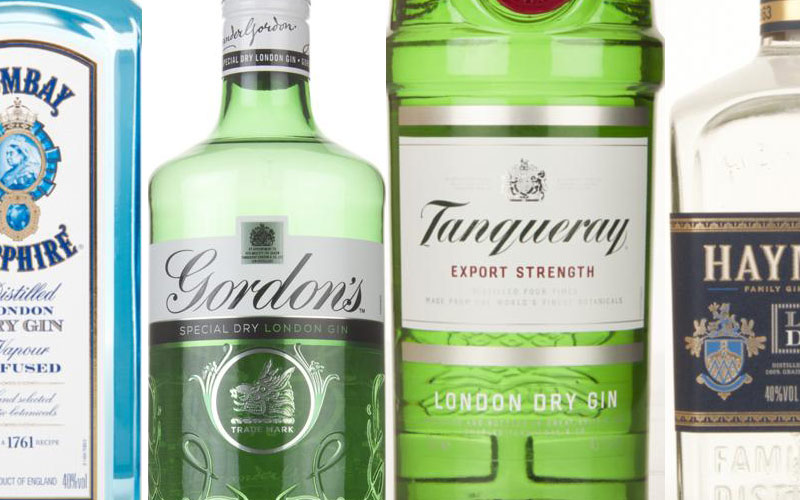
The global gin industry is currently navigated through a complex framework of historical tradition and modern legislative oversight, primarily dictated by European Union regulations and mirrored in various international jurisdictions. Contrary to common consumer perception, the term "London Dry Gin" does not serve as a geographic indicator or a specific flavor profile; rather, it represents a stringent process-based quality designation. Despite significant legislative updates in 2019 and subsequent amendments in 2021, the fundamental requirements for achieving this prestigious label remain rooted in the technicalities of distillation and the purity of the final spirit. As the market for craft spirits continues to expand, understanding the legal nuances of these designations becomes essential for producers and consumers alike.
The Legislative Evolution of Gin Standards
The modern regulatory landscape for gin was significantly reshaped by the European Union’s Regulation 2019/787, which sought to modernize the definitions and protection of spirit drinks. This legislation, which replaced the older 110/2008 standards, was the result of extensive feedback from both the distilling industry and consumer advocacy groups. While the core tenets of gin production remained intact, the new law aimed to provide greater clarity on categories such as "Distilled Gin" and "London Gin."
For the United Kingdom, the legislative path diverged slightly following its exit from the European Union. Under the "retained EU law" framework, the U.K. continues to operate under the version of the 2019 act that was in effect at the time of the transition, though it remains largely harmonized with the EU’s technical requirements. This alignment ensures that British distillers can maintain their status in the European market, where London Dry Gin remains one of the most exported spirit categories. However, the legislation continues to grapple with the subjective nature of flavor, specifically the requirement that the "predominant flavor" must be that of juniper—a standard that remains difficult to enforce through objective laboratory measures.
Historical Context: From Adulteration to Refinement
The necessity for strict distillation standards finds its origins in the 18th and 19th centuries, an era often characterized by the "Gin Craze" in London. During this period, gin was frequently produced from low-quality base spirits derived from spoiled grains or agricultural waste. To mask the harsh, unpalatable flavors of these impurities, distillers often added excessive amounts of sugar, turpentine, or even sulfuric acid. The resulting product was far from the refined spirit known today.
The turning point for the industry arrived with the invention of the continuous column still, patented by Robert Stein in 1826 and later improved by Aeneas Coffey in 1830. Unlike the traditional pot still, which could only reach an alcohol purity of approximately 50% to 70% in a single run, the column still allowed distillers to achieve a neutral spirit of up to 96% alcohol by volume (ABV). This technological leap enabled the production of "clean" spirits, where the unwanted congeners and impurities were stripped away. This high-purity base spirit became the foundation for what we now recognize as London Dry Gin—a spirit so clean that it no longer required heavy sweetening to be drinkable, hence the designation "Dry."
The Hierarchy of Gin Classifications
Under Regulation 2019/787, gin is categorized into three distinct tiers, each with increasing levels of technical restriction.
1. Gin
The base category requires a spirit of agricultural origin where the taste is "predominantly that of juniper." It allows for the addition of flavoring substances and preparations after distillation.
2. Distilled Gin
This category introduces more rigorous requirements. The base spirit must be distilled to an initial strength of at least 96% ABV. It must then be redistilled in the presence of Juniperus communis L. and other natural botanicals. Crucially, distilled gin allows for the addition of flavorings and even additional neutral alcohol after the second distillation. This flexibility allows brands like Hendrick’s or Martin Miller’s to incorporate delicate essences, such as cucumber or rose, which might not survive the intense heat of the still.
3. London Gin
The "London Gin" designation is the most restrictive. It inherits all the requirements of distilled gin but adds several quality-focused mandates. All flavor must be imparted exclusively through the distillation process using natural plant materials. No flavorings can be added after distillation, and the resulting distillate must leave the still at a minimum of 70% ABV. Furthermore, while a distilled gin can be dry, a London Gin must be dry, containing no more than 0.1 grams of sweetening per liter.
Technical Specifications: The Role of Methanol and ABV
A critical component of the London Gin standard is the limit on methanol content. Methanol, or "wood alcohol," is a toxic byproduct of fermentation. While modern distillation techniques easily remove methanol, the 2019/787 legislation codifies a safety guarantee: the spirit must contain no more than five grams of methanol per hectoliter of 100% alcohol. This requirement is a vestige of historical quality control, ensuring that the "London" name remains a hallmark of safety and purity.
The requirement for a 96% ABV base spirit is equally significant. This level of concentration is the physical limit of what can be achieved through standard distillation (the azeotropic point). By mandating this, the law ensures that the base spirit is "neutral," meaning it possesses no character of its own. This allows the botanicals added during the second distillation to provide the sole flavor profile of the gin. If a distiller used a 70% ABV base spirit from a pot still, the grain or fruit characteristics of that base would interfere with the botanical profile, disqualifying it from being labeled a London Dry Gin.
The Subjectivity of the "Juniper Predominant" Clause
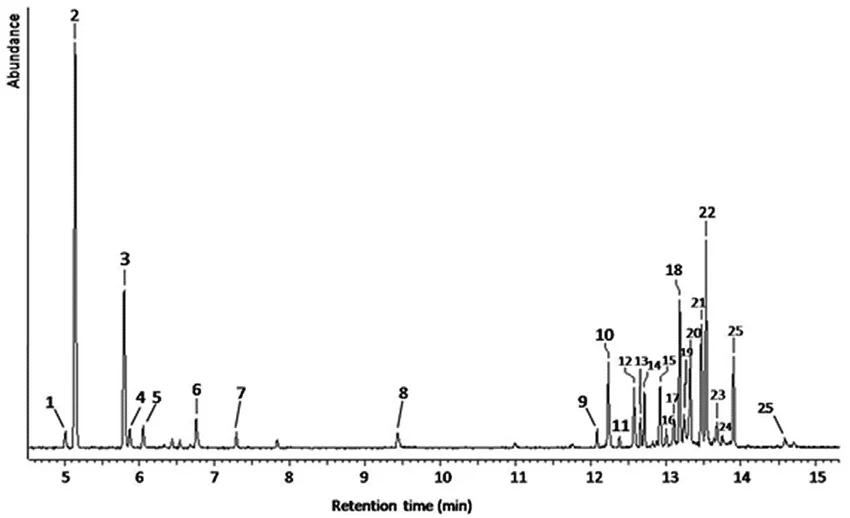
One of the most contentious aspects of gin regulation is the lack of a numerical or chemical definition for "predominant juniper flavor." Currently, this standard is largely enforced through organoleptic (sensory) testing, which is inherently subjective. While some industry leaders have called for the use of Gas Chromatography-Mass Spectrometry (GC-MS) to create a "chemical fingerprint" for gin, regulatory bodies have resisted this move.
GC-MS technology allows chemists to identify specific volatile compounds, such as alpha-pinene and limonene, which are characteristic of juniper berries. By comparing a gin sample against a standard chromatogram, regulators could theoretically determine if the juniper content meets a specific threshold. However, the cost of such testing and the diversity of juniper subspecies make this a logistical challenge. For now, the "predominant" requirement remains a symbolic gesture toward tradition rather than a strictly enforceable metric.
Geographic Indications and the "London" Misnomer
Perhaps the most common misconception among consumers is that London Dry Gin must be produced in London. In reality, the term is a "process designation" that can be applied to gins made anywhere in the world, from Kyoto to Kentucky.
The industry has historically debated whether to seek Protected Geographical Indication (GI) status for London Dry Gin, similar to Champagne or Scotch Whisky. However, GI status requires a "technical file" that specifies exact geographic boundaries and often mandates specific local ingredients or traditional methods. Because the "London Dry" style is produced by thousands of distillers globally, reaching a consensus on such a file would be nearly impossible. Most distillers prefer the current status, which protects the process while allowing for global innovation. In contrast, "Gin de Mahon" from Menorca and "Plymouth Gin" have successfully utilized geographic protections because their production is limited to specific locales and methods.
Prohibitions and the "Plant Only" Rule
The 2019/787 regulations specify that the flavor of London Gin must be imparted through the distillation of "natural plant materials." This seemingly simple phrase has significant implications for modern experimental distillers. Technically, this excludes any flavorings derived from fungi (such as mushrooms) or animal products.
A notable example of this conflict is the "Pechuga" style of gin, where raw meat is suspended in the still to be cooked by the rising vapors. While popular in certain craft circles, such products cannot legally be labeled as London Dry Gin in the EU or U.K. because the flavor is not derived from a plant. Similarly, the rise of "color-changing" gins, often utilizing butterfly pea flower, has created a new category of distilled gins that cannot use the London Dry label, as the designation strictly prohibits any coloring.
Global Regulatory Divergence: The U.S. Perspective
In the United States, the Alcohol and Tobacco Tax and Trade Bureau (TTB) maintains a more inclusive definition of gin. According to the TTB’s Beverage Alcohol Manual, gin is defined as a spirit with a main characteristic flavor derived from juniper berries, produced either by distillation or by the simple mixing of spirits with aromatics or extracts (known as "compound gin").
The U.S. regulations do not strictly codify the "London" term in the same way the EU does, often treating it as a generic trade name for a dry style of distilled gin. This divergence means that some products labeled as "gin" in the U.S. might fail to meet the higher technical standards required for the "Distilled" or "London" labels in Europe.
Industry Implications and the Future of Gin
As the gin market reaches a point of "peak botanical," the value of the London Dry designation is being reassessed. While many new "contemporary" gins prioritize citrus, floral, or spice notes over juniper, the London Dry label remains the gold standard for classicists.
The primary challenge for the future lies in consumer education. As long as the "London Dry" term is used to describe a process rather than a flavor, there will be a disconnect between what is on the label and what is in the glass. Industry analysts suggest that if consumer confusion persists, regulators may eventually be forced to adopt more concrete flavor standards, potentially utilizing the aforementioned GC-MS technology to ensure that "juniper-forward" remains a fact rather than an opinion.
For now, London Dry Gin stands as a testament to the industrialization of the 19th century and the subsequent pursuit of purity. It remains one of the most strictly regulated spirits in the world, ensuring that when a consumer sees those three words on a label, they are guaranteed a spirit of the highest agricultural quality, free from post-distillation additives, and crafted through the transformative power of the still.
