

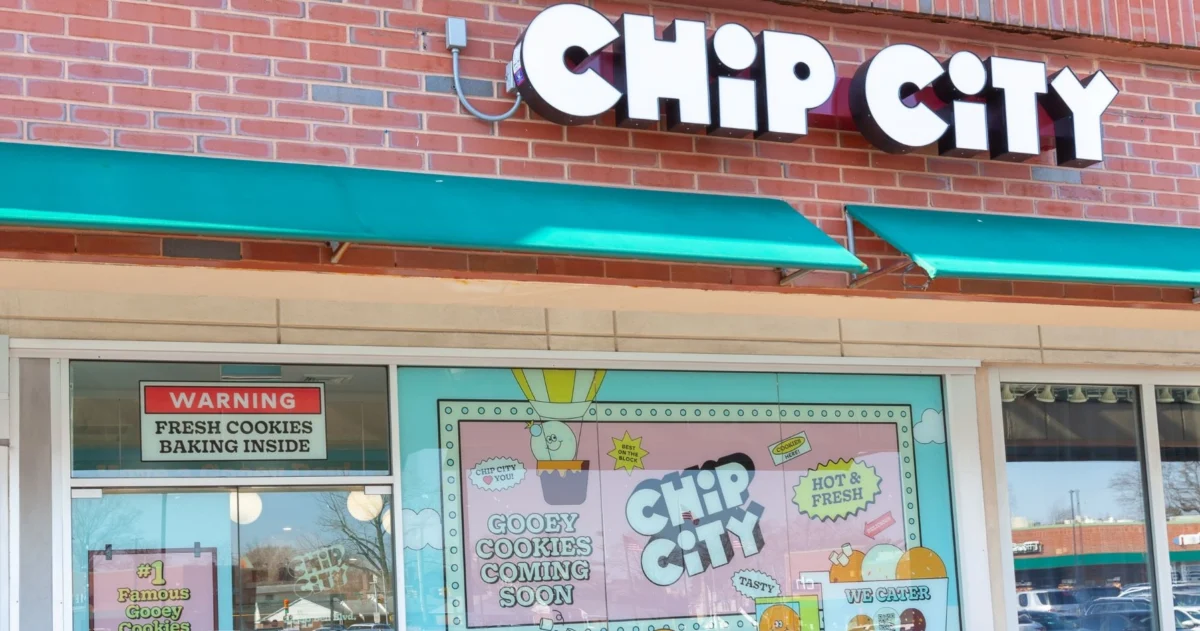
The once-promising cookie chain, Chip City, has ceased all operations, abruptly closing its 22 remaining locations. This sudden shutdown follows a tumultuous period marked by a significant legal dispute with its former CEO and co-founder, Peter Phillips, over alleged unpaid salary. The closure brings a swift end to a venture that had garnered considerable attention and investment, notably from Danny Meyer’s renowned Enlightened Hospitality Investments (EHI), just four years prior. Nicolas Baizan, who assumed the role of company president a mere 10 weeks before the announcement, delivered the news to employees via a message that has since surfaced publicly, confirming the cessation of all store operations at the close of business on Thursday.
A Rapid Decline: From Investment Darling to Closure
Chip City’s trajectory from a burgeoning startup to a shuttered enterprise has been remarkably swift. The company, which once boasted 45 locations by early 2024, has experienced a precipitous decline in recent months. This downturn culminated in the abrupt closure of its remaining storefronts, leaving employees and customers in shock. The official communication cited a challenging consumer environment as a primary factor, with Baizan noting that "consumers are spending less and their preferences are evolving and that has negatively impacted our sales." This statement, while acknowledging market headwinds, appears to sidestep the more immediate catalyst for the shutdown: the legal entanglement with its former leadership.
The Legal Battle: A Precursor to Closure
The immediate trigger for Chip City’s demise appears to be a lawsuit filed by Peter Phillips, the chain’s co-founder and former CEO. Phillips’ legal action, initiated just days before the company’s closure, centers on allegations of unpaid salary and unfavorable terms for his departure. According to court documents, Chip City underwent a significant recapitalization in March, during which EHI, a firm that had initially invested in the chain in 2022, increased its stake to a majority position by investing an additional $4 million. This restructuring significantly reduced Phillips’ ownership to a mere 5%.
As part of the agreement, Phillips was slated to remain with the company on a part-time basis until early December, during which he was to receive his prorated annual base salary of $210,000, amounting to $157,500, along with health benefits. However, the lawsuit alleges that Chip City’s management sought to leverage Phillips’ pending compensation as a bargaining chip. Specifically, Phillips claims the company demanded he surrender four personally registered web domains, which he described as "valuable," and execute third-party borrower authorization documents for five store-level Small Business Administration (SBA) loans, where he remained personally liable.
Phillips’ legal filing asserts that Chip City intended to secure his cooperation on these loans without providing adequate protection against personal financial exposure, a critical concern given the nature of SBA-backed loans, which often require borrowers to pledge personal collateral in the event of default. Furthermore, the lawsuit indicates that the company threatened Phillips with over $900,000 in counterclaims, which he characterized as "manufactured" and retaliatory. This legal standoff, coupled with the company’s alleged financial distress, appears to have created an untenable situation, leading directly to the operational shutdown.
.jpg?disable=upscale&width=1200&height=630&fit=crop)
A Promising Beginning: The EHI Investment and Expansion
The narrative of Chip City’s closure stands in stark contrast to its earlier promise and rapid growth, significantly fueled by strategic investments. EHI’s initial investment in 2022 marked a pivotal moment, signaling confidence in the cookie chain’s potential. This was followed by a substantial $7.5 million investment in 2024, bringing EHI’s total commitment to $17.5 million. At its peak, Chip City had expanded to 45 company-owned locations.
In 2023, the chain reported impressive financial performance, generating over $35 million in system sales, according to data from Technomic, a sister company of Restaurant Business. This period of expansion and robust sales painted a picture of a thriving business poised for continued success within the competitive food service industry. The rapid scaling of its operations, from a few locations to nearly 50, underscored the market’s initial appetite for Chip City’s offerings and its strategic expansion efforts.
Broader Market Context: Challenges in the Cookie Segment
Chip City’s struggles are not occurring in isolation. The broader cookie and bakery segment of the food service industry has also experienced its share of challenges. For instance, Crumbl, a significantly larger cookie chain with approximately 1,000 units, has also faced store closures and layoffs at its headquarters this year, attributed to declining sales. This trend suggests that while the demand for indulgent treats remains, consumer preferences and spending habits may be undergoing a shift, making it more difficult for even established players to maintain consistent growth.
The current economic climate, characterized by inflationary pressures and a general tightening of consumer discretionary spending, likely plays a significant role. As consumers become more cost-conscious, they may be re-evaluating their spending on non-essential items, including premium baked goods. Furthermore, the intense competition within the dessert and treat sector, with new entrants and established brands constantly innovating, requires sustained marketing efforts and product development to capture and retain customer loyalty.
Analysis of Implications: What the Closure Means
The abrupt closure of Chip City has several immediate and broader implications. For the employees of the 22 locations, the shutdown represents a sudden loss of employment, with limited notice. The legal battle between the company and its former CEO highlights potential governance issues and the complexities of managing rapid growth and investment. The substantial investment from EHI, while initially a vote of confidence, now represents a significant financial loss for the investment firm, underscoring the inherent risks associated with venture capital in the restaurant industry.
From a consumer perspective, the closure means the loss of a popular local option for specialty cookies. The rapid expansion and subsequent contraction of Chip City also serve as a cautionary tale for other businesses in the food service sector, emphasizing the need for robust financial management, clear legal frameworks, and a keen understanding of evolving consumer behavior. The incident may also prompt investors and industry observers to scrutinize the sustainability of business models reliant on high-margin, discretionary purchases in an increasingly uncertain economic environment. The once-sweet prospects of Chip City have soured, leaving behind a stark reminder of the volatile nature of the food industry.
