

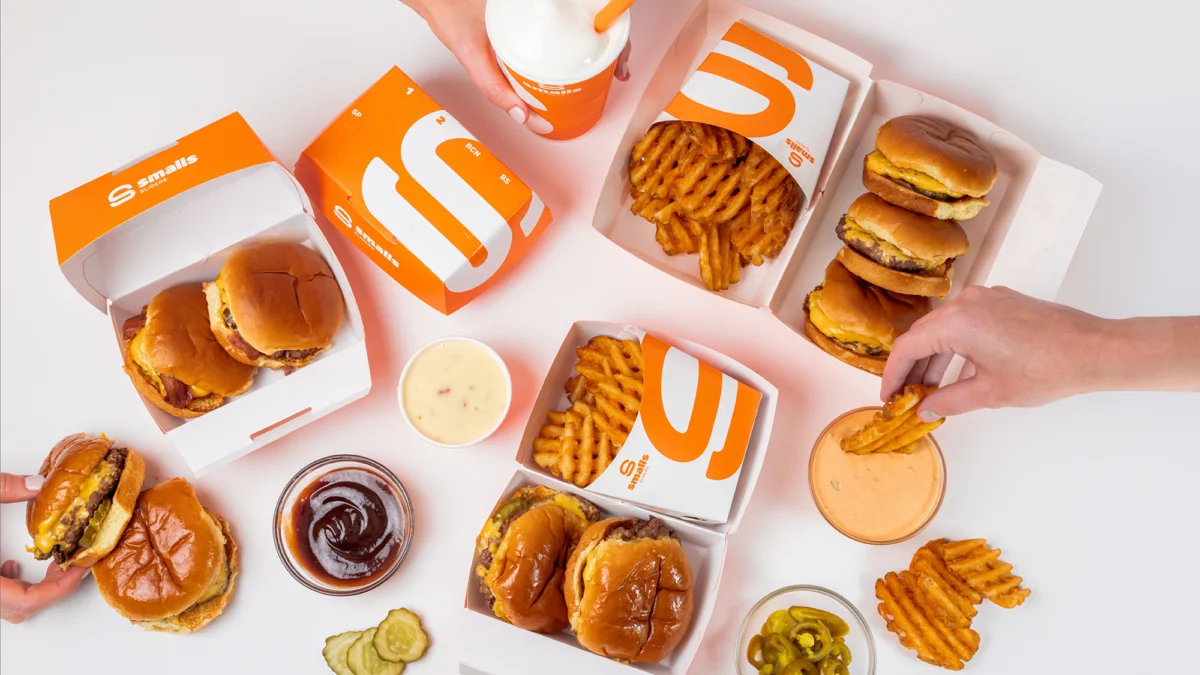
Brandon Landry, a name increasingly synonymous with entrepreneurial success in the competitive restaurant industry, has achieved a rare feat: launching not one, but two distinct concepts that have achieved significant national traction. While many restaurateurs would consider a single successful national brand a career-defining accomplishment, Landry has demonstrated a remarkable ability to identify market opportunities, innovate, and scale businesses effectively. His journey, which began as a walk-on basketball player and business student at Louisiana State University (LSU), has led to the creation of Walk-On’s Sports Bistreaux and, more recently, the rapidly expanding Smalls Sliders. This dual success story offers a compelling case study in strategic growth, adaptability, and the foundational principles of building a resilient restaurant franchise.
The genesis of Landry’s entrepreneurial drive can be traced back to his college years at LSU. It was during this period, while juggling the demands of being a walk-on basketball player and pursuing his business education, that the initial concept for Walk-On’s Sports Bistreaux was conceived. This foundational idea, born from a student assignment in 2003, was rooted in a desire to create a unique dining experience that blended the camaraderie of sports with a high-quality, approachable menu. The concept resonated, and Walk-On’s officially opened its doors in Baton Rouge, Louisiana, in 2004.
The growth of Walk-On’s Sports Bistreaux has been a testament to its enduring appeal. Over the years, the brand has evolved from a local favorite into a significant national player in the casual dining and sports bar segment. By the close of 2025, Walk-On’s was projected to operate 78 locations, a substantial footprint that speaks to its successful market penetration and franchise model. The brand has consistently focused on delivering a vibrant atmosphere, a diverse menu with a Southern flair, and a commitment to community involvement, which have collectively contributed to its sustained growth and brand loyalty.
However, Landry’s ambition did not stop with Walk-On’s. Recognizing the evolving landscape of the restaurant industry, particularly the demand for quicker service models and innovative build-out solutions, he launched Smalls Sliders in 2018. This second venture was designed with a different growth strategy in mind. Smalls Sliders focuses on a small-footprint, drive-thru-centric model that leverages prefabricated, modular construction using shipping containers. This approach significantly reduces build-out times and costs, enabling faster deployment of new locations and facilitating rapid scalability.
The efficiency of the Smalls Sliders model has been instrumental in its swift expansion. According to the most recent Technomic Top 500 report, the brand was poised to reach 45 locations by the end of 2025. Landry has indicated that the pipeline for Smalls Sliders is robust, with hundreds of additional locations in development. He anticipates the brand will surpass the 100-store mark in the upcoming year, signaling a trajectory of explosive growth. This rapid ascent highlights the market’s appetite for streamlined, adaptable quick-service concepts.
In a recent discussion on the podcast "Take-Away with Sam Oches," Brandon Landry delved into the parallels and divergences in growing both Walk-On’s and Smalls Sliders. The conversation provided valuable insights into the core principles that underpin his success in scaling restaurant ventures, regardless of the specific concept. A key theme that emerged was the universal importance of a strong operational foundation, a clear brand identity, and a franchise system that is responsive to the needs of its partners.
Strategic Similarities and Divergences in Scaling
While Walk-On’s and Smalls Sliders cater to different market segments and employ distinct operational models, Landry identified several fundamental similarities in their growth strategies. Central to both is the establishment of a replicable and profitable unit economic model. For Walk-On’s, this involved refining the casual dining experience to ensure consistent quality, service, and atmosphere across multiple locations. For Smalls Sliders, it meant optimizing the drive-thru operation and the cost-effectiveness of its modular construction to deliver value and speed to customers and attractive returns to franchisees.
"The core of any successful restaurant scaling effort lies in understanding what makes a single unit thrive, and then building systems and processes to replicate that success consistently," Landry stated in the podcast interview. "For Walk-On’s, it was about perfecting the ‘game day’ atmosphere and a menu that appeals broadly. For Smalls, it’s about the perfect slider, served with incredible speed and efficiency."
The divergence, as noted, lies in the agility and speed of deployment. The modular, container-based construction of Smalls Sliders allows for a significantly faster ramp-up time compared to traditional brick-and-mortar builds. This innovation directly addresses a key challenge in franchise growth: time to market. By reducing construction timelines, Smalls Sliders can open new locations more rapidly, accelerating revenue generation and brand visibility. This strategic advantage is crucial in today’s fast-paced consumer environment where capturing market share quickly is often paramount.
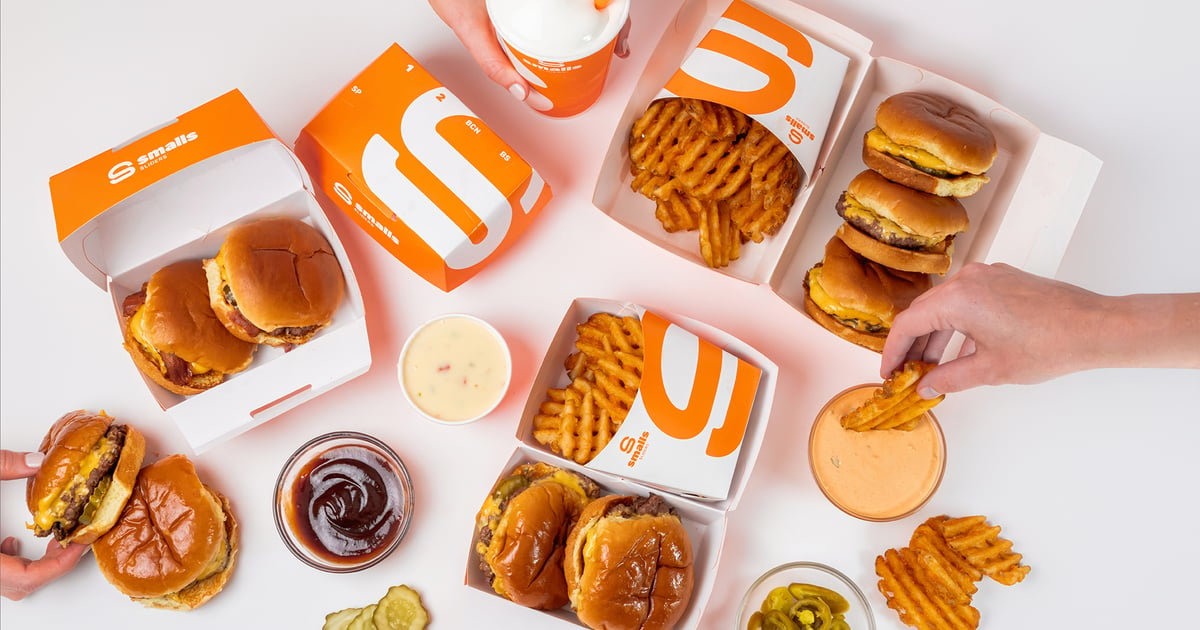
The Key Ingredients to Restaurant Scaling
Landry’s insights into scaling restaurants underscore several critical elements that transcend individual brand identity. These ingredients, he suggests, are essential for any restaurateur aiming for multi-unit or national expansion:
- A Differentiated Concept: Both Walk-On’s and Smalls Sliders offer something distinct. Walk-On’s provides a vibrant sports bar atmosphere combined with a robust menu, differentiating itself from generic sports pubs. Smalls Sliders focuses on a hyper-specialized, high-quality slider product delivered through an efficient, modern model, carving out a niche within the quick-service landscape.
- Robust Unit Economics: Profitability at the individual store level is the bedrock of any franchise system. Landry emphasized the importance of meticulously analyzing and optimizing revenue streams, cost of goods sold, labor, and overhead to ensure each location can be a successful business for its owner.
- Scalable Operational Systems: The ability to replicate a positive customer experience consistently across numerous locations is vital. This involves standardizing recipes, service protocols, training programs, and supply chain management. For Smalls Sliders, the modular build-out itself is a key operational system designed for scalability.
- A Strong Franchisee Partnership Model: Landry highlighted the evolving needs of franchisees and the importance of a franchisor that is actively listening and adapting. This includes providing comprehensive support, effective training, ongoing operational guidance, and a willingness to innovate based on franchisee feedback and market demands. He indicated that Smalls Sliders is particularly focused on this aspect, understanding that franchisee success is directly tied to the brand’s overall growth.
- Adaptability and Innovation: The restaurant industry is dynamic. Landry’s creation of Smalls Sliders, with its innovative construction and operational model, demonstrates a proactive approach to adapting to market trends and technological advancements. This willingness to experiment and evolve is crucial for long-term viability.
Smalls Sliders: Adapting to Franchisee Needs
The podcast discussion specifically touched upon how Smalls Sliders is proactively addressing the evolving requirements of its franchisees. This involves a commitment to continuous improvement and a recognition that the franchisor-franchisee relationship is a partnership. Landry mentioned that Smalls is actively soliciting feedback on everything from operational efficiencies at the store level to marketing support and new product development.
"Our franchisees are on the front lines," Landry explained. "They have invaluable insights into what’s working, what can be improved, and what their customers are looking for. We are building Smalls Sliders with their input at the forefront. This includes refining our operational playbooks, enhancing our technology stack, and ensuring our marketing efforts are driving traffic to their doors."
This focus on franchisee support is particularly important for a brand undergoing rapid expansion. By fostering strong relationships and demonstrating a commitment to their partners’ success, Smalls Sliders aims to build a loyal and motivated franchise network, which is essential for sustained growth and brand integrity. The brand’s innovative use of shipping containers for its physical locations is not just a cost-saving measure but also a statement of its forward-thinking approach, appealing to a new generation of entrepreneurs looking for modern, efficient business models.
Broader Implications for the Restaurant Industry
Brandon Landry’s dual success story with Walk-On’s Sports Bistreaux and Smalls Sliders offers several significant implications for the broader restaurant industry.
Firstly, it validates the potential of niche specialization within the quick-service segment. Smalls Sliders’ focus on a singular, high-quality product (sliders) combined with an optimized service model demonstrates that even in a crowded market, carefully defined concepts can find significant success. This contrasts with the more generalized offerings of many casual dining chains.
Secondly, the innovative use of modular construction by Smalls Sliders highlights a growing trend in the industry. As real estate costs rise and the demand for faster store openings intensifies, prefabricated and modular building solutions are likely to become increasingly attractive. This approach not only reduces capital expenditure for franchisees but also speeds up the return on investment, a critical factor in franchise recruitment and development. Industry analysts have noted that companies exploring such methods are often positioned for rapid expansion and greater market share capture.
Thirdly, Landry’s journey underscores the importance of entrepreneurial resilience and vision. Starting a restaurant concept is challenging; growing it into a national brand is exceptional. Achieving this twice, with distinct concepts, showcases a rare blend of strategic thinking, operational acumen, and the ability to adapt to market dynamics. His transition from a student’s assignment to leading two successful multi-unit brands serves as an inspiring example for aspiring restaurateurs.
The success of both Walk-On’s and Smalls Sliders suggests a bifurcated growth strategy is viable: one focused on a robust, community-centric casual dining experience, and the other on a highly efficient, scalable quick-service model. This approach allows for diversification and caters to different consumer needs and market opportunities. As Smalls Sliders continues its aggressive expansion, its performance will be closely watched as a benchmark for other concepts exploring modular construction and specialized quick-service offerings.
In conclusion, Brandon Landry’s dual restaurant empire represents more than just individual brand successes; it embodies a strategic approach to growth that is adaptable, innovative, and deeply rooted in understanding market demands and franchisee needs. His journey from a college student with an idea to a prominent industry leader offers valuable lessons for anyone seeking to build and scale a successful restaurant business in the 21st century. The continued expansion of both Walk-On’s and Smalls Sliders will undoubtedly shape future discussions on franchising, operational efficiency, and the enduring power of well-executed restaurant concepts.
