

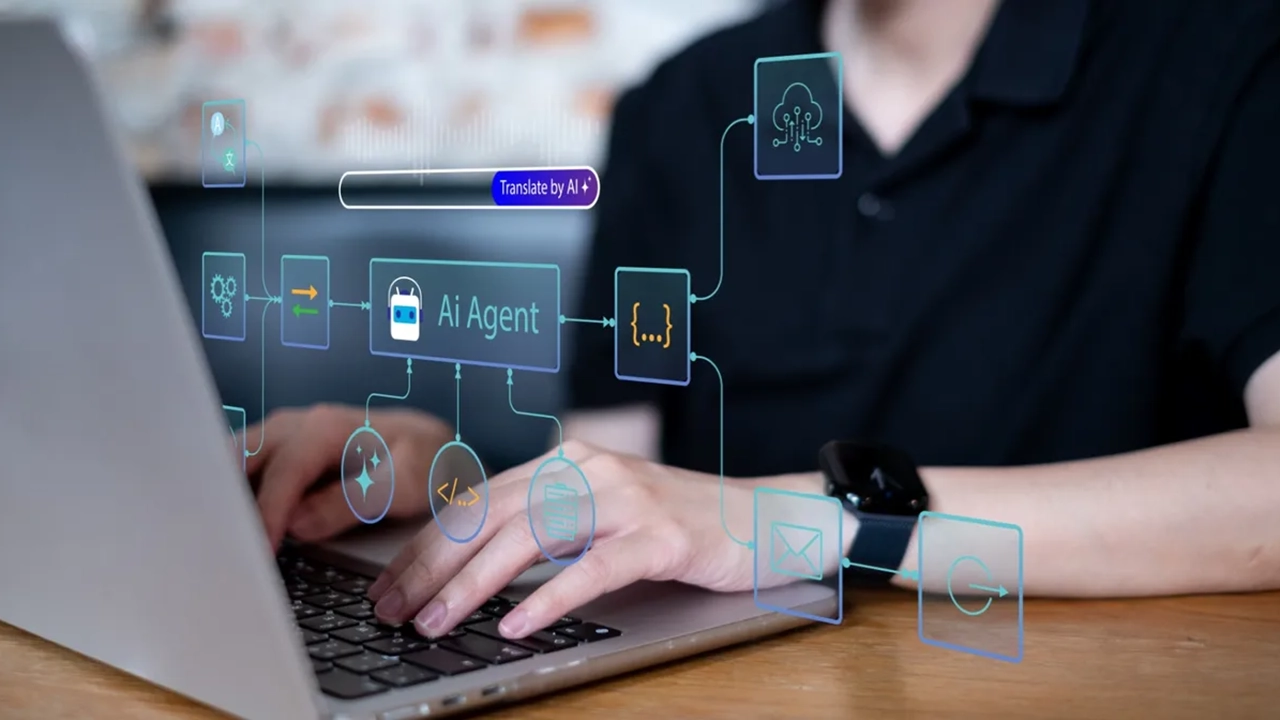
The perennial challenge of managing prime cost—the combined expense of food and labor as a percentage of sales—has long been a critical metric for restaurant operators. While a healthy range is typically considered to be between 55% and 60%, many establishments find themselves operating at a less desirable 68%. For years, the traditional solution has involved engaging a consultant, a costly endeavor that, while often effective, leaves a lingering question of return on investment for the operator. Now, a new paradigm is emerging, driven by the transformative power of artificial intelligence, promising to democratize access to sophisticated operational insights and execution previously only available through expensive external expertise.
The Traditional Bottleneck: Consultants and theROI Conundrum
The established pathway to addressing inflated prime costs has historically been the hiring of specialized consultants. These professionals, commanding hourly rates that can range from $150 to $350, typically deliver a focused prime cost engagement that culminates in an average cost of approximately $11,000. Their methodology is well-honed: they meticulously analyze point-of-sale (POS) and payroll data, meticulously reconstruct staffing schedules based on actual ticket volume, re-evaluate the costing of underperforming menu items, and implement a weekly performance dashboard. The efficacy of this approach is widely acknowledged, with operators frequently recouping their investment within a matter of months.
However, a significant hurdle remains: the reluctance of many restaurant owners to commit to such an engagement, despite its proven success and the fact that the $11,000 fee is often within reach for businesses generating $2 million in annual revenue. The core of this hesitation lies not in the consultant’s diagnosis or the financial feasibility, but in the inherent uncertainty of the ultimate financial outcome. The crucial question—"Is this going to put more back on the bottom line than it takes off?"—remains a subjective gamble. Even the consultant, tasked with presenting a compelling case, cannot definitively guarantee a positive net return for the operator.
This uncertainty is starkly illuminated when the proposition is flipped. If the same consulting engagement were offered with a performance guarantee, promising a return of $22,000 against the $11,000 investment, it would likely be accepted before the initial meeting concluded. The fundamental issue, therefore, has never been the identification of the problem—the prime cost number itself—but rather the lack of definitive clarity and assured outcomes.
The AI Disruption: From Proposal to Execution
The detailed outline of a consultant’s proposed engagement, often provided for free by consultants when an operator requests a quote, is now being directly replicated and, crucially, acted upon by artificial intelligence. The distinction between a "free document" and a paid engagement has effectively dissolved.
This paradigm shift has been demonstrated through practical application. An individual with extensive experience in enterprise sales and a background in developing AI systems for businesses recently conducted a direct test. They meticulously crafted a four-week prime cost scope of work, mirroring the detailed proposals a consultant would present after an on-site assessment, rather than the more generalized phases outlined on their websites. This scope of work was designed to be a composite, drawing from the practices of various consulting firms and priced according to published industry rates, recognizing that a scope without a price is merely a descriptive document.
This detailed plan was then fed into an AI system, accompanied by essential contextual information about a hypothetical restaurant: 120 seats, casual dining, $2.1 million in annual revenue, a current prime cost of 68%, and a target of 58%. Within approximately one minute, the AI generated a comprehensive action plan.
AI-Driven Operational Overhauls
The AI’s output included specific, actionable recommendations. For instance, it proposed reducing the kitchen staff on Tuesday through Thursday dinner shifts from four line cooks to three, with the fourth cook only being called in when ticket volume exceeded fifteen covers per hour. This adjustment, based on an analysis of ninety days of POS timestamp data, was projected to save roughly nine labor hours per week across these slower shifts.
Furthermore, the AI re-costed the chicken Parmesan. With a current plate cost of $4.80 against a menu price of $16, the recommendation was to reduce the portion size from eight ounces to six and to substitute hand-cut fries with a par-baked wedge. This single menu item adjustment was calculated to reduce its food cost from 30% to 23% without any change to the menu price. The plan also incorporated the implementation of a weekly dashboard featuring red, yellow, and green indicators to track progress against the targeted prime cost.
The Execution Gap Closes
What distinguishes this AI-driven approach is its ability to move beyond mere recommendations and into the realm of automated execution. By integrating with the restaurant’s existing systems—the POS, scheduling software, and other contemporary one-window AI tools—the AI can now pose a critical question: should it update recipe costings and rebuild next week’s schedule immediately, or commence these actions on the following Monday?
This seamless synthesis of the operator’s data and the consultant’s playbook, facilitated by AI, is what the originator of this concept terms the "Kerzie effect." The POS data, which has always belonged to the operator, serves as the crucial context. The consultant’s proposal, historically a free playbook, now finds its execution facilitated by AI. The only element that was previously being paid for was the "execution gap"—the chasm between knowing what to do and having the capacity or will to do it. This gap is rapidly narrowing.
The Enduring Value of Human Expertise
While the transformative potential of AI in operational efficiency is undeniable, it is crucial to acknowledge the aspects of the consulting process that transcend data analysis and algorithmic recommendations. The seasoned consultant, with potentially hundreds of kitchen visits under their belt, possesses invaluable qualitative insights that no document or AI can fully replicate.
Nuances Beyond the Data
These insights include the ability to discern that a food cost problem might stem from a "portioning culture" issue rather than simply ingredient prices. They can anticipate which general managers might subtly undermine proposed schedule changes, understanding the human dynamics at play within an establishment. This is observational intelligence, born from direct experience, that goes beyond the structured playbook.
Furthermore, consultants provide accountability. They return weeks later to verify whether the projected numbers have materialized. This element of accountability, a commitment to follow-through, is a valuable asset that AI, in its current form, cannot fully replace. It’s important to note that these human contributions are not about passing judgment on what the restaurant should do, but rather about ensuring the execution and validating the outcomes.
Navigating the AI Continuum
The application of AI in business exists on a spectrum. At one end are those who claim to use AI simply by typing questions into a chatbot and presenting the responses. At the other end lies a fully autonomous AI-operated company. The level of AI sophistication required to achieve the operational improvements described in this context resides much closer to the left end of this spectrum than many might assume. It surpasses basic chatbot functionality but falls far short of complete autonomy. Importantly, the tools facilitating this are continually evolving and becoming more accessible.
This accessibility, however, presents a duality. A Harvard Business School experiment involving 758 consultants revealed that AI could perform tasks within their scope approximately 25% faster and with roughly 40% higher quality. Conversely, individuals attempting tasks beyond AI’s capabilities performed worse than those who used no AI assistance at all.
The Operator’s Imperative: Ownership and Engagement
Crossing the threshold into AI-assisted operational improvement necessitates more than just access to the technology. It requires a fundamental commitment from the operator. Someone must genuinely care that a prime cost of 68% represents significant financial leakage occurring week after week. This care must translate into ownership of the process and a drive to enhance operations. A sophisticated dashboard, no matter how well-designed, remains an inert spreadsheet with opinions if no one within the organization is motivated to populate and act upon its insights. If there is no internal desire for the prime cost numbers to improve, the AI cannot be blamed for any lack of progress.
Moreover, the implementation and ongoing maintenance of any new system require human involvement. This responsibility will likely fall not on the owner directly, but on a General Manager or an individual who already deeply understands the POS reports and recognizes operational inefficiencies, such as chronic overstaffing on Tuesday dinners. These individuals are the custodians of the contextual data that the AI needs to function effectively. Crucially, this engagement does not necessitate a high level of technical expertise.
The Future of Restaurant Roles
The assertion is that traditional restaurant jobs are not disappearing, and job titles will largely remain consistent. What will undoubtedly transform is the underlying skill set required for these roles. A General Manager who embraces learning and mastering these new AI-driven operational tools represents one of the most cost-effective operational upgrades available to a restaurant. The talent and potential are already present within the existing workforce.
A Strategic Recommendation: Embrace the Free Playbook
For those in the business of selling AI solutions, the recommendation might seem counterintuitive, but it is rooted in pragmatic observation. The traditional consultant’s playbook, in and of itself, is not worth purchasing. Most operators have long understood this implicitly. What many overlook is that external judgment is also not worth buying.
The fundamental truth is that judgments about a restaurant’s operations are deeply intertwined with the owner’s lived experience and the realities of late-night service on a busy Friday. These are decisions that cannot be effectively outsourced.
The strategic move, therefore, is to acquire both halves of the equation without incurring the traditional costs. The first step is to request a detailed proposal from a consultant. Allow them to conduct their assessment and present their playbook, just as they have always done. Subsequently, take this detailed outline and apply it to the restaurant’s own POS data using an AI tool. Scrutinize the output generated by the AI with careful consideration.
The significant advantage of the AI-generated output is its impartiality. The AI has no service line to protect or agenda to advance. It presents options objectively. The consultant’s recommendations, while often honest and well-intentioned, can be subtly influenced by their existing service offerings or areas of expertise. The AI, conversely, lays bare the possibilities.
This process empowers the operator to engage in the part of the decision-making that has always been theirs: the final choice.
The Operator’s Advantage
By adopting this approach, restaurants can achieve one of two critical outcomes. Either they save the substantial fee associated with traditional consulting, or they enter into an engagement with a clear and precise understanding of precisely what they are paying for. The inherent advantage in any business transaction has always belonged to the party that controls the data. In the restaurant industry, that party has consistently been the operator. The advent of AI simply amplifies this long-standing truth, placing unprecedented analytical and execution power directly into their hands.
