

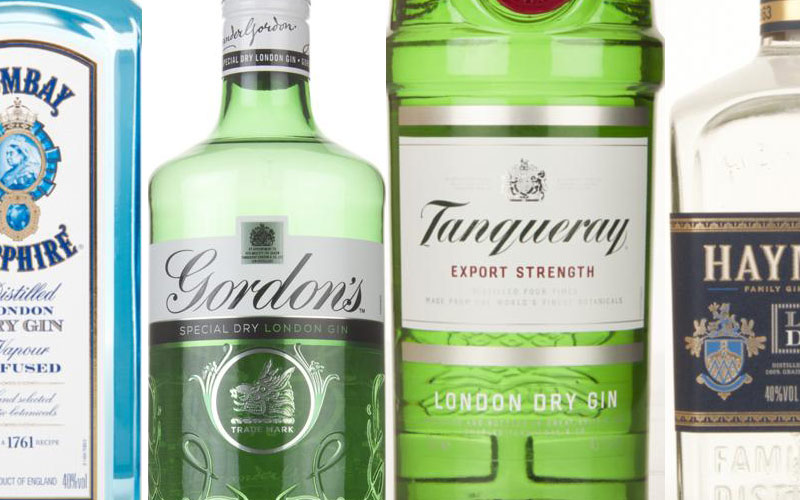
The term London Dry Gin, despite its geographic name and specific flavor associations, remains a technical process designation rather than a protected indication of origin or a strictly defined flavor profile. This regulatory reality, reinforced by the European Union’s 2019/787 legislation and subsequent amendments, continues to shape the global spirits market, creating a complex landscape for distillers and consumers alike. While many associate the label with a specific botanical "punch" or a historical connection to the United Kingdom’s capital, the legal framework focuses almost exclusively on the methods of production, the purity of the base spirit, and the timing of flavor infusion.
The Regulatory Framework: A Shift from Tradition to Codification
The evolution of gin regulation reached a significant milestone in 2019 when the European Union updated its spirit drinks legislation. Regulation (EU) 2019/787, which replaced the older 2008 standards, sought to clarify the definitions of various spirit categories to ensure consumer protection and fair competition. Although further refined under Regulation 2021/1465, the core requirements for London Dry Gin have remained remarkably consistent.
In the United Kingdom, the regulatory environment carries an additional layer of complexity due to the nation’s exit from the European Union. Currently, the U.K. adheres to the version of the EU legislation that was in effect at the time of the transition, effectively "freezing" the standards until domestic lawmakers choose to diverge. For international trade, this means that while the terminology remains harmonized for now, the underlying legal authorities are distinct.
Historically, the "London Dry" designation emerged not as a marketing tool, but as a quality control measure. During the 18th and 19th centuries, gin production was often unregulated and dangerous. Spirits were frequently distilled from low-quality grains or waste products, resulting in harsh, impure liquids. To mask these defects, distillers added heavy amounts of sugar, turpentine, or other adulterants. The "London Dry" style represented a move toward purity, enabled by the technological leap of the continuous column still.
Technical Specifications of Distillation and Purity
To understand why a gin earns the London Dry label, one must look at the chemistry of the distillation process. According to Section 21.a of Regulation 2019/787, all London Gins must first meet the criteria for "Distilled Gin." This begins with the base spirit, which must be of agricultural origin—typically grain, though sugar beets, grapes, or even dairy by-products like whey are permitted.
The first technical hurdle is the initial alcoholic strength. The base spirit must be distilled to at least 96% alcohol by volume (ABV). This high threshold effectively mandates the use of a column still, as traditional pot stills generally cannot reach such levels of purity in a single run. At 96% ABV, the spirit is considered "neutral," meaning it has been stripped of the character of its source material, providing a blank canvas for the distiller.
Once this neutral spirit is obtained, it must be redistilled in the presence of Juniperus communis L. (juniper berries) and other natural botanicals. For a gin to be labeled "London Gin," several additional constraints apply:
- Methanol Limits: The spirit must contain no more than 5 grams of methanol per hectoliter of 100% vol. alcohol. Methanol, often called "wood alcohol," is a toxic byproduct of fermentation. While modern distillation techniques make methanol poisoning rare in commercial spirits, this limit remains a hallmark of the London Dry quality guarantee.
- Distillation Yield: The resulting distillate must come off the still at an alcoholic strength of at least 70% ABV.
- Additive Restrictions: No colorings may be added. Furthermore, no flavorings or sweetening products can be introduced after the distillation process is complete.
- Dryness Standard: To use the word "dry," the final product cannot contain more than 0.1 grams of sweetening products per liter, expressed as invert sugar.
The Timing of Flavor: Distilled vs. London Dry
A common point of confusion among consumers is the distinction between "Distilled Gin" and "London Dry Gin." The primary difference lies in when and how flavor is added.
A "Distilled Gin" allows for the addition of flavorings after the final distillation. For example, the popular brand Hendrick’s Gin is a distilled gin but cannot be labeled a London Dry Gin because it infuses essences of rose and cucumber after the spirit has left the still. Similarly, Martin Miller’s Gin, which adds a separate cucumber distillate post-process, falls into the "Distilled" category rather than "London Dry."
In contrast, a London Dry Gin must have its entire flavor profile—excluding water and neutral spirit used for dilution—derived exclusively from the redistillation of plant materials in the still. This "one-shot" or "concentrate" method ensures that the volatile oils from the botanicals are chemically bonded to the spirit during the heating process.
The Botanical Dilemma and the "Plant" Requirement
The current legislation includes a specific clause that limits the flavor sources for London Gin to "natural plant materials." This seemingly straightforward requirement has created modern hurdles for experimental distillers. Under a strict interpretation of the law, a gin flavored with mushrooms—such as the American-made Radoune Gin—would technically fail the London Dry criteria because mushrooms are fungi, not plants.
Similarly, "Pechuga-style" gins, a technique borrowed from mezcal production where raw meat (such as turkey or chicken breast) is suspended in the still during distillation, would also be excluded. Portobello Road’s Director’s Cut No. 03, which utilized this method, cannot bear the London Gin designation because the flavor is derived from animal protein rather than botanical matter.
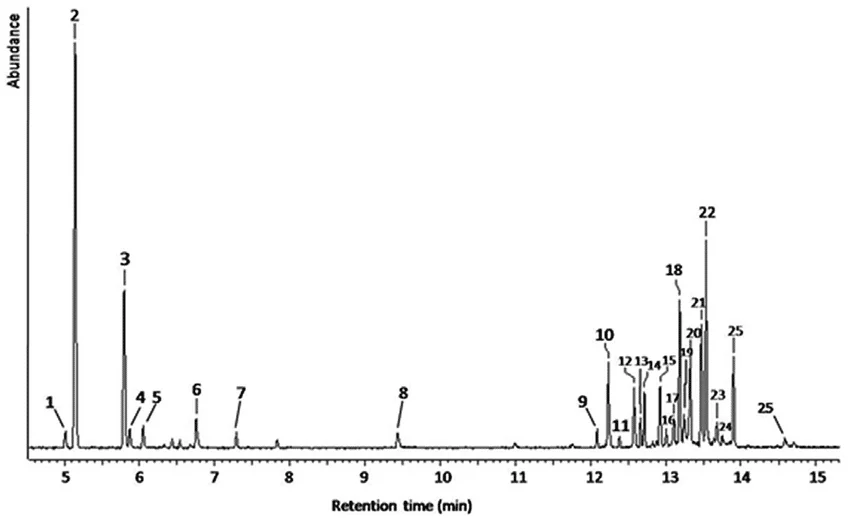
Furthermore, the law requires that the "predominant flavor" of any gin be that of juniper. However, the definition of "predominant" remains one of the most subjective and loosely enforced aspects of the regulation. There is no legal numerical value or chemical threshold for juniper oil (alpha-pinene) content. While some large-scale distilleries use Gas Chromatography-Mass Spectrometry (GC-MS) to ensure consistency by measuring volatile peaks, regulatory bodies lack the resources to apply such rigorous testing to every product on the market. Consequently, the "juniper-forward" requirement is largely symbolic, allowing "contemporary" or "New Western" style gins—which often emphasize citrus or floral notes over juniper—to remain on the shelves alongside classic London Drys.
The Sugar Exception: Why "Dry" Allows Sweetening
A peculiar aspect of the London Dry regulation is the allowance of up to 0.1 grams of sugar per liter. While this may seem to contradict the "dry" label, the industry reality is that this sugar is rarely used for flavor. Instead, it often serves as a carrier for tracer molecules.
Large-scale producers, such as Gordon’s Gin, utilize "sugar dyes" or microscopic chemical tracers to protect their intellectual property and deter counterfeiters. These molecules allow the company to verify the authenticity of a bottle found in the marketplace. By allowing a tiny fraction of sugar, the law permits these anti-fraud measures without compromising the spirit’s perceived dryness.
Global Variations: The U.S. vs. The E.U.
The London Dry standard is a European creation, and its influence varies globally. In the United States, the Alcohol and Tobacco Tax and Trade Bureau (TTB) maintains a more inclusive definition. The U.S. standard defines gin simply as a spirit with a main characteristic flavor derived from juniper berries, produced by distillation or the mixing of spirits with aromatics.
Crucially, the U.S. does not strictly codify the "London" prefix in the same way the E.U. does. In the American market, the term "London Dry" is often used as a stylistic descriptor rather than a rigid process requirement. This discrepancy can lead to labeling challenges for distillers exporting between the two regions, as a product labeled "London Dry" in the U.S. might not meet the 0.1g sugar limit or the "no-additives" rule required for sale in Europe.
Analysis of Implications for the Spirits Industry
The decision by the E.U. to maintain the status quo in the 2019/787 legislation, rather than pursuing Geographical Indication (GI) status for London Dry Gin, has significant long-term implications. A GI status—similar to that held by Champagne or Cognac—would have required a "technical file" specifying the exact geographic location and traditional methods of production.
Had London Dry Gin been granted GI status, it is likely that many iconic gins produced outside of London (or even outside of the U.K.) would have been forced to rebrand. By keeping the term as a process designation, the E.U. has preserved the commercial interests of global brands that have used the label for decades. However, this comes at the cost of consumer clarity.
As the "craft gin" boom continues, the lack of a concrete flavor standard means the market will likely see an increasing number of London Dry Gins that taste very little like the "classic" profile. If the industry continues to push the boundaries of what "predominant juniper" means, there may be renewed calls for more stringent, perhaps even laboratory-based, definitions.
Summary of Core Realities
For the modern consumer and industry professional, three facts remain paramount regarding the London Dry Gin designation:
- It is not about geography: A London Dry Gin can be legally produced anywhere in the world, from Japan to South Africa, provided the process requirements are met.
- It is not a flavor profile: While traditionally associated with a crisp, juniper-heavy taste, a London Dry Gin can be "contemporary" and experimental, provided the flavors are infused during distillation and no color is added.
- It is a quality guarantee: The designation serves as an assurance of high-purity base spirits, low methanol content, and a lack of post-distillation additives or heavy sweeteners.
As of 2024, the London Dry label remains the industry’s most prestigious process-based hallmark. While its definitions are steeped in 19th-century chemistry and 21st-century bureaucracy, it continues to serve as the benchmark against which all other gin styles are measured. Whether the "predominant juniper" clause will eventually be replaced by numerical chemical standards remains a subject of debate among regulators and master distillers.
