

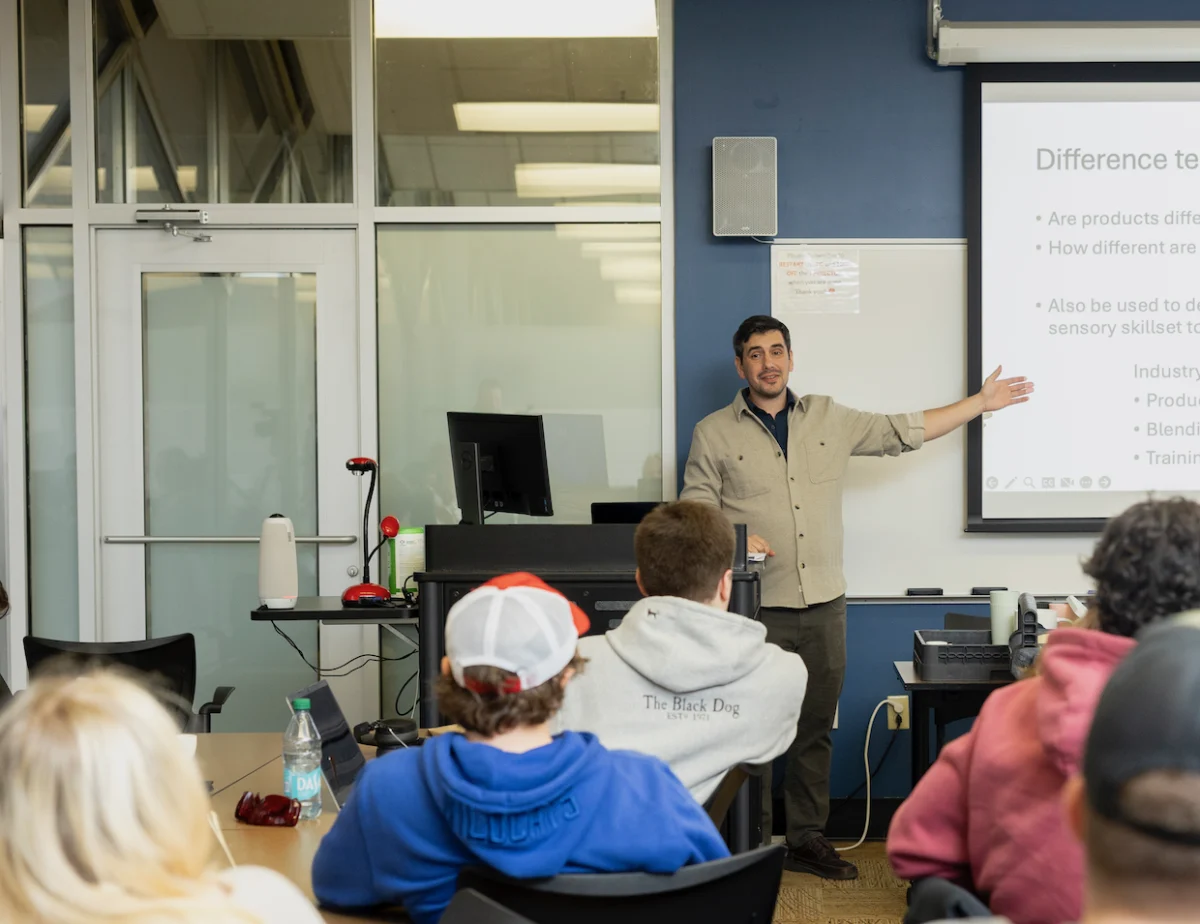
The University of Kentucky is set to make history this fall by launching its inaugural undergraduate coffee education program, marking a significant step in academic exploration of the beloved beverage. This pioneering initiative, housed within the esteemed Martin-Gatton College of Agriculture, Food and Environment (CAFE), promises to offer students a comprehensive understanding of coffee, spanning its rich history, complex science, and profound cultural significance.
Spearheading this ambitious venture is David Gonthier, an associate professor in the UK Department of Entomology. Gonthier, whose personal journey with coffee is deeply rooted in his family’s agricultural heritage in Honduras, envisioned a program that would bridge the gap between academic study and the tangible realities of the coffee value chain. His passion for coffee extends beyond the academic realm; he established the UK Coffee Lab, a research and educational center designed to be fully student-run, equipped with a 3-kilogram-capacity Mill City roaster and situated at the UK Horticulture Research Farm (South Farm). This hands-on facility serves as a crucial component of the new program, providing students with practical experience in coffee processing.
The curriculum, meticulously developed with contributions from UK graduate fellow Briana Bazile and Martin-Gatton CAFE research analyst Viktor Halmos, culminates in a "Coffee, Science and Culture" certificate. This interdisciplinary approach ensures that students gain a holistic perspective, moving beyond mere consumption to understand the intricate processes and global impact of coffee.
Core Curriculum: From History to Sensory Science
At the heart of the program lie two foundational courses: COF 301, "Not Just Coffee," and COF 302, "Coffee Sensory Science." "Not Just Coffee" will provide students with a deep dive into the historical trajectory of coffee, exploring its origins, its role in shaping global economies, and its profound influence on various cultures throughout history. This course aims to contextualize coffee not just as a commodity, but as a significant driver of social, political, and economic change across centuries.
Complementing the historical perspective, "Coffee Sensory Science" will offer a practical, hands-on introduction to the art and science of coffee tasting and evaluation. Students will learn to identify and articulate the complex flavor profiles, aromas, and textural characteristics that define high-quality coffee. This course is designed to equip them with the sensory vocabulary and analytical skills necessary to appreciate the nuances of coffee from different origins and processing methods.
While the certificate is designed to encompass the entire coffee value chain, from the farm where the beans are cultivated to the final cup enjoyed by consumers, Gonthier has expressed a clear ambition to expand the program’s practical components. Future plans include incorporating more in-depth laboratory experiences focusing on advanced roasting techniques, diverse brewing methodologies, and the fundamental business practices that underpin the coffee industry. This progressive vision underscores the program’s commitment to staying at the forefront of coffee education.
A Personal Journey Inspiring a Global Vision
David Gonthier’s deep-seated interest in coffee is intrinsically linked to his family’s history in Honduras, a major coffee-producing nation. His formative experiences living in rural Honduras, immersed in the lives of coffee farmers and farmworkers, profoundly shaped his perspective. He witnessed firsthand the challenges and triumphs associated with coffee cultivation, which instilled in him a strong desire to contribute to improving the livelihoods of producers.
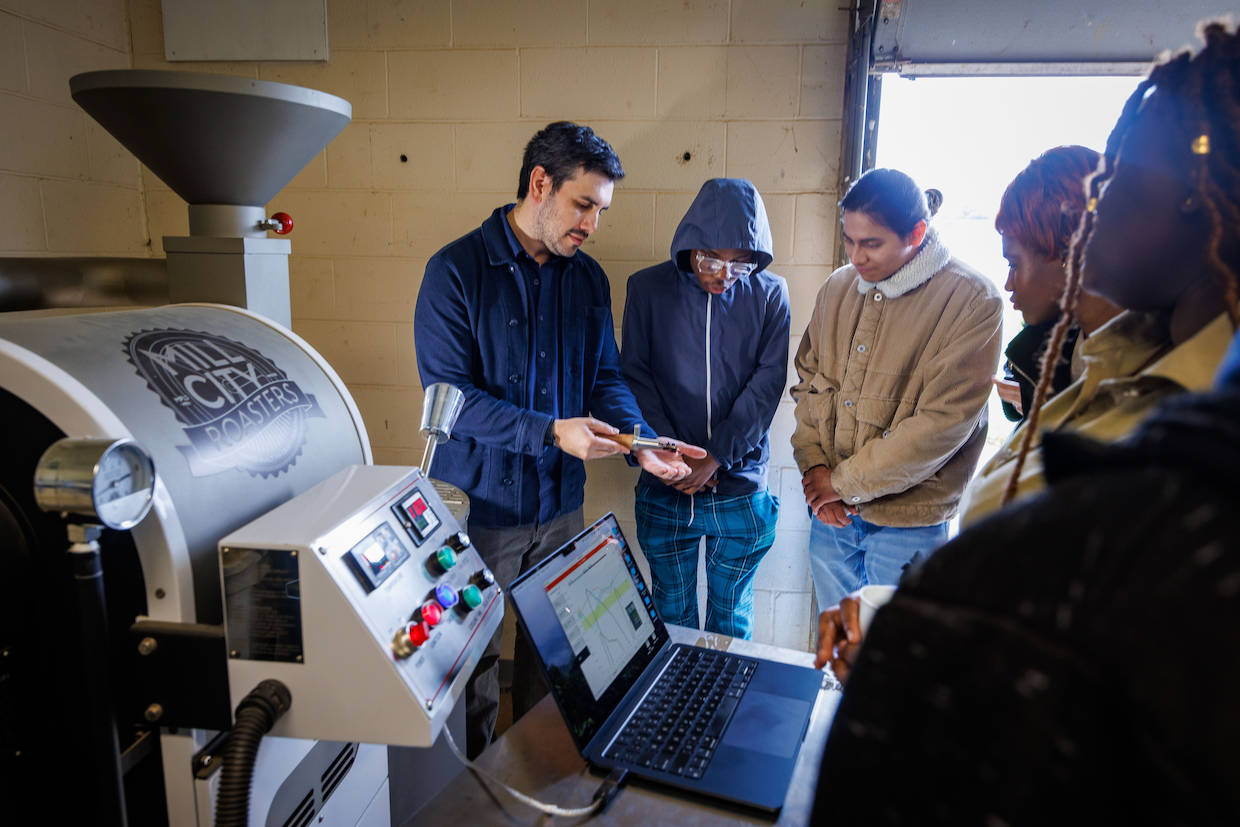
"I think the biggest eye-opening thing for me was living in rural Honduras and being able to really be close with people who are coffee farmers or even coffee farmworkers and seeing the struggles that they had in that part of the world," Gonthier shared in a recent interview. "It really kind of galvanized me to try to always want to do more and really learn about what coffee can provide to these producers."
Following his undergraduate studies in 2007, Gonthier took a year to live in Honduras, his mother’s home country. During this period, he collaborated with his cousin, a conservation biologist and coffee farmer, on projects that included documenting bird species in national parks. Crucially, he also gained invaluable practical knowledge of coffee farm operations, delving into production practices, pest management, organic farming techniques, and business strategies tailored for farmers.
His academic pursuits further solidified his expertise. Gonthier went on to earn a Ph.D. from the University of Michigan, where his research focused on the ecological and economic benefits of shade-grown coffee systems in Chiapas, Mexico. His scholarly work in this area has been published, contributing to the growing body of research on sustainable coffee cultivation. He has also maintained strong ties to coffee-producing regions, making frequent visits to Honduras to stay abreast of developments and challenges in the field.
The UK Coffee Lab: A Hub for Student-Led Innovation
The establishment of the UK Coffee Lab represents a tangible manifestation of Gonthier’s vision. It serves as a practical extension of the classroom, offering students an unparalleled opportunity to engage directly with the coffee-making process. The lab’s student-run model is designed to foster a sense of ownership and responsibility, empowering students to experiment, learn, and innovate under faculty guidance.
The decision to integrate a dedicated coffee lab into the university’s agricultural and environmental science departments is particularly noteworthy. It signals a recognition of coffee not just as a beverage, but as a complex agricultural product with significant economic, social, and environmental implications. This approach aligns with broader trends in higher education, emphasizing experiential learning and interdisciplinary problem-solving.
Looking Ahead: Expanding Horizons and Global Connections
Gonthier’s aspirations for the program extend beyond the confines of the UK campus. He has expressed a strong desire to introduce study abroad opportunities, specifically tailored to provide students with direct exposure to coffee production systems in origin countries. These trips would be designed to showcase diverse farming practices, processing methods, and the socio-economic contexts in which coffee is grown. Such immersive experiences are invaluable for cultivating a global perspective and fostering a deeper understanding of the challenges and opportunities within the coffee sector.
"Another big thing I really hope to do is provide study abroad opportunities – trips to origin built around seeing examples of different types of coffee production systems and how those are all set up," Gonthier stated.
The development of this program arrives at a critical juncture for the global coffee industry. Fluctuations in commodity prices, the impacts of climate change on coffee-growing regions, and evolving consumer preferences are all significant factors shaping the future of coffee. Educational initiatives like the one at the University of Kentucky are poised to play a crucial role in equipping the next generation of coffee professionals with the knowledge and skills needed to navigate these complexities and contribute to a more sustainable and equitable industry.

Broader Implications for Agricultural Education and the Coffee Industry
The introduction of an undergraduate coffee education program at a major research university like the University of Kentucky has several significant implications. Firstly, it elevates coffee from a niche interest to a legitimate field of academic inquiry, potentially inspiring similar programs at other institutions. This recognition can lead to increased research funding, attract top-tier faculty, and foster greater collaboration between academia and the coffee industry.
Secondly, the program’s focus on the entire value chain, from farm to cup, addresses a critical need for well-rounded professionals in the coffee sector. By understanding the interconnectedness of cultivation, processing, roasting, brewing, and consumption, graduates will be better equipped to address challenges such as price volatility, supply chain transparency, and the promotion of sustainable practices.
The program’s emphasis on science and culture also highlights the multifaceted nature of coffee. Beyond its economic importance, coffee has a rich cultural heritage that influences social interactions, traditions, and global trade patterns. By integrating these aspects into the curriculum, the University of Kentucky is acknowledging the broader societal impact of coffee and preparing students to engage with it in a more informed and nuanced way.
Industry Reactions and Future Prospects
While direct official statements from broader coffee industry organizations regarding this specific program were not immediately available, the establishment of such an academic initiative is generally viewed positively. Industry leaders have long emphasized the need for skilled professionals who possess a deep understanding of coffee’s complexities. Programs that offer rigorous academic training combined with practical experience are seen as vital for advancing the industry’s sustainability, quality, and ethical practices.
The inclusion of topics such as farmer livelihoods, sustainable production, and market dynamics suggests a forward-thinking approach that aligns with the growing consumer demand for ethically sourced and environmentally conscious coffee. This focus can help cultivate a new generation of coffee professionals who are not only skilled baristas or roasters but also informed advocates for positive change within the global coffee community.
The University of Kentucky’s commitment to this program, supported by its College of Agriculture, Food and Environment, positions it as a potential leader in coffee-related research and education. As the program evolves and expands, it is likely to attract students from across the nation and potentially internationally, further solidifying its impact on the future of coffee. The development of the UK Coffee Lab and the ambitious plans for study abroad experiences underscore a dedication to providing students with a comprehensive and impactful educational journey. This initiative represents a significant investment in the future of coffee, promising to nurture a new cohort of knowledgeable and passionate individuals ready to contribute to the vibrant and ever-evolving world of coffee.
