

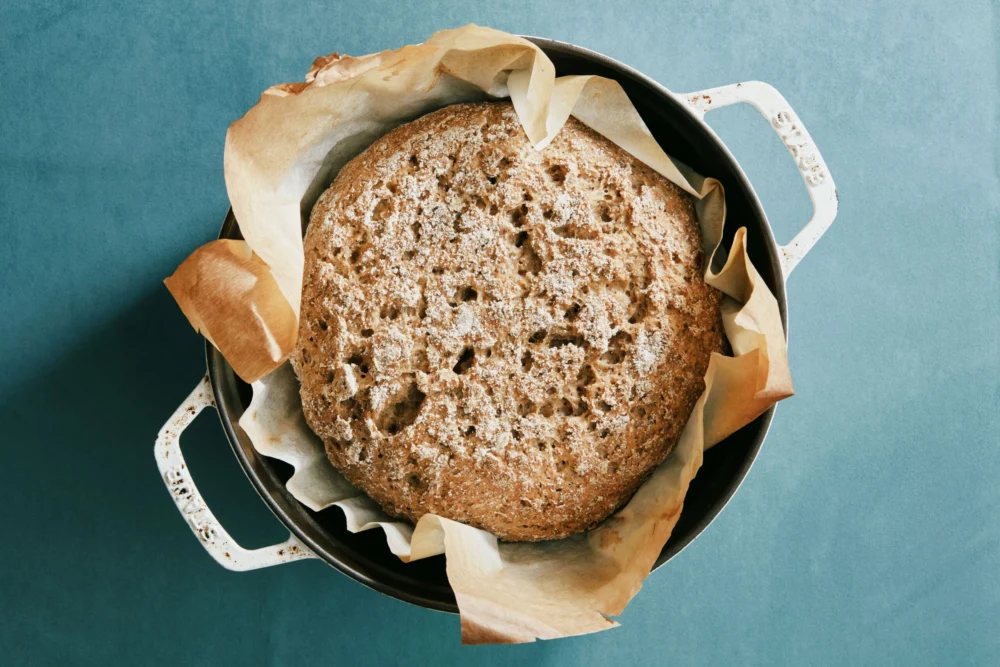
The culinary landscape for individuals navigating gluten-free dietary requirements has seen significant advancements, with a particular focus on simplifying traditionally complex baking processes. A recent development highlights an exceptionally straightforward gluten-free bread recipe that promises a dense, chewy crumb without the need for kneading, shaping, or scoring—steps often considered fundamental to conventional bread making. This innovation represents a crucial step in making staple foods like bread more accessible and less daunting for home bakers adhering to gluten-free diets. The recipe leverages ingredients such as oats and chia seeds to provide a robust texture, while offering flexibility with binding agents like xanthan gum or psyllium husk powder, and adaptable baking methods including a conventional loaf pan.
Background: The Gluten-Free Imperative and Its Challenges
The demand for gluten-free products has surged globally over the past two decades, driven primarily by increased diagnoses of celiac disease and a growing awareness of non-celiac gluten sensitivity (NCGS). Celiac disease, an autoimmune disorder affecting approximately 1% of the global population, necessitates a strict, lifelong gluten-free diet to prevent intestinal damage and associated health complications. NCGS, while not as clearly defined, affects a larger segment of the population, with estimates ranging from 0.5% to 6%, experiencing symptoms relieved by gluten avoidance. This demographic shift has spurred significant innovation in the food industry, with a market value for gluten-free products projected to exceed $10 billion by 2025.
Historically, gluten-free bread has posed a significant challenge for both commercial producers and home bakers. Gluten, a protein composite found in wheat, barley, and rye, is crucial for the elasticity, structure, and leavening capacity of traditional bread. Without gluten, doughs often lack cohesion, resulting in breads that are crumbly, dense, dry, or otherwise unpalatable. Early gluten-free breads were frequently criticized for their inferior texture and taste compared to their gluten-containing counterparts. This led to a perception that baking quality gluten-free bread at home was an arduous task, often requiring specialized flours, multiple binders, and intricate techniques to mimic gluten’s properties.
The Evolution of Gluten-Free Baking Techniques
The journey towards more palatable and accessible gluten-free bread has been a gradual one, marked by key scientific and culinary breakthroughs. Initially, gluten-free flours were primarily single-ingredient starches like rice flour or cornstarch, which contributed to poor texture. The development of blended gluten-free flours, combining various starches, protein flours (e.g., almond, sorghum), and fiber-rich flours, improved the nutritional profile and textural qualities. However, the fundamental challenge of achieving elasticity and structure without gluten remained.
The introduction of hydrocolloids like xanthan gum and guar gum in the late 20th century revolutionized gluten-free baking. These ingredients, derived from microbial fermentation or plant extracts, have the ability to absorb significant amounts of water and form gels, thereby mimicking some of gluten’s binding and viscoelastic properties. They provide structure, improve crumb texture, and extend shelf life in gluten-free products. More recently, psyllium husk powder, derived from the seeds of the Plantago ovata plant, has gained prominence as a natural, fiber-rich alternative binder, celebrated for its ability to create a more pliable dough and a chewier bread crumb.
A New Paradigm: Effortless Gluten-Free Home Baking
The described recipe embodies a significant shift towards simplifying gluten-free bread preparation, making it feasible for even novice bakers. The most striking feature is the elimination of traditional bread-making steps: kneading, shaping, and scoring. Kneading, which develops gluten strands in conventional bread, is entirely unnecessary here, directly addressing a core challenge of gluten-free baking. Similarly, the absence of shaping and scoring, often intimidating for beginners, streamlines the process considerably.
The recipe’s design suggests a focus on minimal intervention, a philosophy that resonates with the broader "no-knead" bread movement popularized in the mid-2000s. While traditional no-knead recipes rely on long fermentation to develop gluten, this gluten-free iteration demonstrates that similar ease can be achieved through careful ingredient selection and hydration, bypassing the need for gluten development altogether. This approach is particularly appealing in an era where consumers seek convenience without compromising on health or quality.
Key Ingredients and Their Functional Roles
The recipe highlights specific ingredients chosen for their functional contributions to the bread’s texture and nutritional profile:
- Oats: When certified gluten-free, oats are a valuable addition to gluten-free diets. They contribute dietary fiber, essential minerals, and a distinct nutty flavor. In this bread, oats likely provide bulk and contribute to the "plenty of nice texture," adding a pleasant chewiness and structural integrity to the dense crumb. Oats are known for their ability to absorb moisture, which can help prevent the bread from drying out.
- Chia Seeds: These tiny seeds are nutritional powerhouses, packed with fiber, omega-3 fatty acids, and protein. Their most crucial role in this recipe is their ability to form a gel when mixed with liquid. This "chia gel" acts as a natural binder, contributing to the dough’s viscosity and the bread’s moist, chewy texture. It also aids in water retention, which is vital for preventing dryness in gluten-free breads.
- Xanthan Gum: As a primary binding agent, xanthan gum is a polysaccharide widely used in gluten-free baking. It mimics the elasticity and viscosity provided by gluten, helping to trap gas produced by leavening agents and giving the bread structure. A typical inclusion rate in gluten-free bread recipes is around 0.5-1.5% of the flour weight, providing essential cohesion and preventing crumbling.
- Psyllium Husk Powder: Offered as an alternative to xanthan gum, psyllium husk powder is derived from the husks of Plantago ovata seeds. It is an excellent source of soluble fiber and has remarkable water-absorbing capabilities, forming a thick gel. This gel provides structure, elasticity, and a soft, pliable texture to gluten-free doughs, often leading to a more "bread-like" feel. The suggested replacement ratio of 15 grams of psyllium husk powder for xanthan gum implies a significant functional role, leveraging its high fiber content and gelling properties.
Methodological Flexibility: Loaf Pan Alternative
The recipe’s adaptability is further demonstrated by the inclusion of an alternative baking method using a conventional loaf pan. While the initial description might imply a free-form loaf, the loaf pan option provides a structured environment for the dough. Pouring the batter into a greased loaf pan, covering it, and allowing it to rise until doubled in size before baking at 450°F (approximately 232°C) for about an hour, offers a familiar approach for many home bakers.
The note regarding the crust—"The crust won’t be golden brown, but the end result will be equally delicious"—is an important detail. Gluten-free breads often brown differently than wheat-based breads due to the absence of gluten proteins and varying sugar content in the flour blend. The high temperature might still contribute to some crust development, but the primary focus remains on the interior crumb and overall flavor. This transparency helps manage expectations and emphasizes that visual cues might differ, but the quality of the finished product remains high. This adaptability ensures that bakers can achieve excellent results regardless of their preferred baking vessel or desired aesthetic.
Expert Perspectives and Community Impact
Culinary experts and nutritionists generally laud recipes that democratize healthy eating options. A registered dietitian might commend this recipe for incorporating whole grains (oats) and nutrient-dense seeds (chia), offering a fiber-rich alternative to many commercially processed gluten-free breads that can be high in refined starches. The simplicity of preparation also encourages more individuals to bake at home, allowing greater control over ingredients and reducing exposure to additives often found in store-bought products.
Food scientists would likely point to the synergistic effects of the ingredients. The combination of structural support from oats, the gelling action of chia seeds, and the binding capabilities of xanthan gum or psyllium husk creates a robust matrix capable of mimicking gluten’s functions. This recipe serves as an excellent example of how understanding ingredient science can lead to practical, user-friendly culinary solutions.
For the gluten-free community, such a recipe offers significant relief. The ability to produce a reliable, delicious bread without complex steps reduces the psychological barrier to home baking. This can lead to increased dietary adherence, greater food enjoyment, and a sense of empowerment for individuals who often feel limited by their dietary restrictions. Access to easy, homemade staples can also be more cost-effective than purchasing specialized gluten-free products, which often carry a premium price.
Broader Implications and Future Outlook
The emergence of simplified gluten-free bread recipes like this one has broader implications for the food industry and public health. It underscores a growing trend towards clean-label products and a desire for transparency in food preparation. As consumers become more health-conscious and ingredient-aware, demand for recipes that use wholesome, recognizable ingredients and minimal processing will likely continue to grow.
Furthermore, this type of recipe can inspire further innovation in gluten-free product development, encouraging manufacturers to explore simpler formulations and more natural binding agents. It also reinforces the idea that dietary restrictions do not necessitate culinary compromise or excessive effort.
The future of gluten-free baking appears increasingly bright, characterized by continued advancements in ingredient science, a deeper understanding of dough rheology without gluten, and a persistent drive for user-friendly recipes. As the knowledge base expands and culinary techniques evolve, gluten-free bread will likely become even more indistinguishable from its traditional counterparts in terms of texture, flavor, and, crucially, ease of preparation. This particular recipe stands as a testament to that ongoing evolution, offering a straightforward path to a delicious, homemade gluten-free staple for all.
