

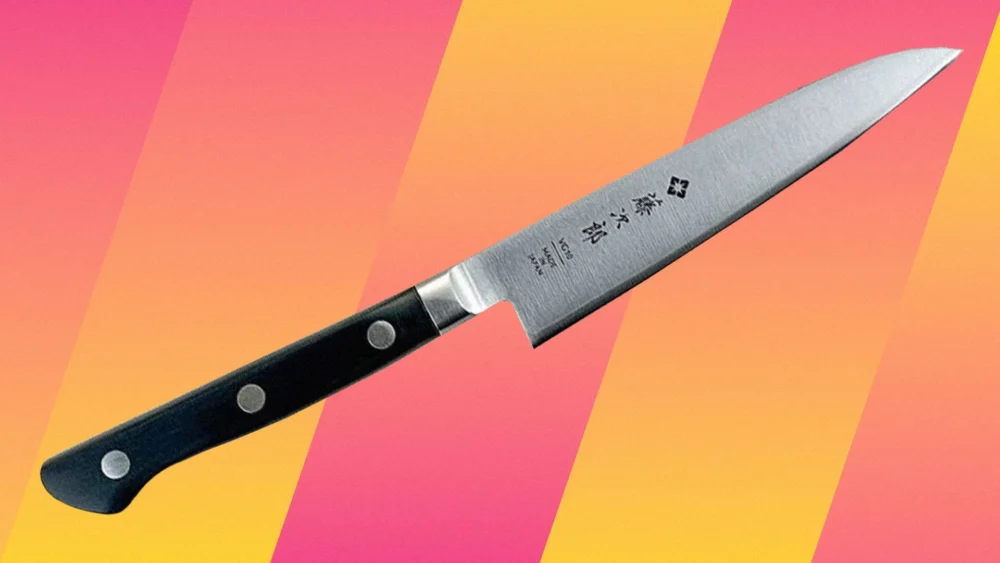
For decades, culinary orthodoxy in Western kitchens championed the chef’s knife as the undisputed king, a versatile behemoth capable of tackling virtually any cutting task. This prevailing wisdom, often distilled into maxims like "If you can’t do it with a chef’s knife, you’re not using your chef’s knife properly," led many home cooks and even professional apprentices to overlook other specialized blades. However, a quiet revolution has been unfolding in kitchens worldwide, driven by the increasing appreciation for precision, efficiency, and ergonomic comfort. At the forefront of this shift is the humble yet exceptionally capable petty knife, a Japanese-designed utility blade that is proving itself indispensable, often outperforming its larger counterparts and the often-awkward Western utility knife.
Historical Roots and Design Philosophy
The petty knife, whose name derives from the French word "petite" meaning small, traces its origins to Japan’s Meiji era (1868-1912). This period marked a significant cultural shift, with Japan opening its borders to Western influences, including culinary practices. As Western-style cooking gained popularity, Japanese blacksmiths, renowned for centuries for their unparalleled blade-making artistry, adapted their techniques to produce knives suited for these new culinary demands. The gyuto, the Japanese equivalent of a Western chef’s knife, emerged during this time, characterized by its thinner blade, harder steel, and often more acute edge angle compared to its European counterparts. The petty knife was conceived as a smaller, more nimble companion to the gyuto, embodying the same principles of precision and efficiency in a compact form.
Unlike the common Western utility knife, which often features a stick-straight blade of intermediate length, the petty knife inherits the elegant and functional design characteristics of its larger Japanese brethren. Western utility knives, typically found in standard knife blocks, often present ergonomic challenges; their thin, flat profile provides inadequate clearance between the user’s knuckles and the cutting board, leading to an uncomfortable and inefficient chopping motion. This design flaw often forces users into awkward grips, compromising both safety and precision.
Ergonomic Superiority and Blade Geometry
The petty knife, conversely, addresses these issues through thoughtful design. It boasts a sufficiently tall heel, the portion of the blade closest to the handle, which elevates the handle off the cutting board. This critical feature ensures ample knuckle clearance, allowing for a natural and comfortable grip, including the favored "pinch grip" where the thumb and forefinger hold the blade itself. This improved ergonomic design minimizes fatigue and significantly enhances control during extended prep work.

Furthermore, the petty knife’s blade geometry is optimized for a wide array of tasks. While many Western-style knives feature a pronounced curve that facilitates a rocking chop, Japanese-inspired blades, including the gyuto and petty knife, typically feature a "drop point." In this design, the spine of the blade gently curves downward towards the tip, culminating in a fine, sharp point. This drop point is invaluable for intricate "point work," such as scoring duck breasts, making precise grid cuts for dicing garlic cloves, or initiating delicate cuts with exceptional accuracy. This contrasts sharply with the blunter tips often found on Western utility knives, which lack the same piercing and detail-oriented capabilities.
The subtle curve of the petty knife’s edge is another testament to its refined design. The most dramatic angle of the blade is often positioned a few inches back from the tip, creating a gentle rock ideal for mincing herbs with fluid, controlled motions. More ingeniously, when the knife’s tip rests on the cutting board, the edge’s curve crests approximately a half-inch to an inch above the surface. This strategic placement positions the most aggressive slicing angle perfectly at the ideal height for cleanly slicing larger proteins like steak, demonstrating a meticulous understanding of practical kitchen application. This allows for effortless, continuous-motion slicing, where the knife’s inherent sharpness and balance do most of the work, requiring minimal pressure from the user.
Versatility in Application: Beyond the "Petite" Tasks
While its name suggests small tasks, the petty knife’s versatility extends far beyond paring or peeling. It often serves as the ideal intermediary tool, bridging the gap between a diminutive paring knife and a substantial chef’s knife. Consider the seemingly daunting task of portioning a whole roast chicken. Traditionally, this might be relegated to a heavy cleaver or a large chef’s knife. However, the petty knife excels here, its slender, sharp blade deftly navigating the joints and cartilage, separating parts with remarkable ease and minimal effort. Its precision allows for clean removal of the breast from the ribcage, a task that a paring knife would find too short and a chef’s knife too cumbersome for the necessary delicate maneuvers.
For everyday kitchen tasks, the petty knife proves invaluable. Peeling shallots, dicing garlic, slicing fruit, and cutting cheese become more comfortable and efficient. The significant knuckle clearance and stable grip mean that a user can seamlessly transition from handheld peeling to board-based chopping and dicing without compromising stability or risking injury. The smaller form factor of the petty knife is particularly advantageous when dealing with smaller ingredients, as it reduces the physical distance between the knife hand and the hand holding the food, leading to a more stable and controlled cutting position compared to using a larger gyuto or chef’s knife.
Distinguishing the Petty Knife from its Western Counterpart
The fundamental difference between a Japanese petty knife and a Western utility knife lies not merely in size, but in their underlying design philosophies. Western utility knives often serve as a generic "in-between" size, lacking the specific ergonomic considerations and blade geometry optimized for nuanced tasks. Their straight, relatively thick blades and lack of knuckle clearance make them less comfortable and less efficient for sustained cutting, often leading to a jarring motion that "bashes knuckles into the counter."

The petty knife, by contrast, is a purpose-driven design. It embodies the Japanese tradition of crafting specialized tools for specific functions, ensuring that each cut is executed with maximum precision and minimum effort. This focus on refined utility distinguishes it as a superior choice for any kitchen where efficiency, comfort, and cutting accuracy are prioritized.
Material Science and Craftsmanship
The performance of a petty knife is intrinsically linked to the quality of its materials and craftsmanship. Leading brands like Tojiro and Mac exemplify the standards of Japanese knife making.
Tojiro knives, often celebrated for their exceptional value, frequently feature a "san mai" construction. This traditional layering technique involves sandwiching a core of hard, high-carbon steel (such as VG-10) between two layers of softer stainless steel. The VG-10 steel, known for its excellent edge retention and hardness (often Rockwell 60-61 HRC), forms the cutting edge, while the softer outer layers provide flexibility, corrosion resistance, and protection for the brittle core. This construction results in a knife that sharpens beautifully, holds a keen edge, and offers good durability. The Tojiro Classic Petty Knife (model F-802, distinct from the more economically produced FU-802) is a prime example, often favored for its balance of performance and price, particularly for everyday slicing of fruits and cheeses and precision point work due to its more pronounced tip drop.
Mac knives, particularly their Professional Petty Knife series, utilize a proprietary molybdenum high-carbon stainless steel. This alloy is engineered to achieve a balance of hardness, toughness, and stain resistance, often holding a slightly sharper edge than VG-10 in certain applications. Mac knives are renowned for their thin, incredibly sharp blades and precise tips, making them ideal for delicate slicing tasks where a razor-sharp edge and pinpoint accuracy are paramount. For tasks demanding "photo-worthy plating," such as thinly slicing steaks, chops, or poached chicken breast, the Mac Professional series excels. Its design facilitates effortless pull-through slicing, producing clean, unblemished cuts that elevate food presentation. The Mac Chef series offers a more accessible alternative, maintaining much of the brand’s quality at a slightly lower price point.
Maintenance and Longevity
To fully appreciate the benefits of a high-quality petty knife, proper maintenance is crucial. Japanese knives, with their harder steel and finer edge angles, require different sharpening techniques than many Western knives. Regular honing with a ceramic rod helps maintain the edge between sharpenings, while periodic sharpening with whetstones (Japanese waterstones are often preferred) is essential for restoring the blade’s keenness. Handwashing and immediate drying are vital to prevent corrosion, especially for high-carbon steels, even those with stainless properties. Storing knives in a block, on a magnetic strip, or with blade guards protects the delicate edge from damage.

The Broader Implications for Home and Professional Kitchens
The growing advocacy for the petty knife signals a maturation in culinary tool selection. It challenges the long-held notion that a single, large chef’s knife is the ultimate solution for all kitchen tasks. Instead, it promotes a more nuanced approach, recognizing that different tasks benefit from specialized tools designed with specific ergonomic and functional considerations. This shift reflects a broader trend in home cooking towards greater precision, efficiency, and a desire to emulate professional culinary techniques.
For home cooks, investing in a quality petty knife can transform their daily kitchen experience. It can reduce frustration associated with ill-suited tools, improve the quality and consistency of prep work, and ultimately make cooking more enjoyable and less prone to minor mishaps like nicked fingertips. For professional chefs, the petty knife offers an indispensable complement to their primary blades, providing the agility and precision needed for intricate garnishes, delicate butchery, and refined plating.
While the chef’s knife will undoubtedly remain a foundational tool in any kitchen, the ascent of the petty knife signifies a recognition that even the most versatile tool benefits from specialized companions. Its ergonomic design, precision-oriented blade geometry, and proven utility across a spectrum of tasks firmly establish the petty knife not as a niche item, but as an essential and often overlooked workhorse that deserves a permanent place in every well-equipped kitchen. Its adoption is a testament to the ongoing evolution of culinary practices, where thoughtful design and specialized functionality are increasingly valued over the limitations of a one-size-fits-all approach.
