

The designation of London Dry Gin remains one of the most frequently misunderstood classifications in the global spirits industry. Contrary to popular consumer perception, the term does not denote a geographical point of origin, nor does it strictly define a specific flavor profile. Instead, London Dry Gin serves as a rigorous process-based quality designation, rooted in centuries of legislative evolution and technological advancement. In 2019, the European Union updated its regulatory framework to provide further clarity on these standards, resulting in the implementation of Regulation 2019/787. While subsequent amendments such as Regulation 2021/1465 have refined these rules, the fundamental requirements for what constitutes a "London Gin" remain centered on the purity of the spirit and the methodology of its production.
Historical Context: From Mother’s Ruin to Refined Spirit
To understand the modern legal requirements of London Dry Gin, one must look back to the 18th and 19th centuries. During the infamous "Gin Craze" in London, spirits were often produced under hazardous conditions using poor-quality base grains. Distillers frequently used adulterants—including turpentine and sulfuric acid—to mask the harsh, off-putting flavors of poorly rectified alcohol. Sweetening agents like sugar or honey were also heavily employed to make these "Old Tom" style gins palatable.
The turning point for the industry arrived with the invention of the continuous column still, patented by Aeneas Coffey in 1830. Unlike the traditional pot still, which produces a lower-proof spirit with more residual flavors (congeners), the column still allowed distillers to produce a highly rectified, neutral spirit at approximately 96% alcohol by volume (ABV). This technological leap eliminated the need for heavy sweetening or masking agents, giving rise to a "dry" style of gin that showcased the purity of the spirit and the clarity of the botanicals. Consequently, "London Dry" became a hallmark of quality, signaling to the consumer that the spirit was free from the impurities and excessive sugars common in lower-grade products.
The Legislative Framework: EU Regulation 2019/787
In the modern era, the European Union maintains the strictest definitions for gin. Under Regulation 2019/787, which replaced the aging 2008 standards, gin is categorized into three distinct tiers: Gin, Distilled Gin, and London Gin. While the United Kingdom has exited the European Union, it has largely retained the 2019 standards as part of its domestic law, ensuring consistency for one of its most significant export products.
The 2019 legislation mandates that all gin must be produced from a base spirit of agricultural origin, such as grain, sugar beets, or potatoes. For a product to advance to the "Distilled Gin" category, this base spirit must be distilled to an initial strength of at least 96% ABV. This requirement ensures that the starting point is a truly neutral ethanol, devoid of the flavors of the original fermentable material.
For a spirit to be labeled as "London Gin," it must meet all the requirements of Distilled Gin with several additional constraints. First, the flavor must be imparted exclusively through the redistillation of the neutral spirit in the presence of all the natural plant materials used. Second, the resulting distillate must leave the still at a minimum of 70% ABV. Finally, no flavorings or colorants can be added after the distillation process. The only permitted additions post-distillation are water, to reach the desired bottling strength, and a minute amount of sweetening.
The "Dry" Standard and the Role of Sweetening
The term "dry" in the context of gin is legally defined by the amount of sugar present in the final product. According to current EU and UK standards, a gin may be designated as "dry" if it contains no more than 0.1 grams of sweetening products per liter of the final product, expressed as invert sugar.
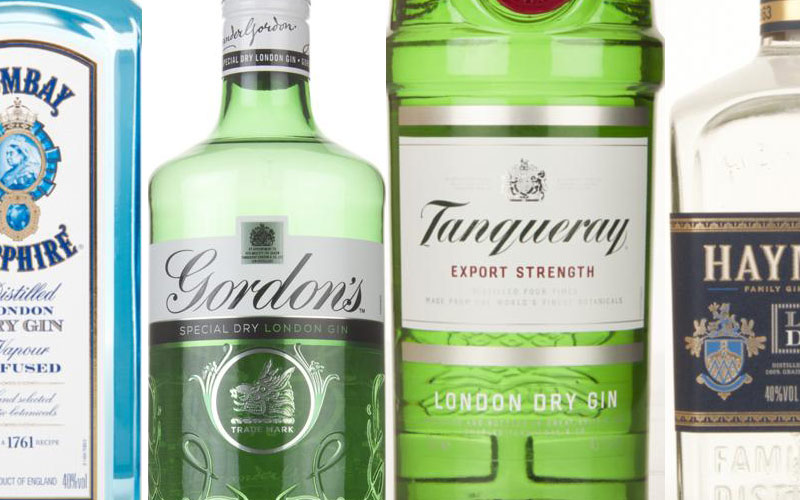
Interestingly, the allowance for a trace amount of sugar is often not for flavor enhancement but for technical and security reasons. Many large-scale distillers utilize "sugar dyes" or tracer molecules that act as a chemical fingerprint to deter counterfeiting. These tracers allow companies to verify the authenticity of their products in the global market. Because these tracers are technically sugar-based, the law must provide a narrow window of 0.1g/L to ensure that brands like Gordon’s or Tanqueray can protect their intellectual property without losing their "Dry" status.
Chemical Purity and the Methanol Constraint
A critical, though often overlooked, aspect of the London Gin designation is the limit on methanol content. Methanol, or wood alcohol, is a toxic byproduct of fermentation. While ethanol (the alcohol we consume) boils at 78.2°C, methanol boils at a lower temperature of 64.7°C. Historically, unscrupulous or incompetent distillers might fail to properly separate the "heads" (the initial part of the distillation run containing methanol) from the "heart" of the spirit.
The London Gin specification acts as a chemical guarantee of safety, requiring that the spirit contain no more than 5 grams of methanol per hectoliter of 100% vol. alcohol. In the contemporary distilling landscape, modern technology and rigorous safety standards mean that most professional distillers easily meet this requirement, even if they are not producing London Dry Gin. However, the inclusion of this limit in the law remains a vestige of the industry’s commitment to public safety and spirit rectitude.
Botanical Restrictions: The "Plant Material" Clause
The 2019 regulations also refined the definition of what can be used to flavor London Gin. The law specifies that flavor must be imparted through the distillation of "natural plant materials." This phrasing creates a specific boundary for innovation. For example, contemporary spirits that utilize mushrooms (fungi) or animal-based products (such as "Pechuga" style gins that use meat in the vapor path) technically fall outside the legal definition of London Gin because fungi and animals are not plants.
Furthermore, the "predominant flavor" of any gin must remain that of juniper (Juniperus communis L.). This remains the most subjective and controversial aspect of gin legislation. As the "Contemporary" or "New Western" style of gin has grown in popularity—emphasizing citrus, floral, or spice notes over the traditional piney punch of juniper—regulatory bodies have struggled with enforcement. Without a numerical measure of juniper volatiles, the determination of "predominance" remains largely at the discretion of sensory panels, making it difficult to enforce in a court of law.
Global Comparisons: The US TTB Standards
Outside of Europe, the United States Department of the Treasury’s Alcohol and Tobacco Tax and Trade Bureau (TTB) maintains a more flexible approach. US law defines gin as a spirit with a "main characteristic flavor derived from juniper berries." Unlike the EU, the US does not have a separate legal category for "London Gin" that mandates specific distillation proofs or prohibits post-distillation flavoring. In the American market, the term "London Dry" is often used more as a stylistic descriptor than a rigid procedural mandate, though many American distillers still follow the European tradition to maintain international export viability.
Analysis of Implications: Why No Geographical Indication?
There have been periodic attempts to grant London Dry Gin a Geographical Indication (GI) status, similar to Champagne or Scotch Whisky. However, these efforts have largely failed. For a spirit to receive GI status, it must typically be linked to a specific geographic area and a highly specific technical file.
Because "London Dry" has evolved into a global process used by distillers from Tokyo to New York, restricted GI status would likely force thousands of brands to rebrand their products, causing massive market disruption. Furthermore, the technical requirements for a GI are often so specific—detailing maceration times and exact still shapes—that they would stifle the very innovation that has fueled the "Gin Renaissance" of the last decade. The current EU regulation provides a "de facto" protection of the term’s quality without the localized restrictions of a true GI.
Future Outlook and Technological Integration
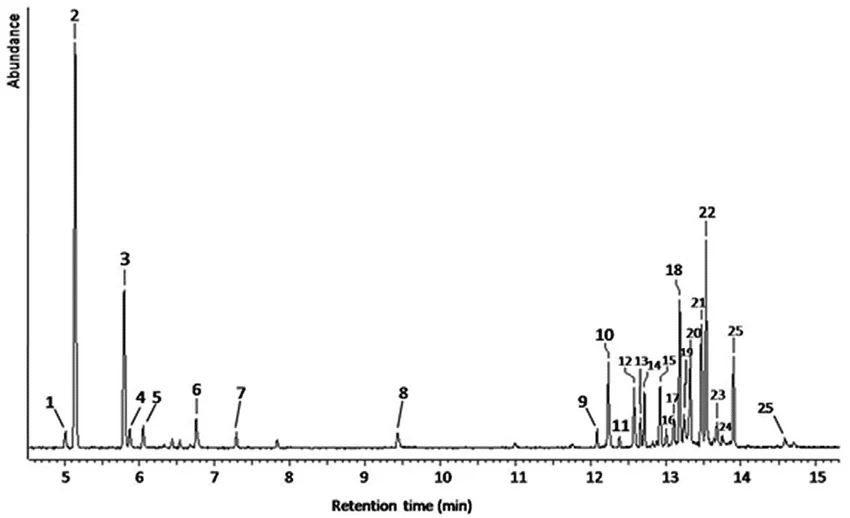
As the industry moves forward, the use of technology like Gas Chromatography-Mass Spectrometry (GC-MS) is becoming more prevalent among major distillers to ensure consistency. By identifying the "peaks" of alpha-pinene and limonene in a distillate, producers can ensure that every batch of London Dry Gin matches a chemical "fingerprint" of the brand’s standard.
While the 2019/787 legislation provided some clarity, the industry remains at a crossroads regarding the "predominant juniper" rule. If consumer trends continue to move away from juniper-forward profiles, there may be future pressure to introduce numerical standards for terpene content or to create new legal categories for "botanical spirits" that do not meet the traditional gin definition.
For now, the London Dry Gin designation stands as a testament to a process-driven philosophy. It assures the consumer that the liquid in the bottle was produced via a single, clean distillation of natural botanicals with a high-purity neutral spirit, free from artificial additives, post-distillation infusions, or excessive sugar. It remains a mark of technical excellence in an increasingly crowded global spirits market.
