

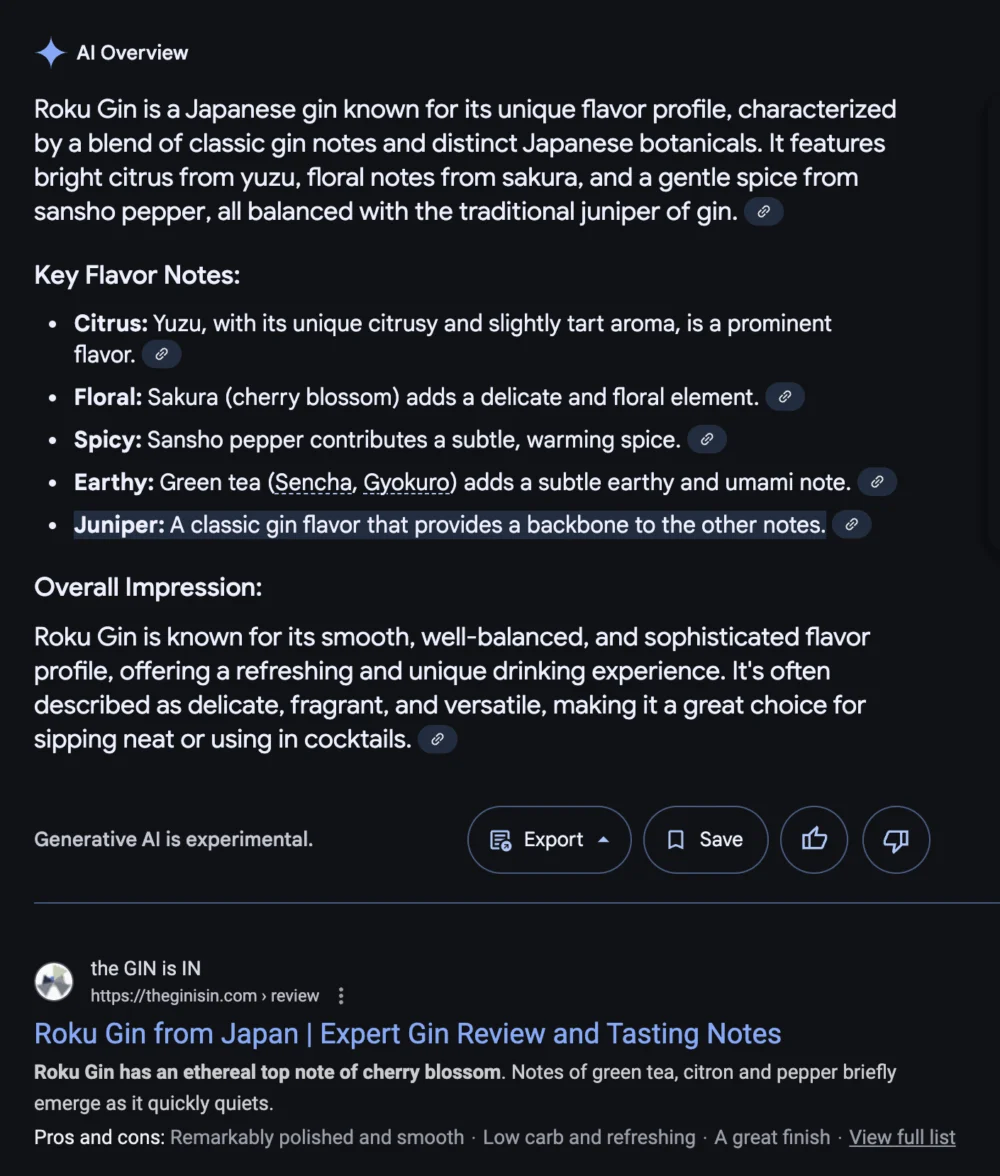
The rise of generative artificial intelligence and AI-driven search summaries has precipitated a critical financial and operational turning point for independent digital publishers, as exemplified by the recent appeal from Aaron Knoll, the founder of the long-standing spirits review platform The GIN is IN. After sixteen years of providing non-sponsored, independent analysis of the global gin market, Knoll has reported a precipitous decline in site traffic directly linked to the integration of Large Language Models (LLMs) like ChatGPT and Google’s AI Overviews into the search experience. This phenomenon, often referred to by digital analysts as "zero-click search," allows users to obtain specific information—such as the tasting notes or ratings of a specific spirit—directly on the search engine results page, eliminating the necessity for the user to visit the source website. The result is a paradox where a publisher’s content remains highly relevant to the search engine’s algorithm but fails to generate the page views required to sustain traditional ad-supported business models.
The Mechanization of Information Retrieval
For nearly two decades, The GIN is IN has operated as an independent arbiter in the spirits industry, distinguishing itself through a strict policy of transparency: the site does not charge distillers for reviews, rejects promotional content, and refuses guest posts from brand marketers. This model was designed to provide consumers with an unbiased alternative to the often-opaque world of liquor marketing. Historically, the site managed its overhead, including hosting costs for up to one million annual visitors, through a combination of personal investment and, eventually, programmatic advertising via platforms like Google Ads.
However, the technological shift that began in earnest in May 2024 has fundamentally altered the economics of this niche journalism. When Google began rolling out its Search Generative Experience (SGE), it transitioned from being a portal that directed traffic to external sites to a destination that synthesized external content into its own proprietary interface. Knoll noted that a search for a "Roku Gin Review"—a staple of his catalog—now returns an elaborate AI-generated summary that utilizes his specific phrasing and data points. While these AI tools have recently begun including attributions and links, the comprehensive nature of the summaries often satisfies the user’s query entirely, rendering the original site’s expertise a mere data source for the AI rather than a destination for the reader.
A Chronology of Independent Digital Publishing (2009–2025)
The trajectory of The GIN is IN mirrors the broader evolution and subsequent contraction of the independent web. In 2009, the site was founded during the "Golden Age" of blogging, a period characterized by high organic reach and a direct relationship between content creators and their audiences. By the mid-2010s, as the site’s popularity surged, it faced the "scaling trap"—the point where traffic becomes so high that hosting costs exceed the creator’s hobbyist budget, necessitating the introduction of advertisements.
The period between 2018 and 2023 saw the site maintain a delicate balance between user experience and monetization. While advertisements provided a necessary revenue stream to cover infrastructure costs, they often compromised the aesthetic and functional integrity of the platform. The pivot point occurred in May 2024, when the widespread integration of generative AI into search engines began to decouple content value from traffic volume. By April 2025, the impact had reached a critical mass, forcing Knoll to issue a public appeal for direct reader support via platforms like Patreon, Venmo, and Ko-Fi to bypass the failing ad-revenue model.
Supporting Data: The Impact of Zero-Click Searches
The challenges faced by Knoll are supported by broader industry data regarding the impact of AI on digital publishing. According to recent studies by SEO analytics firms, "zero-click" searches now account for over 60% of all Google queries on mobile and desktop devices. For niche, information-dense sites, the impact is even more pronounced. When a search engine provides a "featured snippet" or an AI summary, the Click-Through Rate (CTR) for the top-ranked organic result can drop by as much as 40% to 60%, even if that result is the primary source of the AI’s information.

Furthermore, the "cost per thousand impressions" (CPM) for digital ads has become increasingly volatile. For a site like The GIN is IN, which previously hosted nearly one million visitors, the decline in traffic directly correlates to a loss of the revenue needed to pay for the high-bandwidth servers required to serve that many users. This creates a "death spiral" for independent creators: as traffic falls due to AI summaries, ad revenue drops, making it impossible to pay for the hosting of the very content the AI is using to generate its summaries.
The Dilemma of the Paywall and Public Service
In response to the erosion of ad revenue, many independent publishers have migrated to subscription-based platforms such as Substack. However, Knoll has expressed significant reservations about this transition, citing a commitment to the "public service" aspect of his work. The spirits industry relies on a complex ecosystem of distillers, distributors, and consumers; Knoll argues that hiding reviews of a distiller’s product behind a paywall could be perceived as a disservice to the brands that provide samples for review and to the general public seeking reliable information.
"I didn’t feel right about hiding their product behind a paywall and sharing it with a few hundred devoted gin followers," Knoll stated in his address to readers. This sentiment highlights a burgeoning conflict in the digital age: the tension between the need for financial sustainability and the desire to remain a visible, authoritative voice in the public square. By opting for a voluntary contribution model—utilizing Patreon for recurring subscriptions and Venmo or Ko-Fi for one-time "tips"—Knoll is attempting to preserve the site’s open-access nature while seeking a more stable financial foundation than that provided by fluctuating ad markets.
Broader Implications for the Spirits Industry and Beyond
The potential disappearance of independent sites like The GIN is IN carries significant implications for the spirits industry. If independent reviewers are forced out of the market by the economic pressures of AI search, the vacuum is likely to be filled by "pay-to-play" content and brand-sponsored media. Without the check of objective, non-sponsored analysis, consumers may find it increasingly difficult to distinguish between genuine quality and aggressive marketing budgets.
From a technical standpoint, the situation raises urgent questions regarding the ethics of "fair use" in the age of LLMs. While search engines argue that providing attributions and links constitutes a fair exchange for the use of a publisher’s data, creators like Knoll argue that the exchange is fundamentally lopsided when the search engine’s summary prevents the user from ever clicking the link. This has led to a growing movement among digital publishers to demand better compensation or "opt-out" mechanisms that prevent AI from scraping their content without sacrificing their visibility in traditional search results.
Analysis of Future Sustainability
The survival of independent spirits journalism will likely depend on a fundamental shift in how audiences perceive the value of content. For sixteen years, the "free" nature of the internet has been predicated on the invisible exchange of user attention for advertising revenue. As AI breaks that link, the "direct-to-consumer" support model becomes the only viable path for specialized publishers.
Industry analysts suggest that the future of the niche web may look less like a vast network of ad-supported blogs and more like a collection of community-supported digital libraries. For The GIN is IN, the path forward involves a reliance on the loyalty of a core audience that values the integrity of the review process over the convenience of a quick AI summary. The outcome of Knoll’s appeal will serve as a bellwether for other independent journalists navigating the transition from the "Search Era" to the "AI Era." If the community responds, it may prove that there is still a market for human-led, independent expertise in an increasingly automated world. If not, the digital landscape may continue to consolidate, leaving behind a more homogenized and commercially-driven information environment.
