

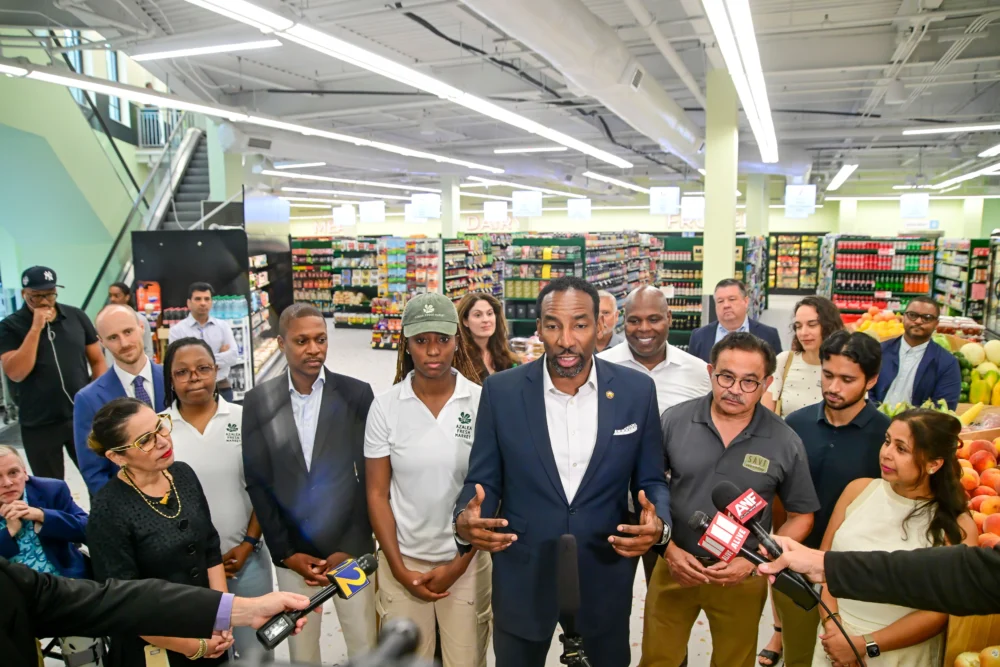
Zohran Mamdani, the new mayor of New York City, swept into office last year buoyed by a platform of ambitious promises, chief among them a commitment to establish a city-owned grocery store in each of the five boroughs. This pledge aimed directly at the pervasive issues of urban food deserts and the relentless surge in grocery prices, challenges that disproportionately impact low-income communities. However, while New York City’s plans are still in their nascent stages, another major American metropolis has already forged ahead, offering a potential blueprint for addressing these critical urban needs. Last summer, Atlanta opened Azalea Fresh Market in its downtown core, a municipal grocery store backed by significant city funding, predating any concrete action from the Mamdani administration.
Atlanta Leads the Way in Addressing Food Insecurity
The Azalea Fresh Market, located in a historically underserved area of downtown Atlanta, represents a groundbreaking public-private partnership designed to inject vitality and essential services into a community long neglected by traditional retail. Its inauguration marked a significant moment in urban policy, demonstrating a proactive approach to combating food insecurity and fostering economic development in areas where commercial supermarkets have feared to tread. The store’s establishment follows decades of a widening gap in access to fresh, affordable food, a phenomenon known as food deserts, which plague numerous American cities.
A Mayoral Mandate Born from Personal Experience
Atlanta Mayor Andre Dickens championed the Azalea Fresh Market initiative with a deep personal conviction. "People need access to fresh food," Mayor Dickens stated unequivocally. "Food is a critical part of a healthy community." His commitment stems from firsthand experience; as a high school student working at Kroger, he routinely witnessed the logistical hurdles and personal expense faced by residents of low-income neighborhoods simply to access a well-stocked grocery store. This intimate understanding of the systemic barriers to healthy eating fueled his determination to find an innovative solution for Atlanta.
The need in Fulton County, where Atlanta is situated, is stark. Nearly 14 percent of its residents grapple with food insecurity, according to data from Feeding America. The downtown neighborhood now served by Azalea Fresh Market had suffered from a complete absence of a supermarket for two decades, a grim testament to the economic calculations that often leave vulnerable communities behind. Mayor Dickens candidly explained the historical avoidance by grocers: "Grocers have historically avoided these neighborhoods due to low profit margins and perceived risks." This commercial reluctance left thousands of residents reliant on convenience stores, gas stations, or long commutes for their basic food needs, often at higher prices and with limited healthy options.
The Azalea Fresh Market Model: A Public-Private Partnership
When traditional methods failed—Mayor Dickens’ initial attempts to entice established grocery chains with substantial incentives like tax breaks, free land, and construction assistance proved fruitless—he pivoted. "They still didn’t want to take it," he recounted. "I got frustrated and was like, ‘We’re going to do it ourselves.’" This determination led the city to issue a request for proposals, seeking a partner willing to operate a municipal store. Savi Provisions, a private company with experience in the grocery and prepared food sector, answered the call.
The resulting partnership saw the City of Atlanta commit substantial financial backing, including an $8 million package of tax credits, grants, and loans. This investment covered the acquisition of land and the demolition of an existing structure to make way for the new market. Savi Provisions contributed $1 million in its own equity, forging a collaborative model that leverages both public resources and private operational expertise. Furthermore, the collaboration extended to the Independent Grocers Alliance (IGA), a crucial alliance that helps independent retailers compete with larger chains by consolidating purchasing power and providing technical assistance.
The Azalea Fresh Market, while city-backed, is operated by Savi Provisions and aims to provide a comprehensive shopping experience. It stocks the full spectrum of products typically found in conventional grocery stores, from fresh produce to pantry staples. A cornerstone of its mission is "Paul’s Promise," named after Savi CEO Paul Nair. This initiative designates 50 to 60 essential items, such as eggs and bread, to be offered at "the lowest price possible." This is achieved through strategic supplier deals facilitated by the IGA and by offsetting lower margins on essentials with higher profits from premium offerings like prepared foods, a sushi bar, and an upstairs coffee shop. Crucially, the store also accepts federal nutrition benefits, including SNAP and WIC, ensuring accessibility for the most vulnerable populations.
Financial Framework and Community Impact
The early indicators suggest the Azalea Fresh Market is on a promising trajectory. According to both Mayor Dickens and Paul Nair, the store serves between 600 and 700 customers daily, with an average basket size of $13. This pattern indicates frequent, smaller shopping trips rather than large monthly hauls, a characteristic often observed in urban settings where residents may not have immediate access to bulk transportation or large storage capacities. While Nair aims for even greater performance, he acknowledges that the store is "on target" for its initial phase.
The partnership’s ambition extends beyond a single location. With the city’s continued financial assistance, Savi Provisions is already constructing a second Azalea Fresh Market in the Campbelltown Road neighborhood, further underscoring the city’s commitment to replicating this successful model. This expansion is critical for a region where food insecurity remains a pressing concern. Beyond direct food access, the city harbors hopes that the establishment of an attractive, modern grocery store will act as a catalyst for broader economic development in the surrounding area, drawing further investment and improving the quality of life for residents.
The Persistent Challenge of Food Deserts
The existence of food deserts – urban or rural areas lacking easy access to affordable, nutritious food – is a multifaceted problem with deep roots in socioeconomic disparities and historical underinvestment. These areas are often characterized by a prevalence of convenience stores selling processed foods, alcohol, and tobacco, but few or no full-service supermarkets offering fresh produce, lean proteins, and dairy products. The consequences are dire, contributing to higher rates of chronic diseases such such as diabetes, heart disease, and obesity among residents. Children in food-insecure households also tend to exhibit poorer academic performance and developmental outcomes. The financial burden on families is also significant, as limited options often translate to higher prices for lower-quality goods, perpetuating a cycle of poverty and poor health.

The Economics of Groceries and Retailer Reluctance
Operating a grocery store, particularly in underserved areas, presents significant business challenges. The industry is characterized by notoriously thin profit margins, typically ranging from 1 to 3 percent for large chains and perhaps up to 5 percent for smaller, independent stores. Fresh food, a cornerstone of healthy eating, is highly perishable, leading to waste and inventory management complexities. Stores also contend with issues like theft and damaged goods. Furthermore, new grocery establishments typically require three to four years to achieve profitability, a timeline that many private investors are unwilling to risk in areas perceived as high-risk or low-return.
A major hurdle for independent or smaller grocery operations is the immense purchasing power wielded by national retail giants like Walmart and Kroger. These behemoths can negotiate deeply discounted pricing deals from suppliers due to their vast volume, making it exceedingly difficult for smaller players to compete on price. The Independent Grocers Alliance (IGA) plays a vital role in mitigating this disparity by aggregating the purchasing power of its member stores, enabling them to secure more favorable terms from distributors and suppliers, thereby helping Azalea Fresh Market to keep its prices competitive, especially for "Paul’s Promise" items.
New York City’s Ambitions: A Different Approach?
While Atlanta’s model is gaining traction, New York City Mayor Zohran Mamdani’s vision for addressing food deserts may take a distinct path. His campaign promise to open city-owned grocery stores in every borough, made last year, is currently evolving into a more concrete plan. In early 2025, Mamdani indicated a strategy to redirect approximately $140 million that the city currently spends on tax breaks and incentives for private grocery stores. Instead, these funds would be channeled into city-owned properties, where stores would be exempt from rent or property taxes. The city would also aim to purchase products at wholesale prices and utilize centralized warehousing to further drive down costs, with the ultimate goal to "ensure every New Yorker can afford the groceries that they need."
This approach suggests a potentially more direct government role in the supply chain and pricing mechanisms than Atlanta’s hybrid model. New York City, with its immense population density and complex economic landscape, faces unique challenges and opportunities. The scale of its food insecurity problem is staggering, with millions of residents living in or near poverty, where access to affordable, healthy food is a daily struggle.
Expert Perspectives on Municipal Grocery Models
Nevin Cohen, the director of the Urban Food Policy Institute at the City University of New York, offers valuable insights into the spectrum of municipal grocery store concepts. He notes that such initiatives can range widely, from operations wholly owned and managed by local governments—akin to a Department of Defense commissary—to various forms of city subsidies designed to attract and support private stores.
Cohen suggests that for New York City, a direct government build-and-run model might be particularly effective in ensuring truly affordable food in neighborhoods that currently lack access to inexpensive goods. He posits that such heavily subsidized offerings, focused purely on affordability and access, are endeavors that a private operator "either wouldn’t want to do or don’t know how to do well or be able to justify financially." In such scenarios, the profit motive, inherent in private enterprise, could conflict with the public service objective of maximizing affordability.
However, Cohen also recognizes the pragmatic appeal of Atlanta’s model. He describes it as "a straightforward model" that smartly sidesteps the complexities and potential pitfalls of a city government directly immersing itself in the intricate, often cutthroat, business of retail grocery operations. "It’s very difficult for cities to do it on their own," he cautions, highlighting the specialized expertise, logistical challenges, and financial risks inherent in the sector. Mayor Dickens himself echoes this sentiment, attributing Azalea Fresh Market’s initial success to the city’s strategic decision not to own and operate the store directly, allowing private sector efficiency to manage daily operations while the city provides essential foundational support.
A Blueprint for Urban Revitalization?
The success of Azalea Fresh Market offers a compelling case study and a potential blueprint for urban revitalization efforts across the nation. The model transcends mere food provision; it represents an investment in public health, community well-being, and economic equity. Mayor Dickens articulates this broader philosophy: "This is investment in people, which is a city thing, that’s what cities do." He underscores the hidden costs of failing to provide healthy food, which manifest in higher rates of disease, increased healthcare expenditures, and diminished student performance in schools. By addressing food insecurity, cities can potentially mitigate these wider societal burdens.
The ripple effect of Azalea Fresh Market is already being felt beyond Atlanta. Mayor Dickens notes, "It seems like every mayor in the nation is asking me, ‘How are you doing it?’" Paul Nair also confirms receiving numerous inquiries from other cities and has even engaged in discussions with the Mamdani administration, indicating a growing national interest in this innovative approach. Nair expresses confidence that "By the time we get done with this, I think this is going to prove an exact model for every city, county, and state that has food deserts."
The Road Ahead: Sustainability and Replication
The long-term sustainability of municipal grocery stores is a critical consideration. While Atlanta is committed to backing Azalea Fresh Market for an initial period of three to five years, Paul Nair is ambitious, aiming for self-sustainability within one to two years. "Our business plan is not for subsidies forever. We want to be self-sustainable as soon as possible," Nair affirmed. Post-initial support, Mayor Dickens envisions the city acting as a "backstop," providing support only if absolutely necessary. This emphasis on eventual self-sufficiency is key to making such initiatives scalable and replicable without creating perpetual drains on public coffers.
The lessons learned from Atlanta’s pioneering effort will be invaluable as New York City and other municipalities grapple with their own strategies to combat food deserts and rising grocery prices. Whether through a hybrid public-private partnership like Azalea Fresh Market or a more directly government-managed system as envisioned by Mayor Mamdani, the imperative to ensure access to affordable, nutritious food is clear. As Mayor Dickens passionately states, despite the myriad responsibilities of running a city, this initiative remains deeply personal: "I got a whole city to run, but this is my baby." The success of these ventures could fundamentally reshape urban food landscapes and redefine the role of municipal governments in ensuring the basic well-being of their citizens.
