

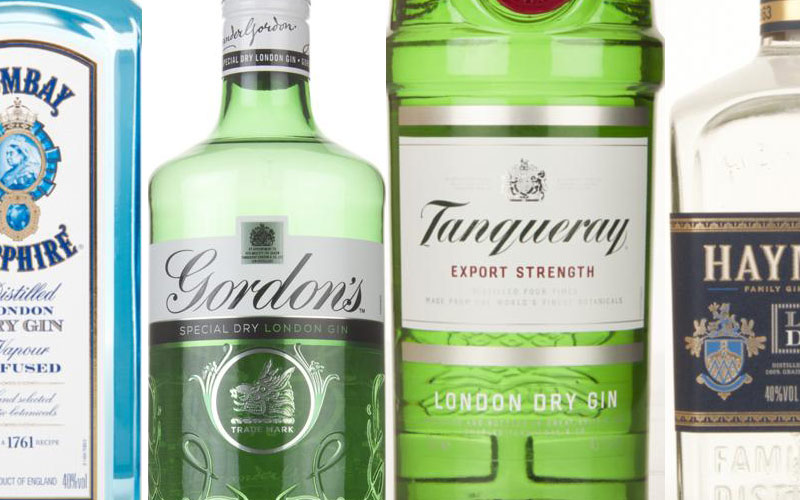
The regulatory landscape governing the production and labeling of London Dry Gin has undergone significant refinement in recent years, yet the core definition remains a testament to industrial process rather than geographic origin or specific flavor profiles. Following a period of extensive consultation with consumers and the distilling industry in 2019, the European Union updated its framework through Regulation 2019/787, later amended by 2021/1465. In the United Kingdom, the legal standard remains tied to the version of the act in effect at the time of the nation’s departure from the European Union. Despite these legislative shifts, the fundamental nature of the London Dry designation persists as a strict quality and process standard, serving as a safeguard for production methods that date back to the technological revolutions of the 19th century.
The Technical Foundation of London Dry Gin
The designation of "London Dry" is frequently misunderstood by the general public as a reference to a specific location or a narrow flavor profile. However, within the spirits industry, it is strictly categorized as a process designation. To carry the label, a spirit must adhere to rigorous distillation requirements that ensure a high degree of purity and a specific method of flavor botanical integration.
Under Section 21.a of Regulation 2019/787, any spirit labeled as a distilled gin—the baseline for London Gin—must utilize a base spirit of agricultural origin. This base must be distilled to an initial alcoholic strength of at least 96% alcohol by volume (ABV). This requirement effectively mandates the use of a continuous column still, a piece of equipment capable of stripping away the impurities and "rough" characteristics associated with lower-proof pot still distillates. By reaching 96% ABV, the distiller ensures a neutral canvas, free from the heavy congeners and volatile compounds that historically plagued 18th-century spirits.
Once this neutral base is established, it must be redistilled in the presence of Juniperus communis L. and other natural botanicals. For the "London" prefix to be applied, several additional constraints are triggered. All flavors must be imparted exclusively through this distillation process. No flavorings, extracts, or colorants can be added after the spirit leaves the still. While water and neutral spirit of the same quality may be added to adjust the proof, the integrity of the distilled botanical essence must remain unadulterated.
A Chronology of Gin Regulation and Technology
The path toward the current London Dry standard is defined by a transition from unregulated, often dangerous decoctions to a highly controlled industrial science.
The 18th Century: The Era of Adulteration
During the infamous "Gin Craze" in England, spirits were often distilled from poor-quality grains and waste products. To mask the harsh, often toxic flavors of these early spirits, producers frequently added heavy sweeteners, turpentine, or even sulfuric acid. The lack of standardized distillation meant that "gin" was a broad and often perilous category.
The 1830s: The Column Still Revolution
The invention of the continuous column still by Aeneas Coffey in 1830 changed the industry forever. Unlike the traditional pot still, which produced spirits at lower proofs with more impurities, the column still allowed for the production of nearly pure ethanol. This technological leap enabled distillers to create a "clean" spirit that did not require heavy sweetening to be palatable, giving birth to the "dry" style.
2008–2019: Codifying the Modern Standard
The European Union’s Spirit Drinks Regulation (EC) No 110/2008 was the first major modern effort to protect the term "London Gin." This was further refined in 2019 to clarify the "dry" component and address the growing market for contemporary gins that use non-traditional botanicals.
2021–Present: Post-Brexit Divergence
While the UK and EU currently share nearly identical standards for London Dry Gin, the UK’s retention of the 2019/787 legislation creates a potential for future regulatory divergence as the British distilling industry seeks to balance tradition with innovation.
The Chemistry of Quality: Methanol and Purity Standards
One of the most critical, yet overlooked, aspects of the London Dry designation is its role as a safety and purity guarantee. The regulations specify that the ethyl alcohol used must have a maximum methanol content of 5 grams per hectoliter of 100% vol. alcohol.
Methanol, often called "wood alcohol," is a toxic byproduct of fermentation. While ethanol (the alcohol we consume) boils at 78.2°C, methanol boils at a lower temperature of 64.7°C. In the 18th and 19th centuries, unscrupulous or unskilled distillers often failed to properly separate the "heads" (the initial part of the distillation containing methanol) from the "heart" of the run. By mandating a base spirit of 96% ABV and strict methanol limits, the London Dry standard ensures that the final product is chemically clean.
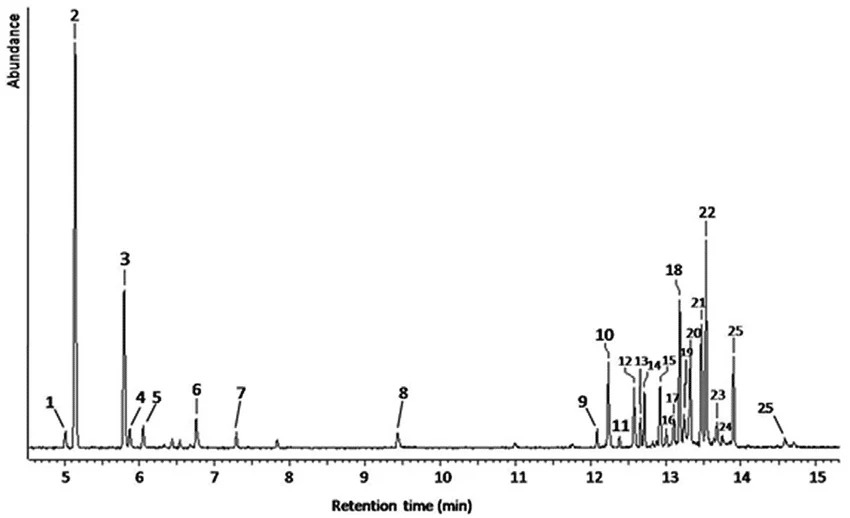
Modern distilleries now employ Gas Chromatography-Mass Spectrometry (GC-MS) to maintain these standards. By identifying the molecular "signature" of volatile compounds, master distillers can ensure that every batch meets the legal requirements for purity while maintaining a consistent flavor profile. This scientific rigor has largely rendered the historical fear of "poison gin" obsolete, but the regulations remain as a vestigial, yet vital, quality floor.
The Subjectivity of Flavor and the "Juniper Predominance" Problem
Despite the technical precision regarding ABV and chemical purity, the legal definition of gin’s flavor remains remarkably vague. Regulation 2019/787 maintains that for a spirit to be labeled as gin, the "taste of juniper must be predominant."
Industry analysts point out that "predominant" is a subjective term. There is currently no numerical or chemical threshold—such as a specific parts-per-million count of alpha-pinene (the primary aroma compound in juniper)—that a gin must meet to be legally compliant. This lack of a measurable standard has led to the rise of "contemporary" or "New Western" style gins, where citrus, floral, or spice notes often rival the juniper on the palate.
In 2015, there were brief discussions within the industry regarding the pursuit of Geographical Indication (GI) status for London Dry Gin, similar to the protections enjoyed by Champagne or Cognac. However, GI status requires highly specific technical files that detail every step of the process. Because the London Dry style is produced by a vast array of distillers with varying proprietary methods, the industry was unable to agree on a single restrictive process, leading to the current situation where "London Dry" remains a process designation rather than a protected geographic origin.
Exclusions and the "Dry" Limitation
The strictness of the London Dry process means that several world-famous gins are legally barred from using the designation. For a gin to be "London Dry," nothing except water and a minute amount of sweetener (no more than 0.1 grams per liter) can be added after distillation.
Case Study: Hendrick’s and Martin Miller’s
Both Hendrick’s Gin and Martin Miller’s Gin are premium spirits that follow many of the London Dry steps. However, Hendrick’s infuses rose and cucumber essences after the final distillation, and Martin Miller’s is blended with Icelandic spring water after a separate distillation process. These "post-distillation" additions disqualify them from the London Dry category, necessitating the label "Distilled Gin."
The "Plant Only" Clause
A peculiar nuance of the 2019/787 regulation is the requirement that flavor must be imparted through the distillation of "natural plant materials." This has implications for innovative distillers. For example, a gin distilled with mushrooms (fungi) or "Pechuga" style gins (which involve suspending raw meat in the still) technically fall outside the "London" designation because they utilize non-plant materials. While animal-derived base spirits like whey or milk are permitted for the neutral alcohol, the flavoring botanicals must be botanical in the strictest sense.
Global Market Implications and the US TTB Standard
The international trade of gin is further complicated by differing standards in the United States. The Alcohol and Tobacco Tax and Trade Bureau (TTB) provides a more inclusive definition. In the U.S., gin is defined as a spirit with a characteristic flavor derived from juniper berries, produced either by distillation or by the simple mixing of neutral spirits with juniper extracts.
Unlike the EU and UK, the U.S. does not strictly enforce the "London" prefix as a process-only term in the same way, though it recognizes the "distilled" category. This regulatory gap means that a "London Dry" gin produced in London and exported to the U.S. must compete with American-made "Dry Gins" that may not have followed the same rigorous redistillation requirements.
Broader Impact and Industry Outlook
The continued reliance on the London Dry designation serves as a stabilizing force in an increasingly crowded spirits market. As of 2024, the "gin boom" has led to the creation of thousands of new brands, many of which prioritize experimental flavors over traditional methods. For legacy distillers and quality-focused newcomers, the London Dry label remains a badge of technical proficiency.
The "dry" requirement, which limits sugar to 0.1 grams per liter, is particularly relevant in an era of health-conscious consumption. This limit was originally intended to prevent distillers from hiding poor quality behind sugar, but today it serves as a transparency tool for consumers seeking unsweetened spirits. Interestingly, the small allowance for sugar is often used by major brands for "sugar dyes"—invisible molecular tracers that allow companies like Diageo (owners of Gordon’s) to identify counterfeit products in the global supply chain.
In conclusion, the London Dry Gin designation is a rare example of a colonial-era standard that has successfully adapted to the modern scientific age. While it offers no guarantees regarding the "place" of manufacture or a specific "recipe," it provides a robust framework for chemical purity and integrity of process. For the consumer, the label "London Dry" is not a map of England, but a blueprint of distillation excellence, ensuring that the spirit in the bottle is the result of fire, vapor, and botanicals, unburdened by additives or shortcuts.