

The term London Dry Gin stands as one of the most recognized yet frequently misunderstood designations in the global spirits industry. While the name suggests a strict geographical origin similar to Champagne or Cognac, the reality is that London Dry Gin is defined not by where it is made, but by how it is produced. In the contemporary spirits market, a bottle labeled as London Dry is as likely to originate from a distillery in Cape Town, South Africa, or Seattle, Washington, as it is from the heart of the United Kingdom’s capital. This designation serves as a rigorous technical benchmark for quality and process, rooted in a nineteenth-century industrial revolution that transformed a once-dangerous illicit substance into a refined global commodity.
Historically, the evolution of gin is a narrative of technological advancement and regulatory intervention. To understand why "London" is attached to the "Dry" process, one must look back to the early nineteenth century, a period when the quality of spirits was notoriously inconsistent and often hazardous. Prior to the mid-1800s, the majority of gin produced was heavily sweetened or flavored with aggressive additives to mask the harsh, impure flavors of poorly distilled base spirits. The transition to the clean, juniper-forward profile recognized today was made possible by the invention of the column still, which allowed for the production of high-purity neutral spirits.
The Scientific Revolution: Aeneas Coffey and the Birth of Neutral Spirits
The pivot point for the gin industry occurred in 1830 when Aeneas Coffey, an Irish inventor and former excise officer, patented the "Coffey Still." Building upon earlier designs by Robert Stein, Coffey’s continuous distillation process allowed distillers to produce spirits at a much higher alcohol by volume (ABV) and with significantly fewer impurities than the traditional pot stills.
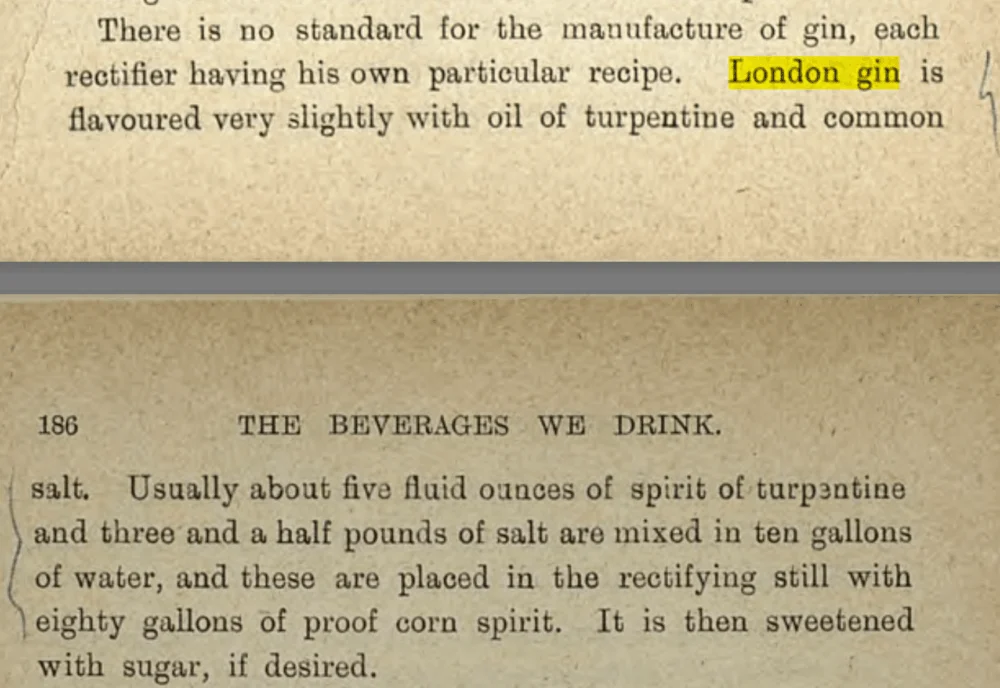
Before the Coffey Still, distillers struggled with "heads and tails"—the toxic or foul-smelling portions of a distillation run. To make these spirits palatable, producers frequently added sugar, honey, or even toxic chemicals like turpentine and sulfuric acid to mimic the sting of alcohol or the floral notes of botanicals. The Coffey Still produced a "neutral" spirit that was clean enough to be consumed without heavy sweetening. This led to the emergence of "Dry" gin. Because the most prominent distilleries utilizing this new technology were concentrated in London, the style became synonymous with the city, eventually co-opting the name "London Dry" as a hallmark of purity and sophistication.
From the Gin Craze to Quality Control: A Chronology of Regulation
The necessity for a standardized "London" style was born out of the chaos of the eighteenth-century "Gin Craze." During this era, gin was often referred to as "Mother’s Ruin," and its production was largely unregulated. Historical records from the early 1800s, including the 1801 publication Every Man His Own Brewer and Distiller, suggest that "London Gin" was already a recognized term, though it lacked the legal protections it carries today. At the time, the label was often used by marketers to imply a level of quality that distinguished their product from "country gin" or illicit "bathtub" varieties.
By the late nineteenth century, the term "London Dry" began to appear frequently in international print. Newspaper archives from 1897 in Australia and 1903 in the United States show advertisements for established London-based brands that were exporting their products to the edges of the British Empire and beyond. These advertisements positioned London Dry as a premium alternative to local spirits, emphasizing its clarity and consistent flavor profile.
However, it was not until the late twentieth and early twenty-first centuries that the term was strictly codified in law. In the European Union, the definition of London Dry Gin was formalized to ensure that the term remained a process-based designation rather than a geographical one. This allowed the style to be produced anywhere in the world, provided the distiller adhered to a specific set of technical requirements.

Technical Requirements and Legal Standards
To be legally labeled as London Dry Gin, particularly under European Union Regulation 2019/787 (which remains the gold standard for gin definitions globally), a spirit must meet several stringent criteria. These rules are designed to prevent the use of artificial additives and to ensure that the botanical flavors are integrated through distillation rather than post-production mixing.
The primary requirements include:
- Base Spirit Quality: The gin must be made from a high-quality neutral spirit of agricultural origin, distilled to a minimum strength of 96% ABV.
- Botanical Infusion: All flavors must be imparted through the traditional distillation of the neutral spirit in the presence of natural botanicals.
- Post-Distillation Restrictions: No artificial flavors or colors may be added after the distillation process. Only water (to reach the desired bottling strength) and a minute amount of sugar may be added.
- Sweetening Limits: The final product must contain no more than 0.1 grams of sweetening per liter. This is significantly lower than the sugar content allowed in "Old Tom" or "Plymouth" styles of gin.
- Minimum Bottling Strength: The final product must be bottled at a minimum of 37.5% ABV (though many premium brands bottle at 40% or higher).
These regulations ensure that London Dry Gin remains a "pure" product. If a distiller adds a cucumber essence or a rose petal extract after the spirit has left the still, the product may be labeled as "Gin" or "Distilled Gin," but it is legally prohibited from using the "London Dry" designation.
The Global Landscape: Production Beyond the United Kingdom
The decoupling of the "London" name from the city of London has allowed for a flourishing of international craft distilleries that utilize the London Dry process to showcase local botanicals while maintaining a traditional structure. The industry has seen a massive shift in production geography, with some of the world’s most iconic "London" brands moving their operations.

A primary example is Tanqueray Gin. Although it is one of the most famous London Dry brands in history, it is no longer produced in London. Since the late twentieth century, Tanqueray has been distilled at the massive Cameronbridge Distillery in Scotland. Despite the change in location, it retains the London Dry label because it adheres strictly to the regulated distillation process.
Other notable examples of the global reach of the London Dry process include:
- Astraea Meadow Gin (United States): Produced in the Pacific Northwest, this gin utilizes the traditional London Dry method but incorporates botanicals that reflect the American landscape.
- No. 3 Gin (Netherlands): While owned by the historic London merchant Berry Bros. & Rudd, this award-winning London Dry Gin is actually distilled in the Netherlands, the ancestral home of gin’s predecessor, Genever.
- Belgravia Gin (South Africa): A prominent brand in the Southern Hemisphere that utilizes the London Dry designation to signal a specific flavor profile to consumers in the African market.
- Australian Distilling Co. Gin (Australia): This producer uses the London Dry process to create spirits that are exported globally, proving that the technique is the defining factor, not the latitude or longitude of the distillery.
Industry Implications and the Future of the Designation
The continued use of the London Dry label provides a vital navigational tool for consumers in an increasingly crowded spirits market. As "Contemporary" or "New World" gins—which often emphasize citrus, floral, or spice notes over the traditional juniper—gain popularity, the London Dry designation remains the primary signal for a juniper-forward, high-clarity spirit suitable for classic cocktails like the Martini or the Gin and Tonic.
From a commercial perspective, the "London Dry" tag is a powerful marketing asset. It carries an aura of British heritage and Victorian-era reliability, even when the product is distilled thousands of miles from the Thames. However, this has led to ongoing debates within the industry regarding Geographical Indicators (GIs). Unlike Plymouth Gin, which was a protected GI until 2014 (meaning it had to be made in Plymouth, England), the industry consensus has largely favored keeping London Dry as a process-based term. This openness has encouraged innovation, allowing distillers worldwide to compete on the basis of technical skill rather than purely on their physical address.

In conclusion, London Dry Gin represents a rare instance where a geographical name has evolved into a universal standard of excellence. It is a testament to the nineteenth-century London distillers who pioneered the use of the Coffey Still to create a cleaner, drier spirit. Today, the label serves as a bridge between the historical "Gin Craze" and the modern craft spirits movement, ensuring that regardless of where a distillery is located, the commitment to purity, traditional distillation, and juniper-forward flavor remains the heart of the gin-making craft. For the modern consumer, the "London" in London Dry is not an invitation to look at a map, but a guarantee of what is inside the bottle.