

New research published in the prestigious scientific journal npj Science of Food has unveiled a surprising yet potentially groundbreaking ingredient for the food industry: rehydrated coffee cherry pulp powder, also known as cascara powder. This innovative study, spearheaded by researchers from Qassim University in Saudi Arabia and institutions in Egypt, suggests that this underutilized byproduct of coffee processing can effectively replace a significant portion of beef fat in burger patties, offering a dual benefit of enhanced nutritional value and reduced environmental waste.
The study, published in late 2025, delves into the growing trend of product reformulation within the global food and beverage sector. Driven by increasing consumer demand for healthier, more sustainable food options, food scientists are actively seeking novel ingredients that can achieve these goals without compromising taste or texture. Coffee cherry pulp, the sticky, fleshy layer surrounding the coffee bean that is typically discarded or composted after the beans are extracted, represents a vast, largely untapped resource. By transforming this "waste" into a functional food ingredient, the research aligns perfectly with the principles of a circular economy, minimizing waste and maximizing resource utilization.
From Coffee Byproduct to Burger Ingredient: A Scientific Exploration
The research team, led by Rehab F. M. Ali and Ayman M. El-Anany, focused on the techno-functional properties of coffee cherry pulp powder (CCPP). Their methodology involved sourcing CCPP from a private coffee producer in Saudi Arabia. This raw powder was then subjected to a rehydration process, where it was mixed with water in a 3:1 ratio and allowed to hydrate for 24 hours. This crucial step aimed to make the powder more amenable to incorporation into food matrices.
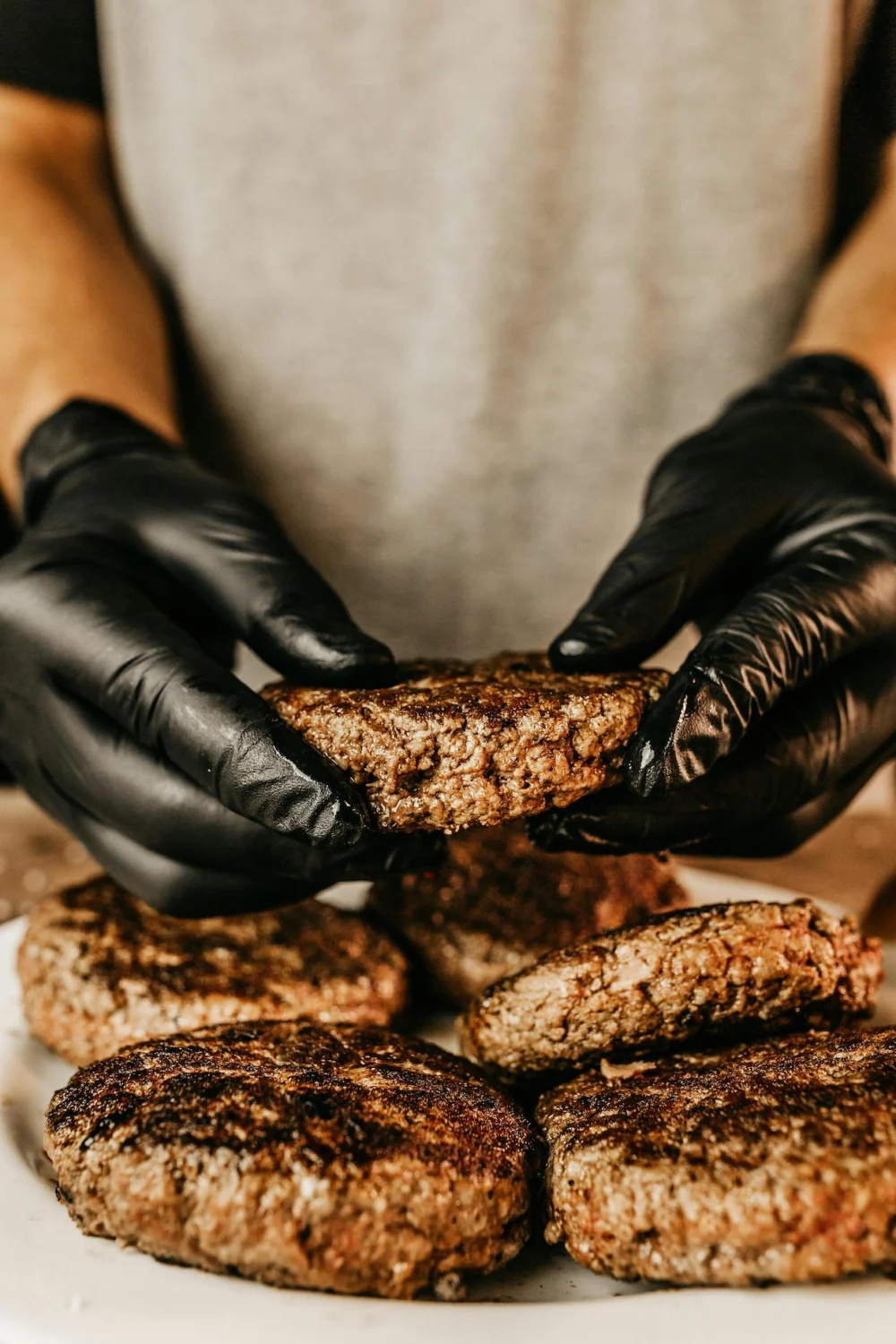
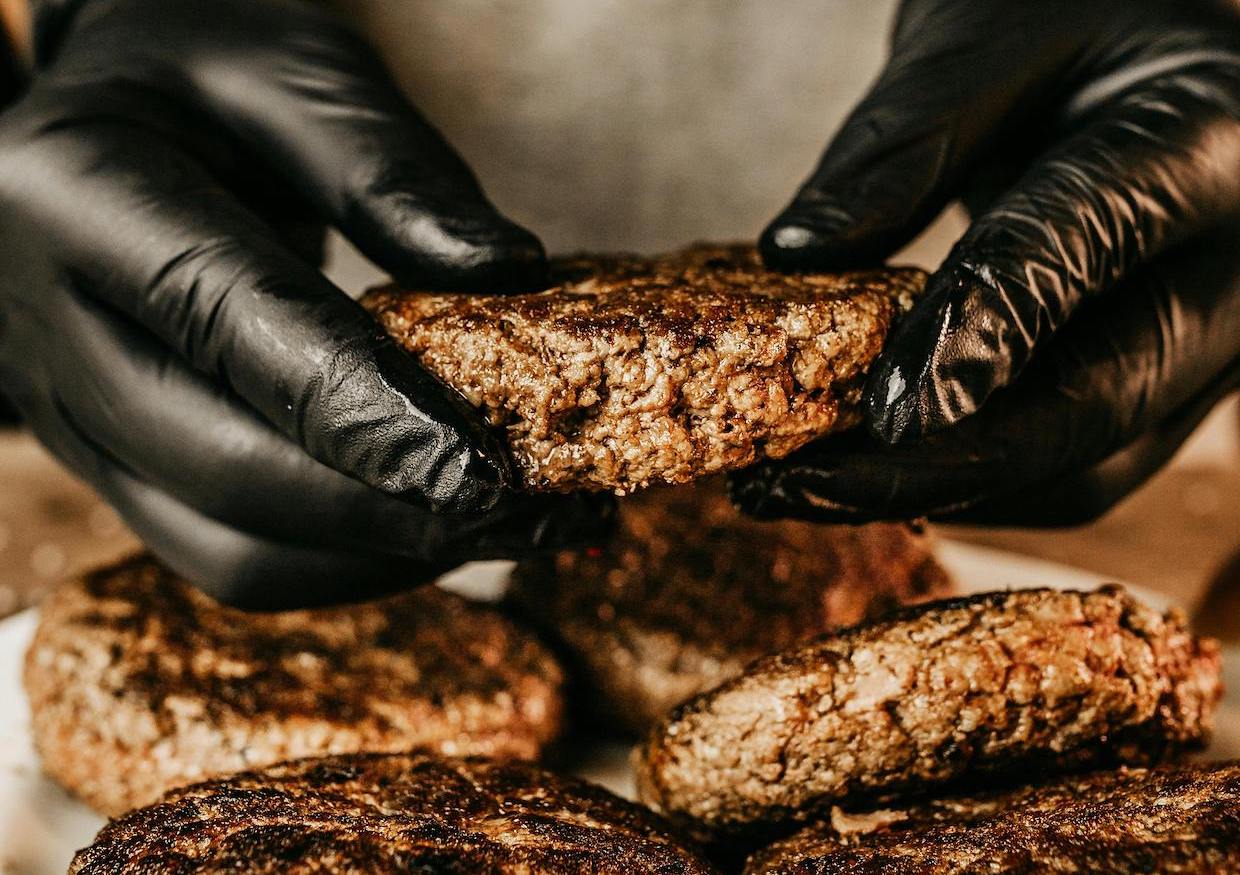
Subsequently, the hydrated CCPP was blended into beef burger patties. The experimental setup involved creating 100-gram patties primarily composed of 65% lean beef. A control group was prepared with a standard 20% beef fat content. The experimental patties then saw this beef fat replaced by the hydrated CCPP at varying percentages: 25%, 50%, 75%, and a complete 100% replacement. This comprehensive approach allowed the researchers to meticulously assess the impact of CCPP incorporation across a wide spectrum of fat substitution.
The grilling process for all patties was standardized to ensure consistent cooking conditions. They were grilled at 180°C (356°F) for 5 minutes, reaching an internal temperature of 73°C (163°F). This controlled cooking environment was essential for evaluating how the CCPP affected the cooking characteristics and final product quality.
Beyond the sensory and nutritional evaluations, the study also rigorously analyzed the "techno-functional" attributes of the CCPP itself. This included measuring its water absorption capacity, oil absorption capacity, and emulsifying activity. These properties are critical for understanding how a new ingredient will behave during food processing and how it can contribute to the overall structure, texture, and stability of the final product. For instance, high water and oil absorption capacities suggest that CCPP could potentially contribute to juiciness and mouthfeel in meat products, mimicking some of the roles of traditional fats. Its emulsifying activity would be vital for binding fat and water within the patty, preventing separation and maintaining a cohesive structure.
Taste and Nutritional Insights: Consumer Acceptance and Health Implications
The human element of the study was crucial, with a sensory panel comprising 50 individuals aged 25-40 tasked with evaluating the burgers. Using a 9-point hedonic scale, a standard method for measuring consumer preference, the panel provided feedback on various attributes. The results were particularly encouraging, indicating that the CCPP-enhanced burgers were well-received by consumers.
Notably, the patties with 50% and 75% beef fat replacement achieved the highest scores for overall acceptability. This suggests that a substantial portion of the traditional fat can be substituted with CCPP without a significant decline in consumer liking. The panel also reported positive scores for other critical sensory attributes, including appearance, color, texture, juiciness, and flavor. This indicates that the CCPP did not introduce undesirable off-flavors or textures, and in some instances, may have even contributed positively to the overall sensory experience.
While the article does not delve deeply into specific nutritional data for the CCPP-enhanced burgers, it highlights the potential for improved nutritional value. Coffee cherry pulp is known to be a source of dietary fiber and various antioxidants. By replacing animal fat, which is a source of saturated fat, with a plant-based ingredient rich in these beneficial compounds, the reformulated burgers could offer a healthier alternative. Further research would be needed to quantify the exact nutritional changes and their impact on dietary recommendations. However, the fundamental principle of substituting less healthy components with nutrient-dense alternatives is a cornerstone of modern food science and public health initiatives.
Broader Implications and Future Potential
The implications of this research extend far beyond the creation of a novel burger ingredient. It represents a significant step forward in the quest for sustainable food production and waste reduction. Globally, the coffee industry generates millions of tons of coffee cherry pulp annually. The current practices of disposal or composting, while environmentally conscious to a degree, do not fully leverage the potential value of this biomass. By finding a high-value application for CCPP in the food industry, this research could incentivize more widespread adoption of coffee pulp utilization, creating new revenue streams for coffee producers and reducing the environmental burden associated with waste management.

The success of CCPP as a fat replacer in burgers could pave the way for its application in a wide range of other processed meat products, and potentially even in plant-based meat alternatives where fat content and texture are critical factors. The ability of CCPP to hydrate and absorb liquids, coupled with its potential to contribute to emulsification, makes it a versatile ingredient for food technologists.
The study’s financial backing by the Deanship of Graduate Studies and Scientific Research at Qassim University underscores the growing academic and institutional interest in sustainable food innovation. The clear declaration of no conflicts of interest by the authors, Rehab F. M. Ali and Ayman M. El-Anany, further lends credibility to their findings.
Challenges and Next Steps
While the findings are promising, several challenges and areas for future research remain. Scaling up the production of high-quality, food-grade CCPP will be essential for commercial viability. Ensuring consistent quality and safety standards for CCPP will also be paramount. Further studies are needed to fully understand the long-term health impacts of consuming CCPP-enhanced foods and to explore its potential allergenic properties.
Moreover, the precise mechanism by which CCPP influences the sensory attributes of burgers requires deeper investigation. Understanding how its fiber content, antioxidant profile, and water-binding properties interact with the meat matrix during cooking could lead to even more optimized formulations.
The development of CCPP as a food ingredient is a testament to the ingenuity of food scientists in addressing pressing global challenges. As consumer preferences continue to evolve and the imperative for sustainable practices intensifies, ingredients like coffee cherry pulp powder are poised to play an increasingly important role in shaping the future of food. This research not only offers a potential solution for reducing food waste and enhancing the nutritional profile of popular food items but also highlights the remarkable potential that lies within the often-overlooked byproducts of our global food system. The humble coffee cherry, once a mere appendage to the coveted bean, may soon be a star ingredient in a universally loved dish.