

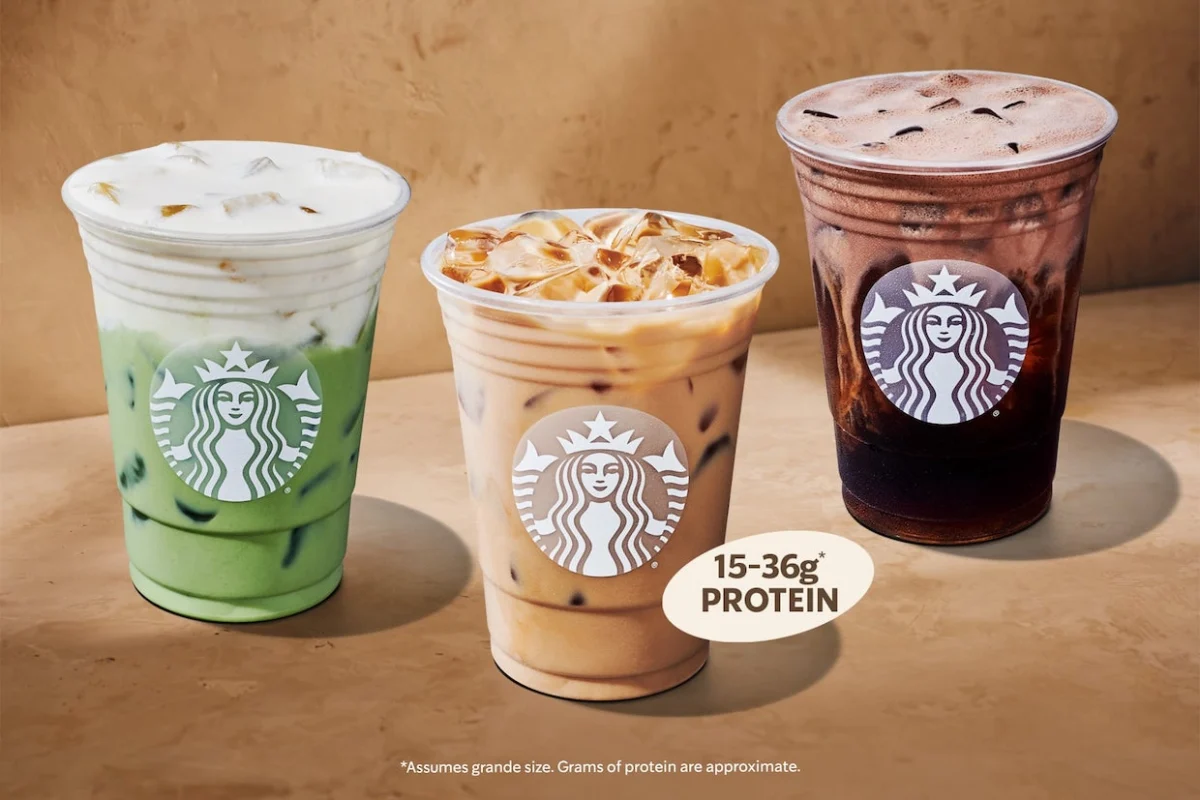
Starbucks is currently embroiled in a significant legal challenge, facing a proposed class-action lawsuit that alleges the coffee giant has engaged in deceptive marketing practices concerning its "Sugar-Free" protein beverages. The lawsuit, filed on October 2, 2026, in the U.S. District Court for the Western District of Washington at Seattle, contends that eight of Starbucks’ protein lattes and matchas, marketed as "Sugar-Free," contain substantial amounts of naturally occurring sugar from milk, ranging from 13 to 21 grams per large ("venti") serving.
The core of the legal dispute centers on the interpretation of the term "Sugar-Free" and its applicability to beverages that contain milk, a natural source of lactose, which is a sugar. The plaintiffs, identified as consumers Michael Walsh of California, Anne Legnini of New York, and Elna Potter of Washington, argue that a reasonable consumer would not expect a product labeled "Sugar-Free" to contain such a significant sugar content derived from its base ingredients. This discrepancy, they claim, constitutes a violation of federal food-labeling regulations and constitutes a deceptive business practice.
Allegations of Misleading Labeling
The lawsuit specifically targets both hot and iced versions of Starbucks’ "Sugar-Free Vanilla Protein Latte," "Sugar-Free Caramel Protein Latte," "Sugar-Free Vanilla Protein Matcha," and "Sugar-Free Caramel Protein Matcha." According to the complaint, the inclusion of milk in these formulations introduces lactose, a disaccharide that contributes to the total sugar content of the beverages. The plaintiffs assert that this natural sugar content directly contradicts the "Sugar-Free" marketing claim, which they believe implies a near-zero sugar content.
A key point of contention highlighted in the complaint is the distinction between "sugar-free" and "no added sugar." The lawsuit argues that while Starbucks’ own protein beverage page describes the lineup as including "no-added-sugar options made with sugar-free syrups," the use of the unqualified term "Sugar-Free" is misleading. The complaint posits that legally and practically, these two claims are distinct, and Starbucks’ use of "Sugar-Free" is a misrepresentation when the product inherently contains sugar.
The complaint further details that the highest sugar content cited is found in a venti "Sugar-Free Caramel Protein Matcha," which reportedly contains 21 grams of sugar. This quantity is equated to approximately five teaspoons of sugar and is presented as being "almost as much total sugar as is contained in a standard Kit Kat bar." The plaintiffs are not alleging that Starbucks has intentionally added table sugar or sweetened syrups to these specific beverages. Instead, the focus is on the naturally occurring sugar present in the milk used as a primary ingredient.
Legal Framework and Regulatory Standards
The legal challenge is grounded in federal food-labeling regulations. The lawsuit asserts that Starbucks’ use of the "Sugar-Free" designation violates federal rules that stipulate a product must contain less than 0.5 grams of sugar per serving to be labeled as such. Furthermore, the complaint contends that lactose is explicitly recognized within federal regulations defining "total sugars," further bolstering the argument that the presence of milk sugar disqualifies the beverages from being truthfully labeled "Sugar-Free."
Beyond the sugar content itself, the lawsuit also alleges that Starbucks failed to provide a required calorie-related disclaimer that should accompany a "Sugar-Free" claim. This aspect of the complaint suggests a procedural violation in addition to the substantive labeling misrepresentation. The plaintiffs are seeking a jury trial to adjudicate these claims.
Starbucks’ Response and Defense
In response to the allegations, a Starbucks spokesperson issued a statement asserting that the company believes the lawsuit’s claims are without merit. Starbucks intends to "vigorously defend" itself against the allegations. The company further stated that it has "consistently and clearly provided information about its protein beverages, sugar-free options, customization choices, and nutritional content across product announcements, menus, marketing materials, Starbucks.com and the Starbucks app." This indicates that Starbucks views its disclosure practices as transparent and adequate, aligning with its internal understanding of its product offerings and labeling.
The Genesis of Starbucks’ Protein Beverages
Starbucks introduced its protein beverage lineup in September 2025, responding to a perceived and growing consumer demand for high-protein options. The company announced the launch of protein lattes and protein cold foam offerings, emphasizing their role in meeting this market trend. At the time of their introduction, Starbucks stated that these new beverages could deliver up to 36 grams of protein per grande serving, with the protein cold foam adding approximately 15 grams of protein. The "Sugar-Free" marketing was presented as a key feature for consumers seeking to manage their sugar intake while still enjoying Starbucks’ popular beverage formats.
Broader Context of Legal Challenges in the Coffee Industry
This lawsuit against Starbucks is not an isolated incident within the broader coffee and beverage industry. In recent years, several legal challenges have been brought against coffee companies concerning their labeling and marketing claims, with varying outcomes. These cases often highlight the complexities and consumer expectations surrounding terms like "natural," "healthy," "sustainable," and, as in this instance, "sugar-free."
For example, a separate proposed class-action lawsuit remains active in federal court in Washington. This suit accuses Starbucks of misleading consumers through its "100% ethical" sourcing claims and alleged undisclosed volatile organic compounds in its decaffeinated coffee. Starbucks has filed a motion to dismiss this particular case.
In contrast, some recent legal challenges have seen dismissals. Two lawsuits targeting Trader Joe’s "low acid" coffee labeling were dismissed. One was a California consumer class action dismissed with prejudice in September 2026, and a separate Puroast false-advertising case was dismissed with prejudice shortly thereafter. These dismissals, particularly those with prejudice, suggest that the courts may be scrutinizing the specificity and substantiation of such marketing claims. The outcomes of these cases can set precedents and influence how companies approach their labeling strategies.
Analysis of Potential Implications
The Starbucks "Sugar-Free" protein beverage lawsuit raises significant questions about the clarity and accuracy of food and beverage labeling, particularly in the rapidly evolving health and wellness market. Consumers are increasingly seeking products that align with specific dietary goals, such as reduced sugar intake. The "sugar-free" designation is a powerful marketing tool that can significantly influence purchasing decisions.
If the plaintiffs prevail, Starbucks could face substantial financial penalties, including damages and legal fees, as well as mandated changes to its product labeling and marketing practices. The lawsuit could also prompt a broader review of how "sugar-free" claims are applied across the food and beverage industry, especially for products that contain dairy or other ingredients with naturally occurring sugars.
Conversely, if Starbucks successfully defends itself, it could reinforce its position that its disclosures are adequate and that the lawsuit lacks merit. However, the legal proceedings themselves can generate negative publicity and raise consumer awareness about the sugar content in seemingly "healthy" options.
The distinction between "sugar-free" and "no added sugar" is a critical legal and consumer-facing point. The lawsuit suggests that consumers expect the former to mean a significantly lower or negligible sugar content, regardless of the source. This case underscores the importance of precise language in marketing and the potential legal ramifications of any perceived ambiguity that could mislead consumers.
The legal battle highlights a growing trend of consumer scrutiny over product claims, driven by increased access to information and a greater focus on health and nutrition. As the beverage industry continues to innovate with functional and health-oriented products, the clarity and truthfulness of their marketing will remain under a watchful eye, subject to both regulatory oversight and legal challenges. The outcome of this Starbucks lawsuit could have far-reaching implications for how "sugar-free" and similar health-related claims are defined and enforced in the marketplace.
