

The regulatory framework governing the production and labeling of gin has undergone significant refinement in recent years, yet the core principles defining "London Dry Gin" remain rooted in a tradition of process rather than geography or specific flavor profiles. In 2019, the European Union implemented Regulation 2019/787, which was further amended by Regulation 2021/1465, to provide greater clarity for both consumers and the distilling industry. Despite these legislative updates, the fundamental nature of London Dry Gin as a "process designation" persists, distinguishing it from other spirits through rigorous production standards rather than a requirement to be manufactured within the United Kingdom’s capital.
The Historical Genesis of Quality Control
To understand the modern legalities of London Dry Gin, one must look to the 18th and 19th centuries, an era characterized by the "Gin Craze" and a subsequent struggle for spirits purity. During this period, gin was often a crude product distilled from low-quality grains and frequently adulterated with hazardous substances such as turpentine or sulphuric acid to mask off-flavors. Sweetening agents were also heavily used to make these harsh spirits palatable, leading to the popularity of "Old Tom" gin, a sweeter predecessor to the dry styles known today.
The technological turning point arrived in 1830 with Aeneas Coffey’s refinement of the continuous column still. Unlike the traditional pot still, which produces a lower-proof spirit with more congeners (flavor compounds), the column still allowed distillers to produce a highly rectified, neutral spirit at approximately 96% alcohol by volume (ABV). This "clean" base meant that distillers no longer needed to hide imperfections with sugar or heavy flavoring. The resulting unsweetened style became known as "Dry Gin," and because much of the high-quality production was centered in London, the term "London Dry Gin" emerged as a hallmark of purity and technical excellence.
Technical Requirements under Regulation 2019/787
The current European legislation, which remains the basis for UK law post-Brexit due to its adoption into domestic statute at the time of withdrawal, sets forth stringent criteria for any spirit bearing the "London Gin" name. Under Section 21 of the regulation, several layers of production must be satisfied.
The Base Spirit and Distillation Purity
The foundation of any London Dry Gin must be ethyl alcohol of agricultural origin. This base spirit must be distilled to an initial alcoholic strength of at least 96% ABV. This requirement effectively mandates the use of a column still, ensuring the base is almost entirely neutral and free of the impurities that characterized pre-19th-century spirits.
The Redistillation Process
While "Gin" can be made by simply flavoring neutral spirits with essences or oils (often called "cold-compounded gin"), "Distilled Gin" and "London Gin" require a more complex secondary process. The 96% neutral spirit must be redistilled in traditional stills in the presence of juniper berries (Juniperus communis L.) and other natural botanicals. For a gin to be classified specifically as "London Gin," all flavor must be imparted exclusively through this distillation process. No flavorings or botanical extracts can be added after the spirit leaves the still.
The "Dry" Designation and Sweetening Limits
The term "dry" in the context of gin is a specific legal measurement. A distilled gin may be labeled as "dry" if it contains no more than 0.1 grams of sweetening products per liter of the final product. While London Gin is not explicitly required by its name alone to be dry, the 2019 regulations codified that any spirit labeled as London Gin must meet this 0.1g/L threshold. Consequently, all London Gins are, by definition, dry gins.
The Methanol Standard: A Guarantee of Safety
A critical but often overlooked aspect of the London Gin designation is its strict limit on methanol content. Methanol, or "wood alcohol," is a toxic byproduct of fermentation. While ethanol (the alcohol intended for consumption) boils at 78.2°C, methanol boils at a lower 64.7°C. Historically, unscrupulous distillers might include the "heads" (the first part of the distillation run containing methanol) to increase their volume yield, leading to blindness or death in consumers.
Modern London Gin regulations stipulate that the spirit must contain no more than five grams of methanol per hectoliter of 100% vol. alcohol. This is an incredibly high standard of purity. While most modern commercial distillers meet safety standards regardless of their gin’s classification, the London Gin label serves as a formal guarantee that the producer has performed precise "cuts" during distillation to remove toxic volatiles.
The Juniper Predominance Problem
Perhaps the most contentious element of gin regulation is the "predominant flavor" clause. EU Regulation 2019/787 states that for a product to be called gin, the taste must be "predominantly that of juniper." This requirement is inherited by both Distilled Gin and London Gin.
However, the law provides no scientific metric for "predominance." There is no required milligram-per-liter count of alpha-pinene (the primary aroma compound in juniper) to satisfy the rule. This subjectivity has allowed for the rise of "Contemporary" or "New Western" style gins, where citrus, floral, or spicy notes often rival or even overshadow the juniper. While some traditionalists argue that these products violate the spirit of the law, the lack of enforceable numerical standards makes it difficult for regulatory bodies to penalize brands that push the botanical boundaries.
The Exclusion of Non-Plant Materials
A nuance of the London Gin definition that impacts modern innovation is the "natural plant materials" clause. The regulation specifies that flavors must be imparted through the distillation of agricultural alcohol in the presence of "all the natural plant materials used."
This wording creates legal hurdles for experimental distillers. For instance:
- Fungi: Since mushrooms are biologically classified as fungi and not plants, a gin flavored with truffles or morels may technically fall outside the "London Gin" definition.
- Animal Products: Some distillers have experimented with "Pechuga" style gins, where meat (such as poultry or ham) is suspended in the still. Because meat is an animal product, these spirits cannot be labeled as London Dry Gin, despite following the correct distillation process.
It is important to note that while the flavoring must be plant-based, the base spirit can come from animal byproducts, such as whey or milk, provided it is distilled to the required 96% purity.
Global Variations and Geographical Indication (GI) Status
While London Dry Gin is a protected term in the EU and UK, its interpretation varies globally. In the United States, the Alcohol and Tobacco Tax and Trade Bureau (TTB) defines gin more broadly. US regulations do not strictly enforce the "London" process designation in the same way, often focusing more on the juniper characteristic and a minimum bottling strength of 40% ABV (80 proof), compared to the EU’s minimum of 37.5% ABV.
There have been historical attempts to grant London Dry Gin "Geographical Indication" (GI) status, similar to Champagne or Scotch Whisky. However, these efforts failed because the term had already become too widely used as a generic description of a process. To achieve GI status, producers would have had to prove that the product’s quality is inextricably linked to the specific geography of London—a difficult task given that some of the world’s most famous London Dry Gins are produced in Scotland, the Philippines, or the United States.
Technological Quality Control: Beyond the Palate
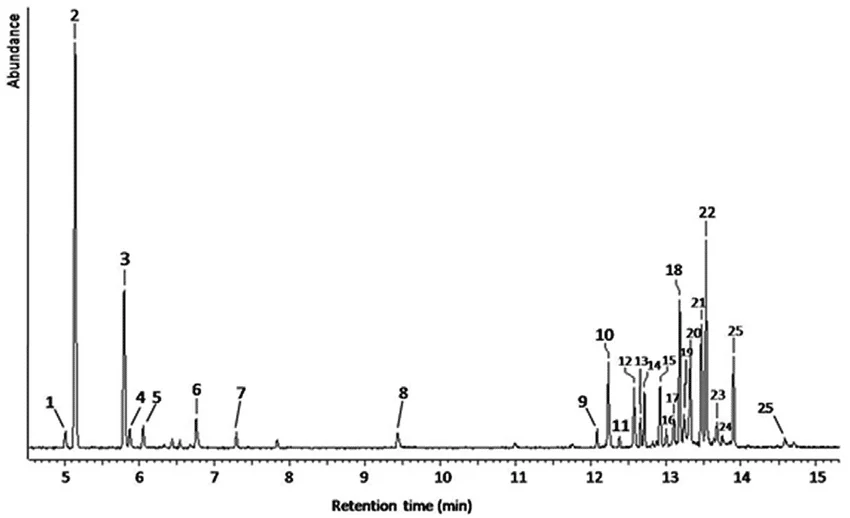
As the industry grows, technology is playing an increasing role in maintaining the standards set by these regulations. Large-scale producers, such as Bombay Sapphire at their Laverstoke Mill facility, utilize Gas Chromatography-Mass Spectrometry (GC-MS) to ensure consistency.
GC-MS allows distillers to create a chemical "fingerprint" of their gin, measuring the exact levels of volatile compounds like limonene (citrus) and pinene (juniper). By comparing a new batch’s chromatogram against a master standard, they can ensure that despite natural variations in botanical harvests, the final product remains consistent with the "London Dry" process requirements. This scientific approach provides a level of quality assurance that far exceeds the baseline requirements of the 2019 legislation.
Broader Impact and Industry Implications
The persistence of the London Dry Gin designation as a process-oriented standard has several implications for the global spirits market. First, it protects the "premium" image of the category by ensuring that any bottle bearing the name has been made without post-distillation additives. This transparency is highly valued by connoisseurs and professional bartenders.
Second, the distinction between "Distilled Gin" and "London Dry Gin" allows for a diverse market. Popular brands like Hendrick’s (which adds cucumber and rose essences after distillation) or Martin Miller’s (which is shipped to Iceland for dilution with local water) are categorized as Distilled Gins. They are high-quality products that simply do not follow the "one-shot" or "concentrate-and-dilute" distillation rule required for the London Dry label.
Finally, the allowance of a tiny amount of sugar (0.1g/L) for "dry" gins highlights the intersection of tradition and modern anti-counterfeiting measures. Major brands often use "sugar dyes" or tracer molecules to track their products in the global supply chain. Without this small legal allowance, many of the world’s most recognizable gin brands would be forced to drop the "dry" designation from their labels.
In conclusion, London Dry Gin remains one of the most misunderstood yet strictly regulated spirits in the world. It is a testament to 19th-century industrial innovation that continues to provide a benchmark for purity in the 21st century. While the flavor of gin continues to evolve through the "contemporary" movement, the London Dry designation stands as a rigorous, process-driven anchor for the industry, ensuring that quality is measured not just by the taste in the glass, but by the integrity of the still.
