

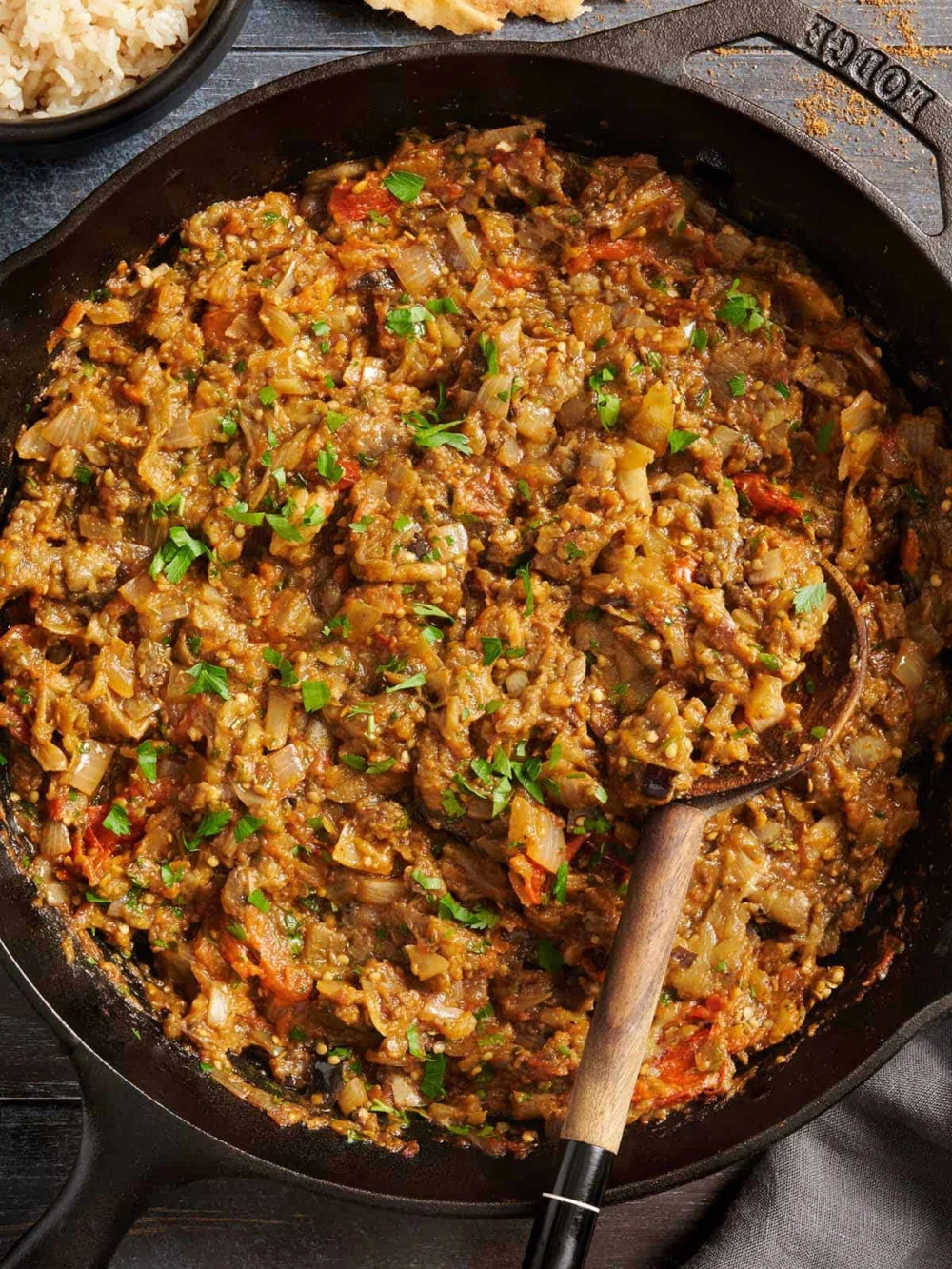
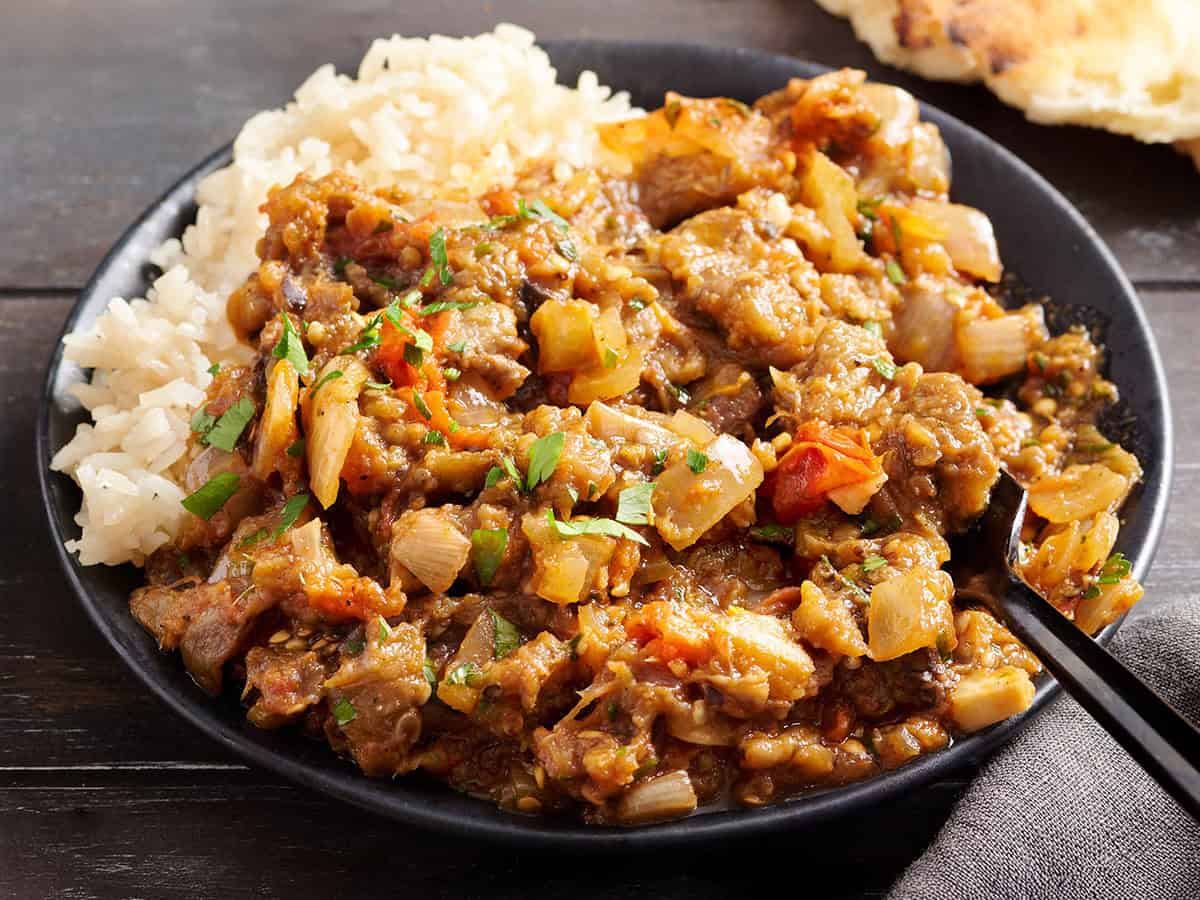
The contemporary culinary landscape is currently witnessing a significant shift toward the domestication of complex international flavors, driven by a combination of inflationary economic pressures and the increasing accessibility of global ingredients in rural and suburban markets. A prominent example of this trend is the emergence of a streamlined, bharta-style eggplant curry, a dish that bridges the gap between traditional South Asian techniques and the logistical realities of modern home cooking. This specific preparation, popularized by culinary researchers at the Nashville Test Kitchen, represents a strategic adaptation of the classic Indian Baingan Bharta, optimized for affordability, nutritional density, and ease of execution. By utilizing a methodology that replaces labor-intensive traditional methods with efficient oven-roasting and flavor-concentrated shortcuts, this dish addresses the growing demand for vegetarian mainstays that do not compromise on the "smoky" and "cozy" profiles typically associated with high-end restaurant offerings.
Historical and Cultural Foundations of Baingan Bharta
To understand the technical evolution of the modern eggplant curry, one must first examine its progenitor: Baingan Bharta. Originating in the Indian subcontinent, specifically within the Punjab region, the term "Baingan" refers to eggplant (Solanum melongena), while "Bharta" denotes a mashed preparation. Historically, the dish is characterized by a distinct smokiness achieved through the charcoal-grilling or open-flame roasting of whole eggplants. This traditional process allows the skin to char completely, infusing the interior flesh with carbonized aromatic compounds before it is peeled and incorporated into a "tadka"—a base of sautéed aromatics, tomatoes, and spices.
The modern adaptation maintains the structural integrity of the bharta—the mashed, saucy consistency—but modifies the heat application. For residents in rural or non-urban settings, where access to authentic Indian tandoors or specialized restaurants is limited, the oven-roasting technique serves as a vital substitute. This transition from open flame to a 450°F (232°C) oven environment, followed by a strategic broiling phase, replicates the textural degradation and flavor concentration of the eggplant without the requirement for specialized equipment or intensive manual labor.
Chronology of Preparation: A Technical Workflow
The execution of a high-quality eggplant curry follows a rigorous chronological sequence designed to maximize flavor extraction while minimizing active kitchen time. The process is divided into three distinct phases: vegetable preparation and roasting, spice tempering, and final integration.
Phase I: Thermal Processing of Base Vegetables
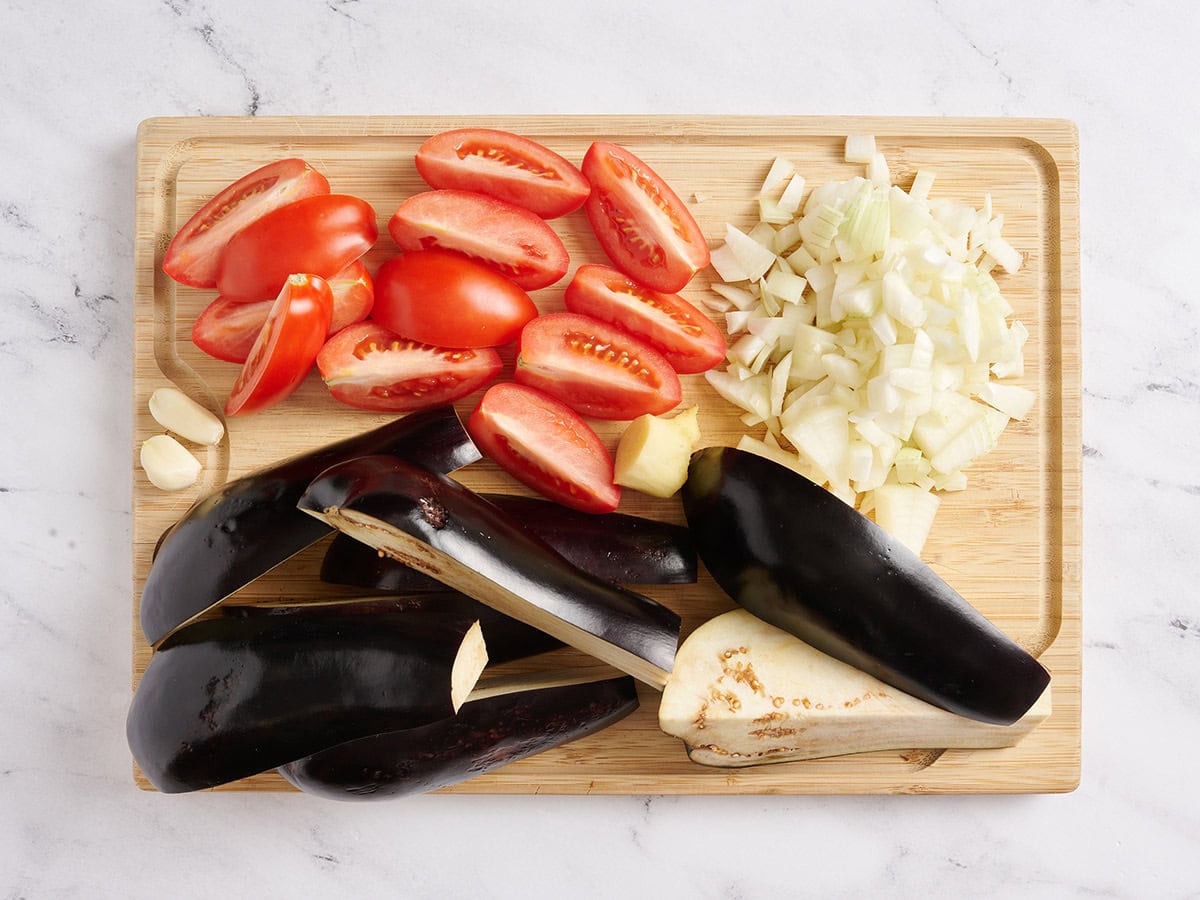
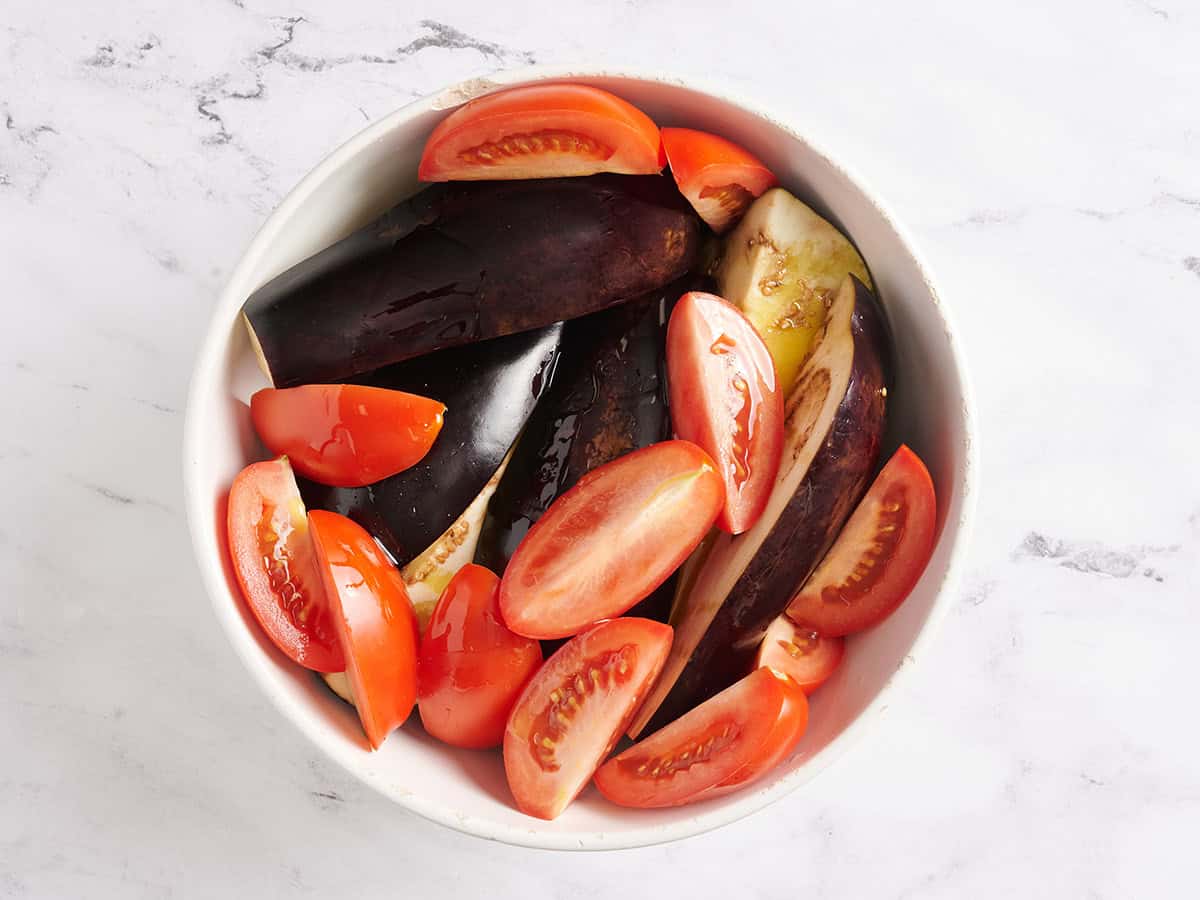
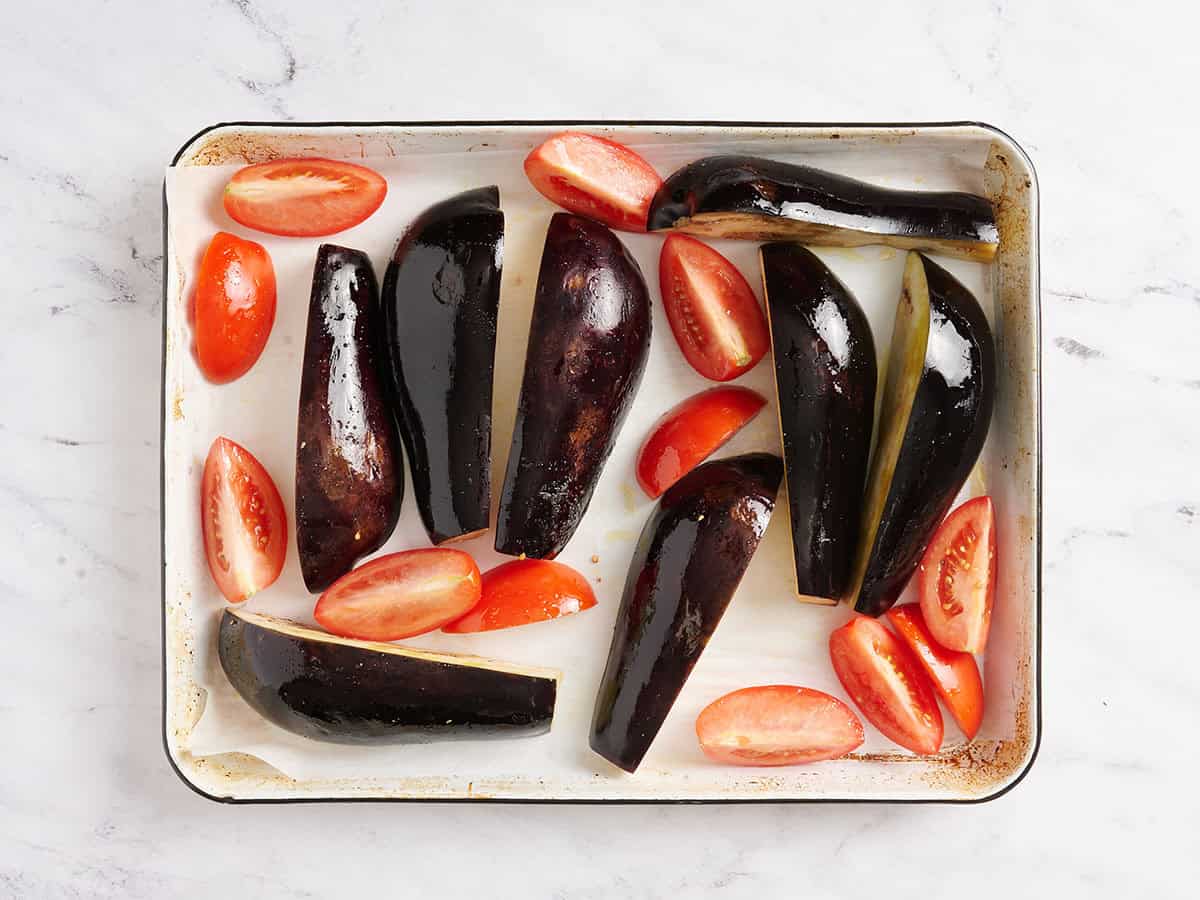
The initial stage involves the quartering of approximately 2.1 pounds of eggplant and one pound of Roma tomatoes. These are coated in olive oil and sea salt—a necessary step to facilitate heat transfer and moisture release. The vegetables are roasted at 450°F for 35 minutes. This high-temperature environment initiates the Maillard reaction, a chemical interaction between amino acids and reducing sugars that gives browned food its distinctive flavor. The final minutes of this phase utilize the broiler function, which provides the localized high-intensity heat required to blister the eggplant skin and provide the requisite "charred" notes.
Phase II: Aromatic Foundation and Spice Tempering
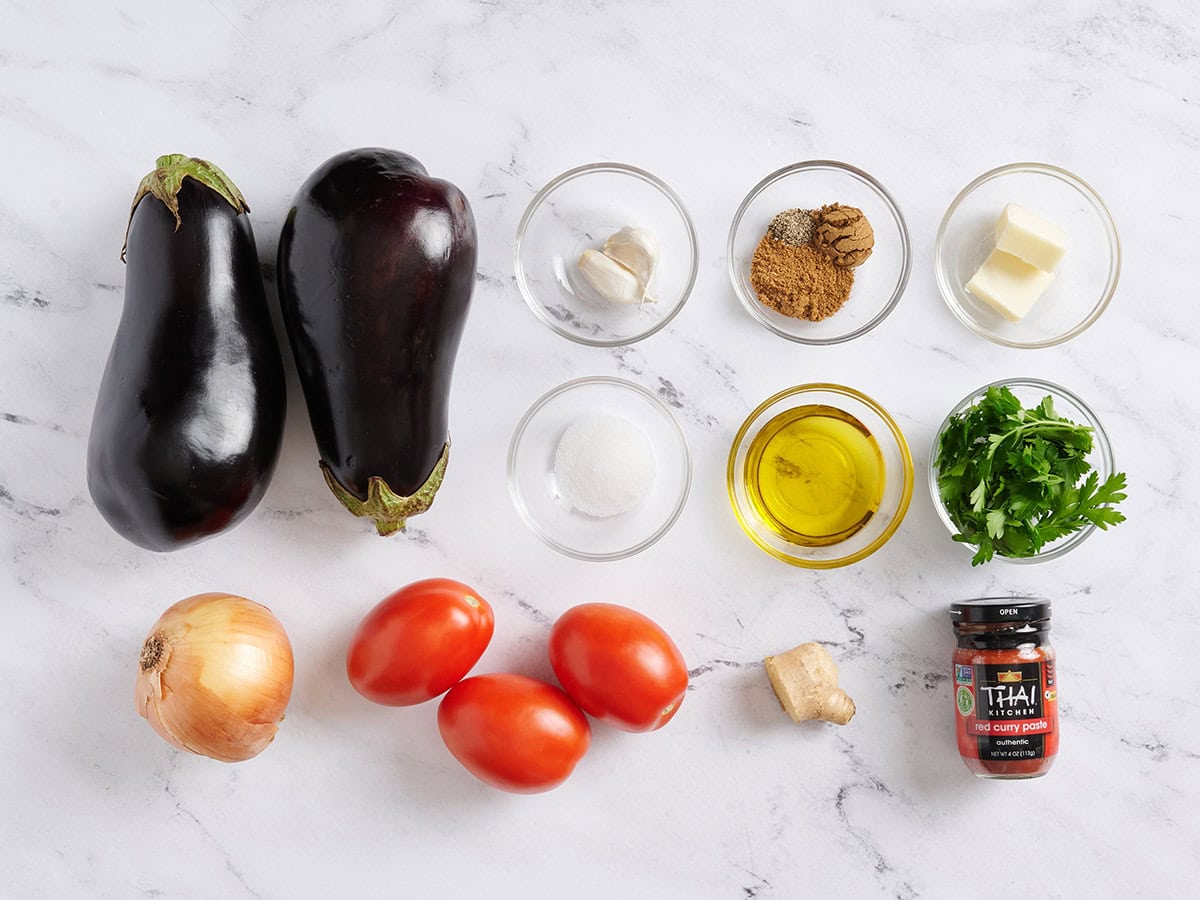
Simultaneous to the roasting process, the "flavor base" is constructed in a skillet. This begins with the dry-toasting of ground cumin and garam masala. Dry-toasting is a critical culinary technique that releases essential oils from ground spices, deepening their profile before they are introduced to fats. Following this, a combination of salted butter and olive oil is used to sauté diced onions, minced garlic, and grated ginger. The inclusion of a red curry paste—specifically the Thai Kitchen variant—serves as a "flavor shortcut." This ingredient introduces concentrated chili heat, lemongrass, and galangal, providing a complex aromatic backbone that complements the earthy tones of the eggplant.
Phase III: Integration and Reduction
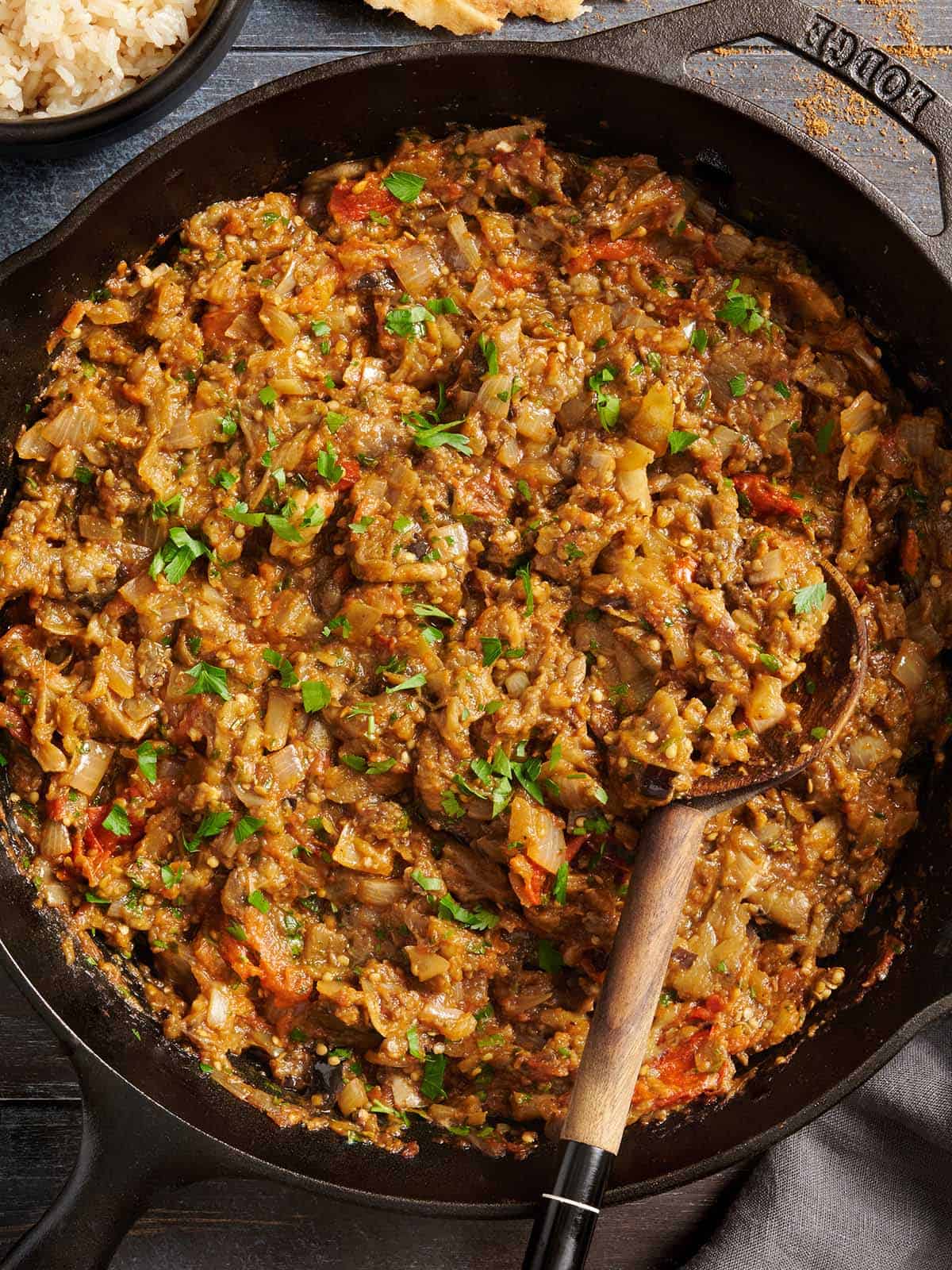
Once the roasted vegetables have reached the desired level of tenderness, the eggplant skins are removed. The flesh, along with the roasted tomatoes and fresh parsley, is integrated into the skillet. Using a mechanical mashing technique with a wooden spoon, the cook creates a cohesive, saucy emulsion. A final 10-minute simmer allows the various flavor compounds to meld and the moisture levels to stabilize, resulting in a thick, hearty consistency.
Economic and Nutritional Data Analysis
The viability of home-cooked eggplant curry is heavily supported by its economic profile. Based on data from the Nashville Test Kitchen, the total cost for a four-serving batch is approximately $7.32, which translates to an exceptionally low cost of $1.83 per serving. In a market where the average cost of a restaurant-prepared vegetarian curry ranges from $12.00 to $18.00 per portion, the home-prepared version offers a cost reduction of over 85%.
From a nutritional standpoint, the dish is categorized as a low-calorie, high-fiber vegetarian option. A single serving provides:
- Calories: 171 kcal
- Total Fat: 11g (17% of Daily Value)
- Sodium: 906mg (39% of Daily Value)
- Carbohydrates: 19g (6% of Daily Value)
- Dietary Fiber: 8g (33% of Daily Value)
- Protein: 3g (6% of Daily Value)
The high fiber content, primarily derived from the eggplant and tomatoes, contributes to satiety, making it an effective main dish for those pursuing weight management or digestive health goals. However, the sodium content is notable, suggesting that individuals on sodium-restricted diets may need to adjust the added salt measurements.
Market Trends and Consumer Behavior
The rise of the "easy weeknight" curry is a direct response to shifting consumer behaviors in the post-pandemic era. Data suggests that more families are relocating to rural areas—a phenomenon mentioned by the recipe’s developers—where "trips to the city" for specialized cuisine are no longer convenient. This geographic shift has created a vacuum that food science and digital recipe platforms have filled by providing "copycat" versions of restaurant favorites.
Furthermore, the "leftover effect" is a significant driver of this dish’s popularity. Unlike many vegetable-based dishes that degrade in quality after initial preparation, the flavors in eggplant curry deepen over time as the aromatic compounds continue to infuse the vegetable fibers. This makes the dish an ideal candidate for "meal prepping," a lifestyle trend where consumers prepare large batches of food to be consumed throughout the workweek. The fact that the curry freezes effectively further enhances its utility for busy households.
Expert Perspectives and Culinary Implications
Jess Rice, a professional chef and former professor at Niagara College, emphasizes that the success of this recipe lies in its accessibility. Rice, who has worked in diverse roles from private celebrity chef to raw vegan restaurateur, notes that the use of "pantry staples" like red curry paste allows home cooks to achieve a "gourmet" result without the intimidation factor of traditional Indian spice blending.
The inclusion of red curry paste in an Indian-inspired dish is a notable example of "culinary fusion" or "pragmatic cooking." While purists might argue for the use of individual spices like turmeric, coriander, and chili powder, the shortcut method ensures consistency for the novice cook. This reflects a broader trend in the food industry where the boundaries between regional cuisines are becoming increasingly porous in favor of flavor efficiency.
Broader Impact on Sustainability and Food Security
The promotion of eggplant-based meals also carries implications for environmental sustainability. Eggplants are relatively low-impact crops compared to animal proteins, requiring significantly less water and land to produce an equivalent amount of dietary fiber and nutrients. As global food systems face increasing strain, the transition toward "meatless" main dishes like this curry is a key component of sustainable consumption.

Additionally, the affordability of the ingredients—onions, garlic, eggplant, and tomatoes—ensures that this recipe remains accessible to populations facing food insecurity. By providing a method to transform inexpensive, raw produce into a sophisticated, flavorful meal, culinary researchers are empowering consumers to maintain high standards of nutrition and culinary enjoyment despite fluctuating grocery prices.
In conclusion, the bharta-style eggplant curry is more than a simple recipe; it is a technical solution to the modern challenges of geography, economy, and time. By synthesizing traditional South Asian flavors with contemporary domestic techniques, it provides a blueprint for the future of home cooking—one that is inclusive, sustainable, and rigorously optimized for the modern palate. As consumers continue to seek comfort and "coziness" in their dining experiences, the ability to replicate complex, smoky, and aromatic dishes in the home kitchen will remain a vital skill in the global culinary repertoire.
